Ocean Cleanup: The Failed Experiment of Dumping Tires into the Sea
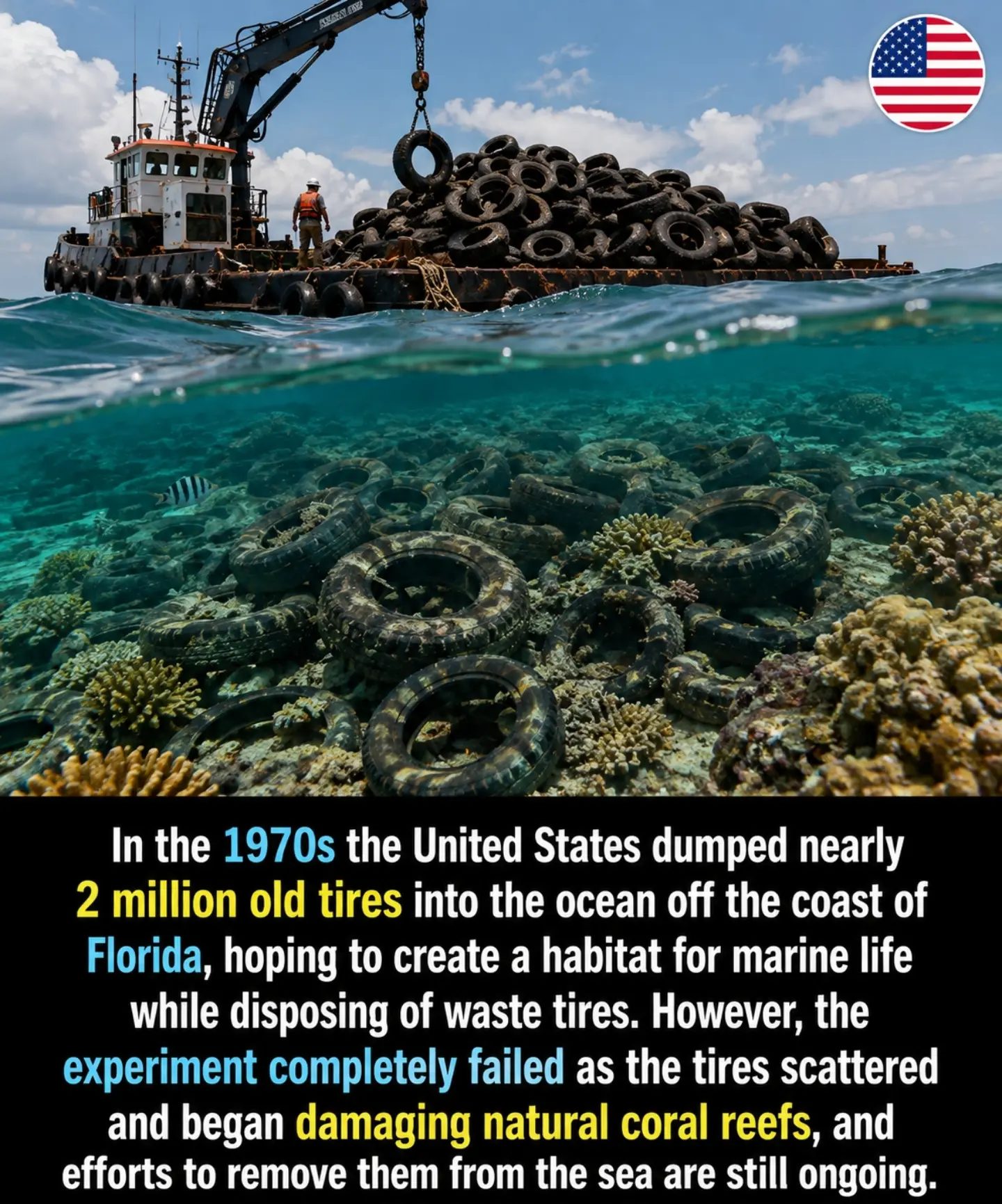
The dumping of millions of tires into the ocean off the coast of Florida in the 1970s was an ambitious but ultimately disastrous experiment. This initiative, driven by a dual purpose of creating a new habitat for marine life and disposing of waste tires, ended in failure and caused significant damage to natural coral reefs.
Why This Matters
The experiment serves as a stark reminder of the unintended consequences that can arise from well-intentioned but poorly planned environmental initiatives. Understanding the mistakes of the past is crucial for developing more effective and sustainable solutions for ocean cleanup and waste management today.
The 1970s Tire Dumping Experiment
The Initial Plan
In the 1970s, the United States embarked on an ambitious plan to address two pressing issues: waste tire disposal and the creation of artificial marine habitats. The idea was to use old tires as a foundation for new marine ecosystems. The plan involved dumping nearly 2 million waste tires into the ocean off the coast of Florida, with the hope that these tires would provide a stable structure for marine life to thrive.
The Execution
The execution of this plan was relatively straightforward. The discarded tires were transported to the designated area and dumped into the ocean. The initial stages of the experiment seemed promising, as the tires settled on the ocean floor and began to accumulate marine growth. However, the long-term effects of this initiative were far from beneficial.
The Consequences
The tires scattered widely, and their presence began to disrupt the natural coral reefs in the area. The tires damaged the delicate structures of the coral reefs, disrupting the ecosystems that depended on them. The failure of the experiment highlighted the need for more careful consideration of environmental impacts and the potential for unintended consequences in environmental interventions.
Ongoing Cleanup Efforts
Efforts to remove these tires from the ocean are still ongoing. The cleanup process is a complex and challenging task, involving the use of specialized equipment and techniques to extract the tires from the water and coral reefs. The removal process aims to mitigate the damage caused by the dumped tires and restore the natural state of the coral reefs.
The Importance of Sustainable Ocean Cleanup
The failed tire dumping experiment underscores the importance of sustainable and well-researched ocean cleanup initiatives. Modern efforts to address marine pollution must consider the long-term impact on marine ecosystems and employ techniques that minimize environmental damage.
Modern Approaches to Ocean Cleanup
Modern ocean cleanup initiatives focus on more sustainable and environmentally friendly methods. For example, innovative technologies are being developed to collect and remove plastic waste from the ocean without causing further damage to marine ecosystems. These technologies often involve the use of specialized boats and nets that can efficiently capture waste while minimizing disturbance to marine life.
Public and Private Sector Collaboration
Effective ocean cleanup requires collaboration between public and private sectors. Governments, non-profit organizations, and private companies are working together to develop and implement sustainable solutions for marine waste. This collaboration ensures that the initiatives are well-funded, well-researched, and have the necessary resources to address the scale of the problem.
Community Involvement
Community involvement is also crucial for the success of ocean cleanup initiatives. Local communities, especially those near coastal areas, play a significant role in monitoring and maintaining the health of marine ecosystems. Public awareness campaigns and educational programs help to inform communities about the importance of keeping the oceans clean and how they can contribute to cleanup efforts.
Practical Tips for Preventing Ocean Pollution
Reduce Plastic Use
One of the most effective ways to prevent ocean pollution is by reducing the use of single-use plastics. Opting for reusable bags, water bottles, and containers can significantly reduce the amount of plastic waste that ends up in the ocean. This small change in daily habits can have a substantial cumulative impact on marine health.
Proper Disposal of Waste
Proper disposal of waste is essential for preventing ocean pollution. Waste materials, including tires, should be disposed of in designated waste facilities rather than being dumped in the ocean or landfills. This ensures that waste is managed responsibly and does not contribute to marine pollution.
Support Ocean Cleanup Initiatives
Supporting ocean cleanup initiatives is crucial for maintaining the health of marine ecosystems. Donating to organizations that focus on ocean cleanup, participating in beach cleanups, and advocating for stricter environmental regulations can all contribute to a cleaner ocean.
Important Takeaways
The tire dumping experiment of the 1970s offers valuable lessons on the importance of sustainable and well-researched initiatives. The failure of this experiment highlights the need for careful consideration of environmental impacts and the potential for unintended consequences. Modern ocean cleanup efforts must prioritize sustainability and employ techniques that minimize environmental damage. Collaboration between public and private sectors, as well as community involvement, is essential for the success of these initiatives.
Conclusion
The failed tire dumping experiment serves as a cautionary tale in the realm of environmental initiatives. It underscores the importance of thorough research, careful planning, and sustainable practices in ocean cleanup efforts. By learning from past mistakes, we can develop more effective and environmentally friendly solutions to address the challenges of marine pollution and waste management.
Watch the Reel
Questions readers ask
What was the primary goal of the 1970s ocean tire dumping initiative off the coast of Florida?
The main objectives were to create artificial marine habitats and to dispose of waste tires. The initiative aimed to achieve these goals simultaneously by dumping 2 million tires into the ocean.
How did the 1970s tire dumping experiment impact the natural environment?
The tire dumping had severe negative effects, particularly on natural coral reefs. The tires disrupted the existing marine ecosystems, causing significant damage to the coral reefs and harming marine life.
What lessons can be learned from the 1970s tire dumping disaster?
The disaster highlights the importance of thorough planning and understanding potential consequences. It underscores the need for careful consideration of environmental interventions and the importance of conducting comprehensive assessments before implementing large-scale ocean waste management projects.
Why did the artificial marine habitat initiative fail?
The failure was due to poor planning and a lack of understanding of the ocean's ecosystems. The tires did not create the intended habitats and instead caused harm to the natural coral reefs and marine life, leading to the initiative's collapse.
What was the scale of the tire dumping experiment in the 1970s?
The experiment involved dumping an enormous amount of waste tires into the ocean. Approximately 2 million tires were deposited off Florida's coast, making it one of the largest waste management initiatives of its time.
How did the tire dumping experiment impact ocean cleanup efforts?
The failed experiment served as a cautionary tale for future ocean cleanup and waste management efforts. It demonstrated the risks of poorly planned initiatives and the need for more sustainable and effective solutions.
Related deep dives
Similar reads based on topic and creator.




Recent articles
Fresh deep dives from the latest Reels we unpacked.




Comments
Be the first to comment.