Historical Bridge Collapse
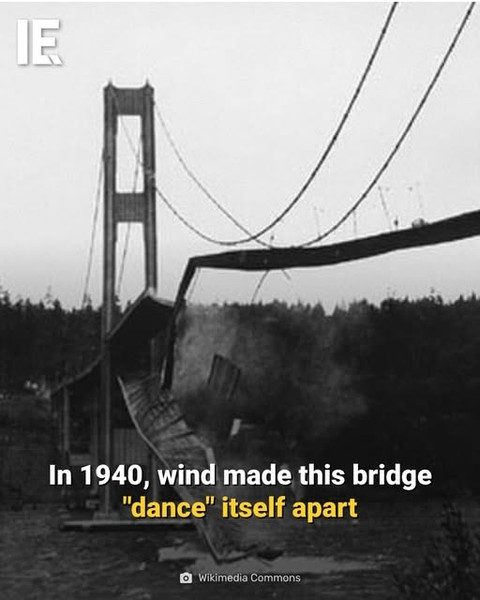
In 1940, the Tacoma Narrows Bridge, known as "Galloping Gertie," collapsed dramatically due to an unexpected interaction between wind and the bridge's design. This event, which would forever change bridge engineering, was triggered by aeroelastic flutter, a phenomenon that forced the structure into a rhythmic, self-reinforcing motion.
Why this Matters
The collapse of the Tacoma Narrows Bridge provided a grim lesson in the impact of wind forces on engineering. Airflow and vibration, once overlooked, became critical considerations in the design of bridges. The disaster highlighted the importance of understanding and mitigating resonant frequencies, which occur when the frequency of wind gusts matches the natural frequency of the bridge.
Understanding the Event
The Bridge's Design and Construction
The Tacoma Narrows Bridge, a suspension bridge, was designed to connect the Tacoma and Kitsap Peninsulas in Washington State. Completed in 1940, the bridge was constructed with a slender, streamlined deck to reduce wind resistance, a design choice that would later prove catastrophic.
The Day of the Collapse
Strong winds on the morning of November 7, 1940, triggered aeroelastic flutter. This phenomenon caused the bridge to sway violently, with the deck oscillating in a twisting motion, resembling a dance. The rhythmic motion increased in amplitude, leading to the bridge's eventual collapse.
The Role of Aeroelastic Flutter
Aeroelastic flutter occurs when wind gusts interact with a structure, causing it to oscillate at its natural frequency. For the Tacoma Narrows Bridge, this natural frequency, combined with the flexible design, created a positive feedback loop. The motion was self-reinforcing, with each oscillation amplifying the forces acting on the bridge, ultimately leading to its destruction.
Practical Tips for Modern Engineering
Wind Tunnel Testing
Modern bridge design relies heavily on wind tunnel testing. This involves subjecting scale models of bridges to various wind conditions to observe how they respond. By studying the effects of wind forces, engineers can design bridges that are more resistant to aeroelastic flutter and other wind-induced phenomena.
Aerodynamic Shaping
Modern bridges often incorporate aerodynamic shaping to minimize wind resistance and reduce the risk of resonating. Designs that are less streamlined and more robust, such as those with trusses and open decks, are preferred for their stability in high wind conditions.
Vibration Control
Damping mechanisms and active control systems are implemented in modern bridges to dissipate energy from wind-induced vibrations. These systems help prevent the build-up of resonant oscillations, ensuring that the bridge remains stable even in strong winds.
Monitoring and Maintenance
Regular monitoring and maintenance are essential for ensuring the safety of bridges. Modern technologies, such as sensors and real-time monitoring systems, allow engineers to detect and address potential issues before they become critical.
Important Takeaways
The collapse of the Tacoma Narrows Bridge highlighted the critical role of wind forces in bridge engineering. The disaster underscored the importance of aerodynamic design, wind tunnel testing, and vibration control in modern bridge construction. By understanding and mitigating the risks associated with aeroelastic flutter, engineers can design more resilient and safe structures.
Conclusion
The Tacoma Narrows Bridge collapse in 1940 was a pivotal moment in bridge engineering. It demonstrated the destructive power of wind forces and the need for a comprehensive understanding of aeroelastic flutter. Today, the lessons learned from this event continue to influence the design and construction of bridges, ensuring that they remain safe and resilient in the face of natural forces. The photo of the Golden Gate Bridge adds a visual context to the resonance and flutter issue that similarly affects modern structures.
Watch the Reel
Related deep dives
Similar reads based on topic and creator.



Recent articles
Fresh deep dives from the latest Reels we unpacked.




Comments
Be the first to comment.