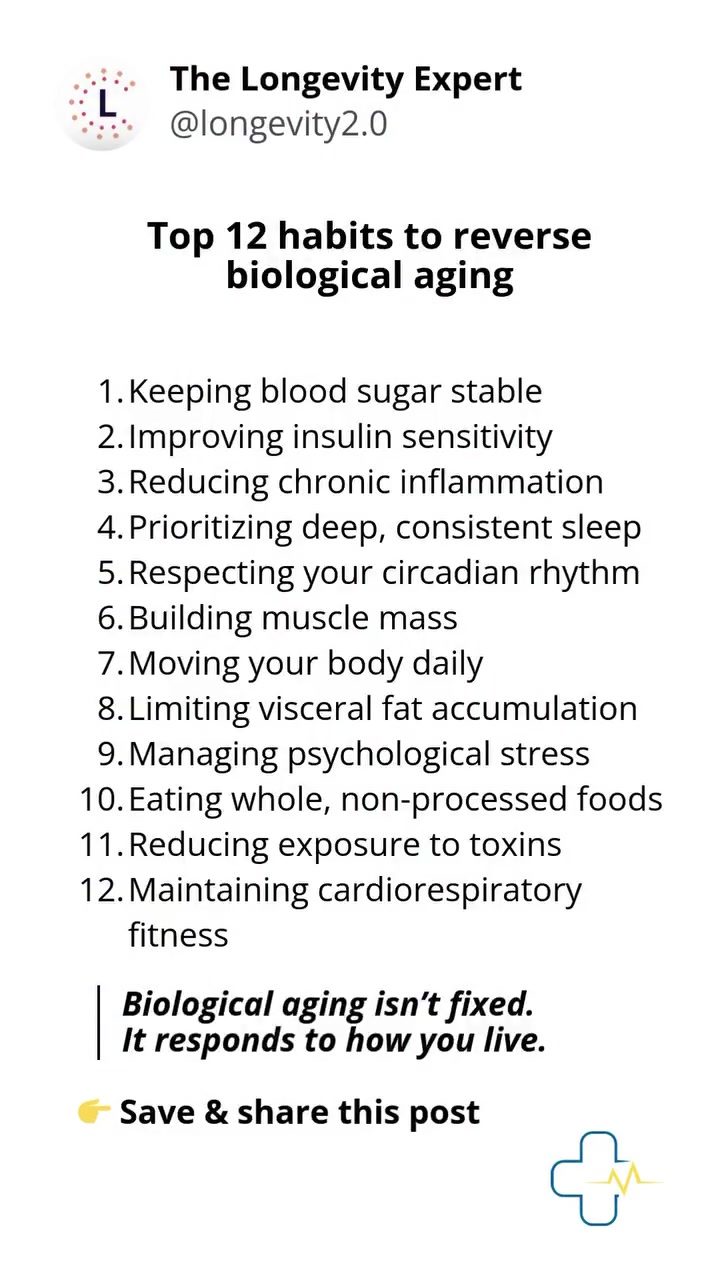
Longevity Habits
Every day, our bodies respond to the signals we send, influencing our biological age. While we can't halt time, adopting specific habits can shift our biology in a younger, more resilient direction. Here are twelve habits linked to reversing biological aging, grounded in improving the systems that drive it.
Why This Matters
Biological aging is not a fixed process. It is influenced by various factors, many of which are within our control. By adopting habits that support our body's natural systems, we can potentially reverse some aspects of aging. These habits focus on key areas such as metabolism, sleep, stress management, nutrition, and physical activity.
Main Discussion
Metabolic Health
Keeping Blood Sugar Stable
Maintaining stable blood sugar levels is crucial for overall health and longevity. Fluctuations in blood sugar can lead to various health issues, including insulin resistance and inflammation. Eating a balanced diet rich in fiber, lean proteins, and healthy fats can help keep blood sugar levels stable.
Improving Insulin Sensitivity
Insulin sensitivity refers to how well your cells respond to insulin, a hormone that regulates blood sugar. Improved insulin sensitivity can help prevent conditions like type 2 diabetes and metabolic syndrome. Regular exercise, a healthy diet, and adequate sleep can enhance insulin sensitivity.
Reducing Chronic Inflammation
Chronic inflammation is linked to numerous age-related diseases, including heart disease, diabetes, and cancer. Reducing inflammation involves adopting an anti-inflammatory diet, regular exercise, and stress management techniques.
Sleep and Circadian Rhythm
Prioritizing Deep, Consistent Sleep
Deep, consistent sleep is essential for cellular repair, memory consolidation, and overall health. Aim for 7-9 hours of quality sleep per night. Maintaining a consistent sleep schedule and creating a relaxing bedtime routine can improve sleep quality.
Respecting Your Circadian Rhythm
Your circadian rhythm is your body's internal clock, which regulates sleep-wake cycles, hormone release, body temperature, and other physiological processes. Respecting this rhythm involves maintaining a consistent sleep schedule, avoiding bright screens before bed, and exposing yourself to natural light during the day.
Physical Fitness
Building Muscle Mass
Muscle mass naturally declines with age, leading to reduced strength, mobility, and metabolism. Strength training exercises can help build and maintain muscle mass. Incorporating resistance training into your routine can support overall health and longevity.
Moving Your Body Daily
Regular physical activity is crucial for maintaining cardiorespiratory fitness, building muscle mass, and reducing the risk of chronic diseases. Aim for at least 30 minutes of moderate-intensity exercise most days of the week.
Maintaining Cardiorespiratory Fitness
Cardiorespiratory fitness refers to the ability of the heart and lungs to supply oxygen to the body during sustained physical activity. Regular aerobic exercise, such as running, cycling, or swimming, can improve cardiorespiratory fitness.
Nutrition and Toxins
Eating Whole, Non-Processed Foods
A diet rich in whole, minimally processed foods provides essential nutrients, fiber, and antioxidants that support overall health. Focus on consuming fruits, vegetables, lean proteins, and whole grains while limiting processed foods, sugars, and unhealthy fats.
Reducing Exposure to Environmental Toxins
Environmental toxins, such as pesticides, pollutants, and chemicals in personal care products, can negatively impact health. Reduce exposure by choosing organic foods, using natural cleaning products, and opting for personal care items free from harmful chemicals.
Mental and Emotional Health
Managing Psychological Stress
Chronic stress can accelerate aging by influencing hormonal balance, immune function, and overall health. Effective stress management techniques, such as meditation, deep breathing, yoga, and social support, can help manage psychological stress.
Limiting Visceral Fat Accumulation
Visceral fat, the type of fat that surrounds internal organs, is linked to various health issues, including heart disease, diabetes, and metabolic syndrome. Regular exercise, a healthy diet, and adequate sleep can help limit visceral fat accumulation.
Practical Tips
Daily Routine
- Morning: Start your day with a balanced breakfast, including lean proteins, healthy fats, and fiber-rich foods. Engage in a morning exercise routine to boost your metabolism and improve mood.
- Midday: Eat a nutritious lunch, focusing on whole foods like salads, whole grains, and lean proteins. Incorporate a short walk or another physical activity to break up your day.
- Evening: Prepare a healthy dinner, focusing on lean proteins, vegetables, and whole grains. Avoid eating late at night and limit exposure to screens before bed.
- Night: Establish a relaxing bedtime routine, which might include reading, gentle stretching, or meditation. Aim for 7-9 hours of quality sleep.
Weekly Habits
- Exercise: Aim for at least 150 minutes of moderate-intensity or 75 minutes of vigorous-intensity aerobic activity per week. Include strength training exercises at least two days a week.
- Stress Management: Incorporate stress-reduction techniques into your weekly routine, such as yoga, meditation, or deep breathing exercises.
- Healthy Choices: Plan your meals for the week, focusing on whole, minimally processed foods. Limit your exposure to environmental toxins by choosing natural products and organic foods.
Long-Term Goals
- Weight Management: Maintain a healthy weight through a balanced diet and regular exercise. Focus on achieving a healthy body mass index (BMI) and waist-to-hip ratio.
- Physical Fitness: Regularly challenge yourself with new exercises or activities to maintain and improve your physical fitness. Consider activities like running, cycling, or swimming to improve cardiorespiratory fitness.
- Mental Health: Prioritize your mental health by scheduling regular relaxation and self-care activities. Consider talking to a mental health professional if you struggle with chronic stress or other mental health issues.
Environmental Changes
- Sleep Environment: Create a sleep-friendly environment by keeping your bedroom cool, dark, and quiet. Invest in a comfortable mattress and pillows, and consider using a white noise machine or earplugs to block out disturbances.
- Kitchen: Stock your kitchen with healthy foods, making it easier to prepare nutritious meals. Keep processed foods and sugary snacks out of reach.
- Home: Use natural cleaning products and personal care items to reduce your exposure to environmental toxins. Consider using air purifiers to improve indoor air quality.
Important Takeaways
Adopting these twelve habits can help reverse biological aging by improving various systems in the body. Consistency is key, as small, incremental changes can have a significant impact over time. Prioritize your health and well-being by making these habits a part of your daily routine.
Conclusion
Biological aging is not a fixed process. By adopting habits that support metabolic health, sleep, physical fitness, nutrition, and mental health, you can shift your biology in a younger, more resilient direction. Consistency beats perfection, so focus on making small, sustainable changes that you can stick with over time.
Watch the Reel
Questions readers ask
What are the key factors that influence biological aging?
Biological aging is influenced by several factors, including metabolism, sleep quality, stress levels, nutrition, and physical activity. These factors are often interconnected, and adopting habits that support these systems can potentially reverse some aspects of aging.
How does maintaining stable blood sugar levels help in reversing biological aging?
Keeping blood sugar stable is crucial for metabolic health. Fluctuations in blood sugar can lead to inflammation and increased oxidative stress, which accelerate aging. By maintaining stable blood sugar levels, you can support your body's natural systems and potentially slow down the aging process.
What role does sleep play in biological aging?
Quality sleep is essential for cellular repair and regeneration. During deep sleep, the body produces growth hormones that help repair tissues and maintain youthful metabolic function. Adequate, restful sleep can significantly contribute to reversing biological aging by supporting overall bodily health.
How can stress management techniques help in reversing biological aging?
Chronic stress can accelerate aging by increasing inflammation and oxidative stress. Techniques such as meditation, deep breathing, and mindfulness can help manage stress levels, promoting a more youthful biology. By incorporating stress reduction practices into your daily routine, you can enhance your body's natural resilience.
What are some specific nutritional habits that support reversing biological aging?
Adopting a nutrient-dense diet rich in antioxidants, healthy fats, and lean proteins can support cellular health and metabolism. Foods like berries, leafy greens, and fatty fish are excellent choices. Avoiding processed foods and sugars can also help stabilize blood sugar levels, further supporting your body's natural systems.
How does physical activity contribute to reversing biological aging?
Regular physical activity, particularly high-intensity interval training (HIIT) and strength training, can enhance metabolic health and promote muscle growth. Exercise also helps reduce inflammation and improve cardiovascular function, contributing to a more youthful biological profile.
What are some practical tips for keeping blood sugar levels stable?
To maintain stable blood sugar levels, focus on consuming a balanced diet with complex carbohydrates, lean proteins, and healthy fats. Regular meals and snacks, along with adequate hydration, can also help. Avoiding sugary drinks and processed foods is essential, as they can cause rapid blood sugar spikes and crashes.
Related deep dives
Similar reads based on topic and creator.




Recent articles
Fresh deep dives from the latest Reels we unpacked.




Comments
Be the first to comment.