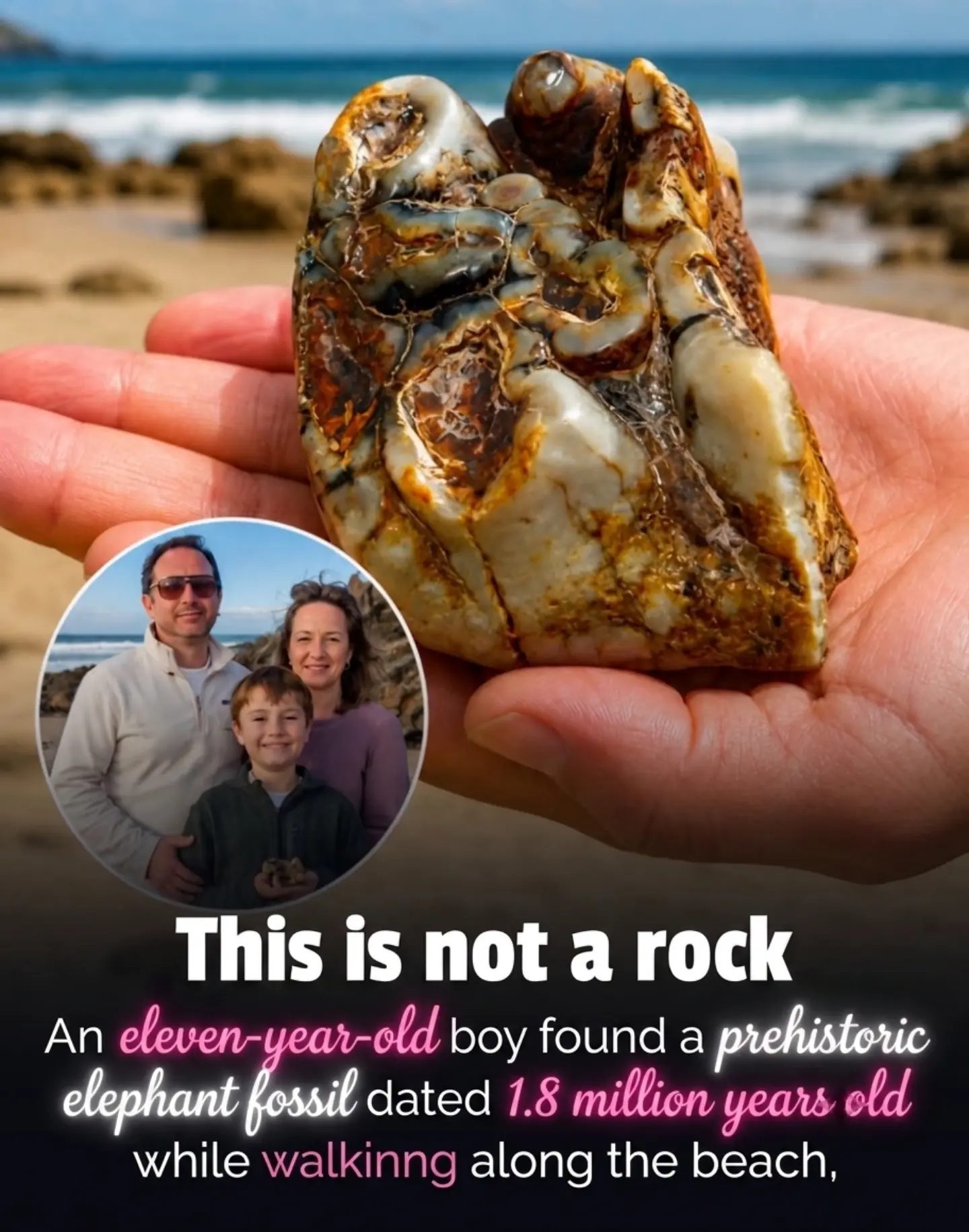
Fossil Discovery: Uncovering a 1.8 Million-Year-Old Elephant Tooth
Imagine walking along the coast and stumbling upon a piece of history that's 1.8 million years old. That's exactly what happened when an 11-year-old boy discovered a fossilized molar from a prehistoric elephant. This incredible find highlights the fascinating world of fossils and the unexpected treasures that can be found along the shoreline.
Why This Matters
The discovery of a 1.8 million-year-old elephant tooth is more than just an exciting find; it offers a unique window into the past. Fossils like this one can provide valuable insights into the evolution of ancient animals, the environments they lived in, and the geological processes that shaped our world. By understanding these ancient remnants, we can piece together more about our planet's history and the life that once thrived on it.
Main Discussion
The Discovery
An 11-year-old boy made a remarkable discovery while walking along the beach. In his hand, he held a large, fossilized elephant tooth, estimated to be 1.8 million years old. This fossil isn't just an ordinary rock; it's a testament to the natural processes that have occurred over millions of years. Minerals have gradually replaced the tooth's organic material, turning it into stone while preserving its natural ridges. These ridges, designed for grinding ancient plants, remain as a clear mark of the animal's past life.
The Significance of Fossilized Teeth
Fossilized teeth are particularly valuable to scientists for several reasons. Firstly, teeth are often well-preserved because of their strong enamel and dense structure. This makes them resistant to degradation over time. Secondly, teeth can reveal a wealth of information about the animal's diet, age, and overall health. The ridges on the fossilized molar, for instance, indicate the type of plants the prehistoric elephant consumed. This information can help scientists reconstruct the ancient ecosystem and understand how different species interacted with each other.
The Process of Fossilization
The process of fossilization is a fascinating journey that can take millions of years. When an animal dies, its remains are often exposed to the elements, leading to rapid decomposition. However, under certain conditions, the organic material can be gradually replaced by minerals from the surrounding soil or water. This process, known as permineralization, turns the organic matter into stone, preserving the structure and details of the original remains. Over time, this fossil can become a valuable piece of geological history, providing insights into the past.
The Role of Beachcombing
Beachcombing, the activity of exploring beaches for interesting items, can be more than just a leisurely pastime. It can also lead to remarkable discoveries like the 1.8 million-year-old elephant tooth. Beachcombers often find unique shells, sea glass, and other treasures, but sometimes, they come across something far more extraordinary. The key is to keep an eye out for unique textures and patterns that might hint at an unusual find.
Practical Tips
If you're inspired to go beachcombing and potentially uncover a piece of history, here are some practical tips to help you on your journey:
-
Stay Alert: Keep an eye out for unusual rocks, bones, or other items that stand out from the ordinary. Look for unique textures, patterns, or shapes that might indicate something more than a simple rock.
-
Know What to Look For: Familiarize yourself with common fossils and their characteristics. This knowledge can help you identify potential fossils more easily.
-
Handle with Care: If you suspect you've found a fossil, handle it gently to avoid damaging it. Remember, fossils are delicate and can break easily.
-
Document Your Findings: Take photos and note the location of your discovery. This information can be valuable if you decide to share your find with a museum or research institution.
-
Check Local Regulations: Before removing any items from the beach, check local regulations to ensure you're not violating any rules. Some areas have specific guidelines about collecting fossils and other artifacts.
Important Takeaways
The discovery of a 1.8 million-year-old elephant tooth underscores the importance of understanding and preserving our natural history. Fossils like this one offer invaluable insights into the past and the world we live in today. By appreciating and studying these remnants, we can deepen our knowledge of the Earth's evolution and the life that once inhabited it. Whether you're a casual beachcomber or a seasoned paleontologist, there's always more to learn and discover.
Conclusion
The world of fossils is full of wonder and surprises. From the discovery of a prehistoric elephant tooth to the intricate process of fossilization, these ancient relics offer a glimpse into the distant past. Whether you're exploring the shoreline or simply appreciating the natural world, keep your eyes open for the unexpected treasures that might be right under your feet.
Watch the Reel
Questions readers ask
What makes an ancient elephant tooth like this one an important discovery?
An ancient elephant tooth like this one is important because it provides direct evidence of prehistoric life. Examining the structure and characteristics of the tooth can offer clues about the diet, age, and overall health of the elephant. Additionally, the context in which the fossil is found can reveal information about the ancient environment and the geological processes that occurred over millions of years.
How did an 11-year-old find a 1.8 million-year-old fossil on the beach?
The 11-year-old beachcomber likely found the 1.8 million-year-old fossil while exploring the shoreline, where erosion and wave action can expose hidden treasures buried in the sand and rocks. Beachcombing allows for the discovery of unique remains, as the ebb and flow of tides bring up items from underwater, including ancient fossils.
What kinds of information can we gain from examining a 1.8 million-year-old fossilized elephant tooth?
A 1.8 million-year-old fossilized elephant tooth can offer insights into the animal's biology, such as its chewing habits, diet, and tooth wear. Scientists can also compare it to other fossils to understand the evolution of elephants and related species. Furthermore, the location and geological context of the fossil can provide information about the environmental conditions of the time.
Why is it significant that this fossil was found by an 11-year-old?
The discovery by an 11-year-old highlights the accessibility of paleontology and encourages more people to explore and appreciate natural environments. It also demonstrates that significant fossil discoveries can come from unexpected sources and can inspire others to get interested in the natural world.
What should you do if you find an ancient fossil like this one?
If you find an ancient fossil, it is essential to leave it in place and contact local authorities or a nearby museum. Notify experts to ensure the fossil is properly documented, collected, and preserved, as they may also provide valuable information about the location and its history.
What is the significance of finding fossils on beaches?
Beaches are dynamic environments where erosion and tidal action can reveal fossils that were previously hidden. Finding fossils on beaches allows scientists to study these ancient remains, and provides clues about the geological history of the region and the ancient life that once inhabited it.
What is a fossilized tooth and how does it form?
A fossilized tooth is an ancient tooth that has been preserved in sediment over millions of years. The process involves the replacement of organic material with minerals, which turns the tooth into a rock-like substance. Fossilization typically occurs when the tooth is buried quickly and the right conditions are met to preserve it over time.
Related deep dives
Similar reads based on topic and creator.


Recent articles
Fresh deep dives from the latest Reels we unpacked.




Comments
Be the first to comment.