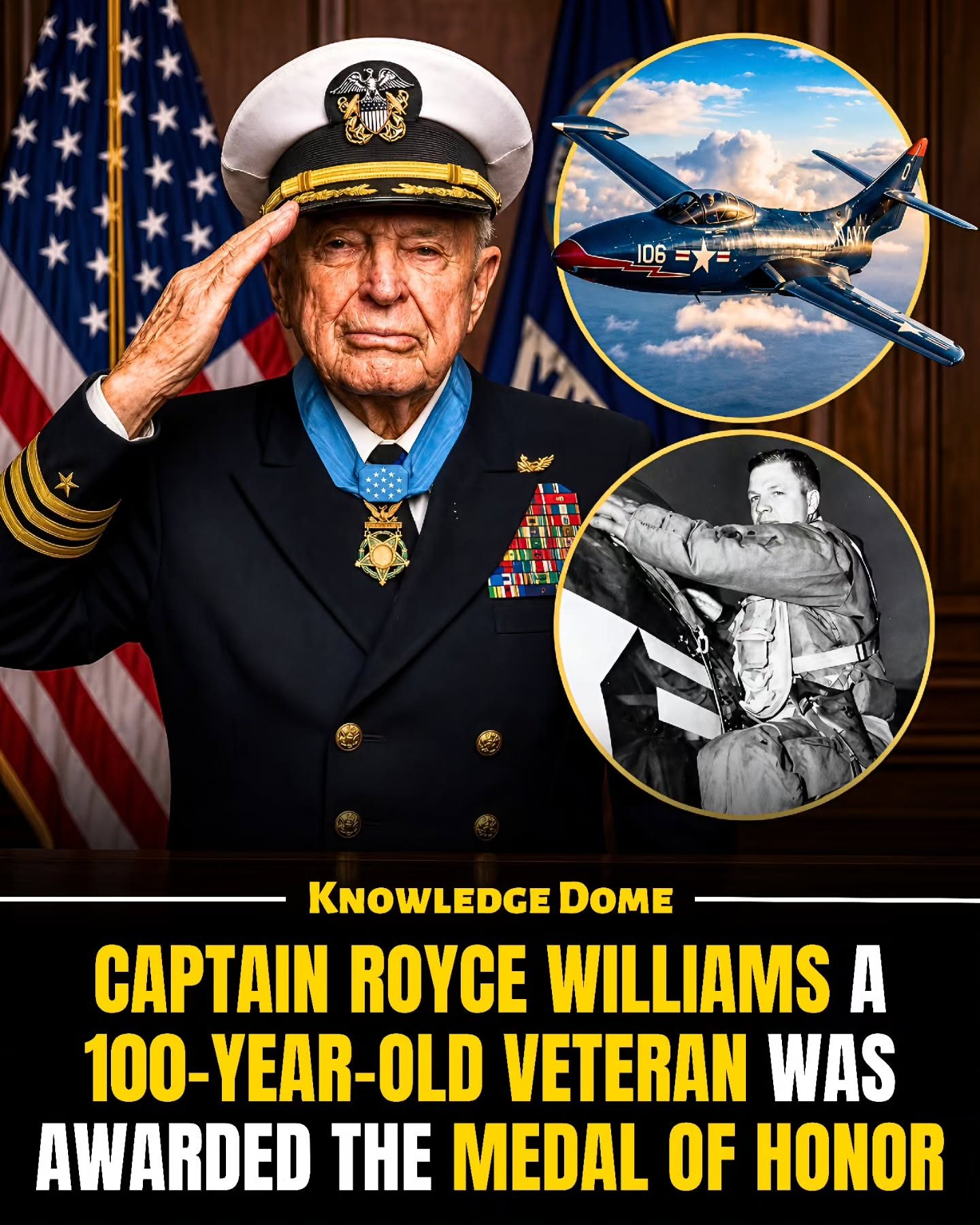
Veteran Recognition: The Remarkable Journey of Captain Royce Williams
Captain Royce Williams, a 100-year-old veteran, has a story that stands as a testament to bravery and perseverance. In 1952, Williams, then a Navy pilot, found himself in an extraordinary fight that seemed almost impossible. Flying alone, he engaged in a relentless aerial battle against seven Soviet MiG-15 jets, lasting an unprecedented 35 minutes. During this intense engagement, he successfully shot down four enemy aircraft. When he finally returned, his aircraft bore the marks of 263 hits—a stark reminder of the ferocity of the battle.
The Unlikely Battle
Most air fights do not last nearly as long as Williams's encounter, making it a rare and exceptional event. The mission was so significant that it was kept secret for many years. The reason for this secrecy was simple: the conflict highlighted direct combat between American and Soviet forces, a revelation that could have significant geopolitical implications. As a result, the story remained hidden from the public for decades, and Williams's heroic actions went unrecognized for far too long.
Recognition After Decades
Years passed, and Congress eventually changed the rules to honor Williams. At 100 years old, Williams finally received the Medal of Honor, recognizing his extraordinary bravery and service. This moment of recognition was a long-awaited acknowledgment of his heroic act that day in 1952.
Context / Why this matters
Historical Significance
The events surrounding Captain Royce Williams's battle and subsequent recognition shed light on a crucial period in American and international history. The early 1950s were marked by the Cold War, where tensions between the United States and the Soviet Union were high. Direct combat between the two superpowers was a rare and often covert occurrence. The secrecy surrounding Williams's mission highlights the delicate balance of power and the efforts to maintain diplomatic relations during this tumultuous period.
Individual Bravery
Williams's actions are a remarkable example of individual bravery in the face of overwhelming odds. His ability to stay in the fight for 35 minutes and shoot down four enemy aircraft is a testament to his skill, courage, and determination. The 263 hits on his aircraft further underscore the intensity and danger of the battle, making it a story of resilience and fortitude.
Recognition and Honor
The delayed recognition of Williams's bravery underscores the importance of acknowledging and honoring military service. Decades passed before Williams received the Medal of Honor, a delay that highlights the complexities and challenges of recognizing military achievements, particularly in the context of classified missions. His eventual recognition serves as a reminder of the significance of honoring those who have served and the importance of ensuring that their contributions are not forgotten.
Practical Tips
Appreciating Military Service
Understanding and appreciating the sacrifices made by military personnel is crucial. Researching historical events and the individuals involved can provide a deeper understanding of their contributions. Engaging with veterans, listening to their stories, and acknowledging their service can help foster a sense of gratitude and respect.
Learning from History
Studying significant historical events and the individuals involved can offer valuable lessons in courage, resilience, and dedication. These stories provide a rich source of inspiration and motivation, encouraging individuals to face their own challenges with determination and fortitude.
Supporting Veterans
Supporting veterans goes beyond acknowledging their service. Providing resources, such as healthcare, education, and employment opportunities, can help veterans transition back to civilian life. Advocating for policies that support veterans and their families can ensure that their contributions are honored and their well-being is prioritized.
Important Takeaways
Recognizing Delayed Honors
The story of Royce Williams highlights the importance of recognizing and honoring military service, even when it comes decades after the event. It serves as a reminder that acknowledgment and appreciation can never be too late. This delayed recognition underscores the significance of honoring those who have served and the importance of ensuring that their contributions are not forgotten.
The Power of Individual Bravery
Williams's extraordinary bravery in the face of overwhelming odds is a testament to the power of individual resilience and determination. His actions serve as a reminder that even in the most challenging circumstances, courage and fortitude can make a significant difference. His story underscores the importance of recognizing and honoring those who have demonstrated exceptional bravery and service.
The Significance of Historical Events
The events surrounding Williams's battle and subsequent recognition provide valuable insights into a crucial period in American and international history. Understanding these events and the individuals involved can offer a deeper appreciation for the sacrifices made by military personnel and the significance of their contributions.
Conclusion
The remarkable journey of Captain Royce Williams serves as a powerful reminder of bravery, perseverance, and the importance of acknowledging military service. His extraordinary actions during a critical period in history, coupled with his eventual recognition, highlight the significance of honoring those who have served and ensuring that their contributions are remembered. By appreciating and learning from stories like Williams's, we can gain valuable insights into the power of individual bravery, the complexities of military recognition, and the importance of honoring those who have made significant sacrifices for our country.
Watch the Reel
Questions readers ask
How did Captain Royce Williams earn the Medal of Honor?
Captain Royce Williams earned the Medal of Honor for his extraordinary bravery during a 1952 aerial battle in the Korean War. Flying solo, he engaged seven Soviet jets, shot down four, and survived despite his aircraft sustaining 263 hits.
Why was Williams's 1952 combat mission so remarkable?
Williams's 35-minute aerial battle was exceptional due to its duration and the disparity in forces. His lone Navy jet against seven Soviet MiG-15s made it a unique and intense combat scenario.
What makes Williams's Medal of Honor so notable?
The fact that Captain Williams received the Medal of Honor at 100 years old makes his achievement particularly remarkable, highlighting the enduring significance of his wartime actions.
How did Williams's 1952 aerial battle compare to typical dogfights?
Williams's battle was distinctive due to its prolonged duration. Most aerial engagements do not last as long, making his 35-minute combat with seven enemy jets a rare and extraordinary occurrence.
Why was the 1952 combat mission kept classified for so long?
The mission was classified for decades due to its sensitive nature. It marked one of the few direct U.S.-Soviet aerial confrontations, and the details were kept confidential for strategic and political reasons.
What other awards has Captain Royce Williams received?
While the Medal of Honor is his most prestigious award, Williams has also received other distinctions for his military service. However, the Medal of Honor stands out as the highest military decoration for his actions in the Korean War.
What impact did Williams's 1952 battle have on U.S.-Soviet relations?
Williams's 1952 battle was notable for its rarity as a direct U.S.-Soviet conflict, occurring during the height of the Korean War. It underscored the escalating tensions between the two superpowers during the early Cold War period.
Related deep dives
Similar reads based on topic and creator.


Recent articles
Fresh deep dives from the latest Reels we unpacked.




Comments
Be the first to comment.