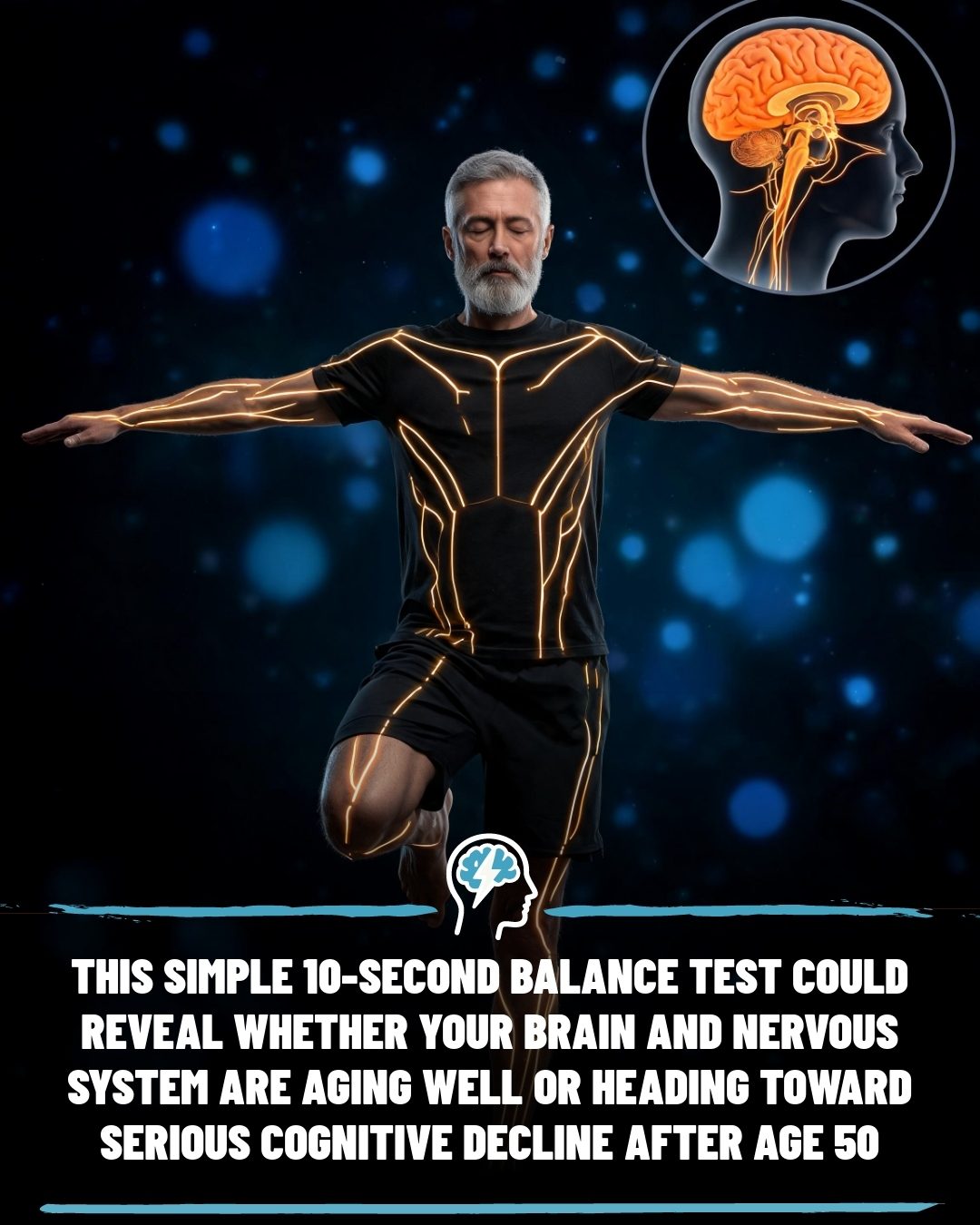
Balance Test for Cognitive Health
A simple 10-second balance test could offer valuable insights into how your brain and nervous system are aging, especially if you're over 50. This test goes beyond evaluating leg strength; it assesses the intricate coordination between multiple systems in the body.
Why This Matters
Maintaining good balance is crucial for overall health and mobility. As we age, our balance can decline, increasing the risk of falls and related injuries. But poor balance is not just a physical issue; it's a neurological one too. Understanding this connection can help us take proactive steps to maintain both physical and cognitive health.
The Science Behind the Test
The Systems at Work
Balance is a complex task that involves multiple systems working together:
- The vestibular system: Located in the inner ear, this system acts as a motion sensor, helping you maintain equilibrium.
- Proprioceptive nerves: These nerves provide feedback to the brain about the position and movement of your body parts.
- The cerebellum: This part of the brain coordinates the information from the vestibular system and proprioceptive nerves, helping you maintain balance.
When any of these systems start to falter, your balance can decline before other symptoms of aging or cognitive impairment become apparent. This is why a simple balance test can be a powerful indicator of overall neurological health.
The Brain Connection
Studies have shown a strong link between balance duration and cognitive function, particularly in individuals over 50. A sharp drop in the time you can stand on one leg can be an early sign of cognitive impairment or small vessel disease in the brain. This means that struggles with balance could point to early neural decline, potentially leading to memory issues or an increased risk of stroke later on.
Practical Tips for the Balance Test
How to Perform the Test
- Stand on one leg: Find a stable surface to hold onto for safety if needed.
- Time yourself: See how long you can stand on one leg without losing your balance. Aim for 10 seconds.
- Close your eyes: Without a visual horizon, your brain must rely solely on internal feedback loops, making the test more challenging and more revealing about your neurological health.
Enhancing Your Balance
Balance is a skill that can be trained and improved. Incorporating exercises that challenge your balance can help strengthen the brain-body connection. Some effective practices include:
- Core workouts: Strong core muscles provide a stable foundation for your body, improving balance and posture.
- Yoga: Many yoga poses require balance and can help improve proprioception and vestibular function.
- Tai chi: This martial art involves slow, controlled movements that enhance balance, flexibility, and mind-body awareness.
- Daily balance drills: Simple exercises like standing on one leg, heel-to-toe walking, or using a wobble board can significantly improve your balance over time.
Incorporating the Test into Your Routine
Make the 10-second balance test a regular part of your health checklist. It's a quick, non-invasive way to monitor your neurological health. Try the test at home, and if you find it challenging, consider consulting a healthcare professional for further evaluation.
Important Takeaways
- Balance is a neurological task: It involves the vestibular system, proprioceptive nerves, and the cerebellum.
- The 10-second balance test can reveal early signs of cognitive decline: Especially in individuals over 50, a sharp drop in balance duration can indicate neurological issues.
- Balance is trainable: Incorporating balance exercises into your routine can improve both physical and cognitive health.
- Regular self-assessment: Making the balance test a part of your health routine can help you stay proactive about your neurological health.
Conclusion
The 10-second balance test is a simple yet powerful tool for assessing cognitive health. By understanding the science behind balance and incorporating regular balance exercises into your routine, you can take proactive steps to maintain both physical and cognitive well-being. So, give it a try—you might be surprised by what this simple test can reveal about your brain and nervous system.
Watch the Reel
Questions readers ask
Why is a 10-second balance test relevant for those over 50?
The 10-second balance test is particularly relevant for individuals over 50 because it can provide early insights into the aging process of the brain and nervous system. As we age, the risk of cognitive decline and neurological issues increases, making this test a useful tool for proactive health management.
What specific systems in the body does the 10-second balance test assess?
This test evaluates the coordination of several key systems, including the vestibular system, proprioceptive nerves, and the cerebellum. These systems work together to maintain balance and coordination, and their proper functioning is crucial for overall health and mobility.
Can the 10-second balance test help identify potential cognitive issues?
Yes, the 10-second balance test can serve as an early indicator of potential cognitive issues. By assessing the coordination of various neurological systems, the test can reveal subtle changes that may be associated with cognitive decline or other neurological health concerns.
How does the 10-second balance test relate to neurological health?
The 10-second balance test provides a window into neurological health by evaluating the functioning of the brain and nervous system. Poor balance can be a sign of underlying neurological issues, making this test a valuable tool for assessing and monitoring neurological health over time.
Why is maintaining good balance crucial for overall health?
Maintaining good balance is essential for overall health and mobility, as it helps prevent falls and related injuries, particularly in older adults. Additionally, balance is a neurological function, so good balance indicates that multiple systems in the body are working together effectively.
What does the 10-second balance test involve?
The 10-second balance test involves standing on one leg for 10 seconds. This simple task assesses the coordination of various systems in the body, providing insights into the body’s overall health and mobility, as well as potential early indicators of cognitive and neurological health.
Related deep dives
Similar reads based on topic and creator.




Recent articles
Fresh deep dives from the latest Reels we unpacked.




Comments
Be the first to comment.