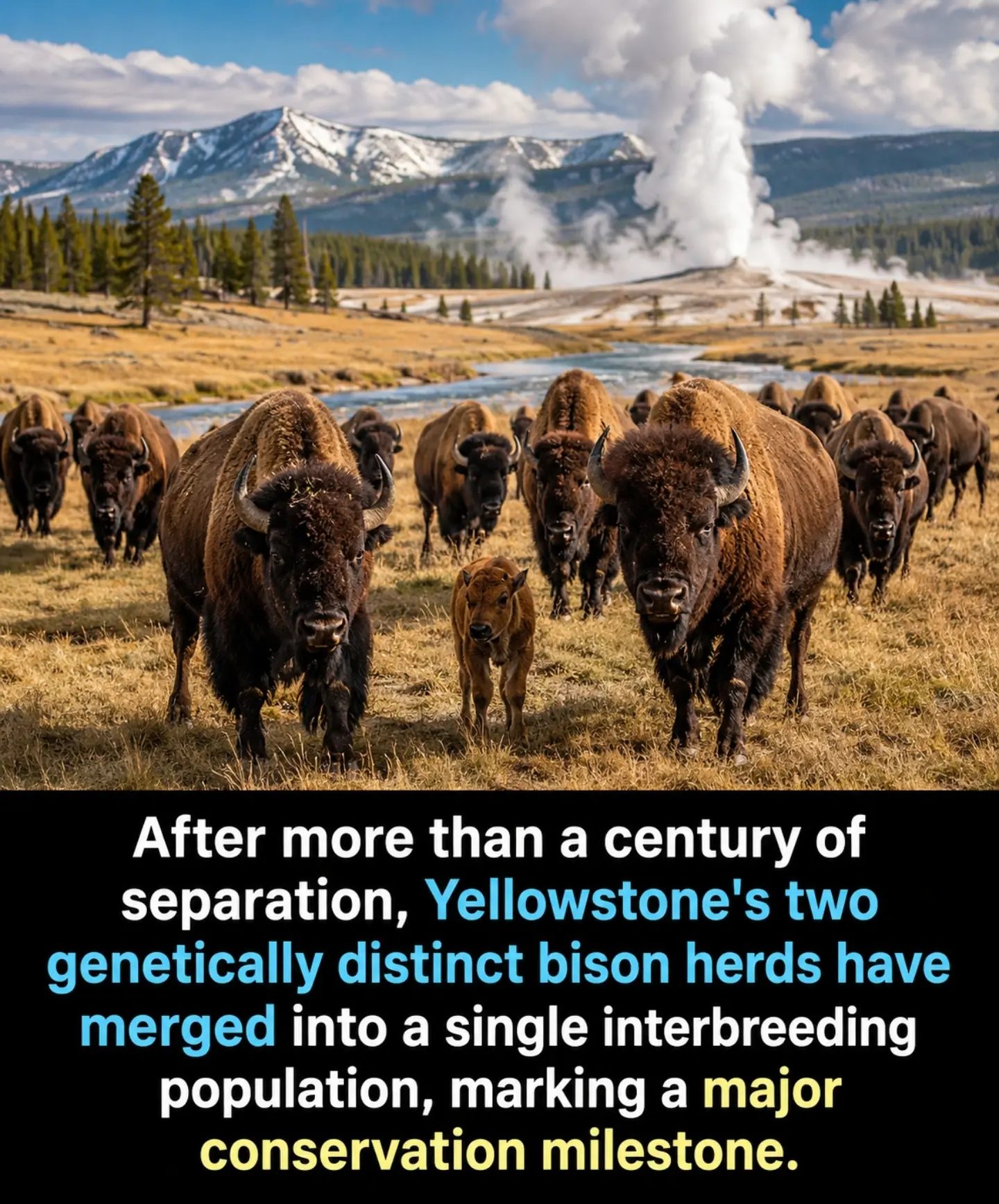
Bison Herd Merger in Yellowstone
After more than a century of separation, the two genetically distinct bison herds in Yellowstone have merged into a single interbreeding population. This significant event marks a major conservation milestone for the park's wildlife management. The merging of these herds represents a crucial step in maintaining genetic diversity and ensuring the long-term survival of the species.
Context / Why this matters
Understanding the implications of this merger requires delving into the history and genetic diversity of Yellowstone's bison. For over a century, two distinct herds have existed within the park: one in the northern range and the other in the central and southern ranges. This separation has led to distinct genetic lineages, each with unique characteristics and adaptations. The reunion of these herds can significantly enhance the overall genetic health of the population, making them more resilient to environmental changes and diseases.
Main discussion
Historical Separation
The historical separation of the two bison herds is rooted in various factors, including human intervention and natural barriers. Initially, the northern herd was established in the 1800s through the relocation of bison from other regions. The central and southern herd, on the other hand, was a remnant of the original bison population that inhabited the park. Over time, these herds evolved independently, leading to genetic differences. The merging of these herds into a single interbreeding population is a testament to the success of Yellowstone's wildlife management strategies.
Genetic Diversity
Genetic diversity is crucial for the survival and adaptability of any species. The merging of the two distinct bison herds is expected to increase the overall genetic diversity of the population. This diversity can enhance the species' resilience to environmental stressors, such as climate change, and reduce the risk of genetic disorders. By combining the unique genetic traits of both herds, the newly merged population can better adapt to future challenges, ensuring the long-term survival of bison in Yellowstone.
Conservation Milestone
This merger is a significant conservation milestone for several reasons. Firstly, it underscores the success of Yellowstone's conservation efforts, demonstrating the park's commitment to preserving biodiversity. Secondly, it highlights the importance of genetic diversity in wildlife management. The merging of these herds is a testament to the park's long-term vision for wildlife conservation. It also serves as a model for other conservation areas, showcasing how careful management can lead to positive outcomes for endangered species.
Practical tips
For those interested in observing and understanding the merging of the bison herds, here are some practical tips:
Visit Yellowstone
Visiting Yellowstone National Park is an excellent way to witness this conservation milestone firsthand. The park offers numerous opportunities to observe bison herds in their natural habitat. During the winter, bison can often be seen grazing in open fields, providing a unique opportunity to see the newly merged herds.
Guided Tours
Guided tours are available for those who want a more in-depth understanding of the park's wildlife and conservation efforts. These tours are led by experienced naturalists who can provide insights into the behavior and history of the bison herds, as well as the significance of their merger.
Educational Resources
Yellowstone National Park offers a wealth of educational resources, including brochures, exhibits, and online materials. These resources can help visitors understand the park's conservation efforts and the importance of genetic diversity in wildlife management. Interactive exhibits and informative displays are available at various visitor centers throughout the park.
Important takeaways
The merging of Yellowstone's two genetically distinct bison herds is a significant event with far-reaching implications for wildlife conservation. This merger underscores the importance of maintaining genetic diversity and highlights the success of Yellowstone's long-term conservation strategies. By increasing genetic diversity, the newly merged population is better equipped to adapt to future challenges, ensuring the long-term survival of the species.
Conclusion
The merger of Yellowstone's two genetically distinct bison herds marks a major conservation milestone. This event highlights the park's commitment to preserving biodiversity and the importance of genetic diversity in wildlife management. By combining the unique genetic traits of both herds, the newly merged population is better equipped to adapt to future challenges, ensuring the long-term survival of the species. Visitors to Yellowstone have the unique opportunity to witness this conservation success story firsthand and gain a deeper understanding of the park's wildlife and conservation efforts.
Watch the Reel
Questions readers ask
What are the two distinct bison herds in Yellowstone?
The two distinct bison herds in Yellowstone are the northern herd and the central and southern herd. These herds have been separated for over a century, leading to unique genetic lineages within each group.
Why is the reunion of Yellowstone's bison herds significant?
The reunion is significant because it increases the genetic diversity of the species. This merger enhances the resilience and adaptability of the bison population, which is crucial for their long-term survival.
What are the benefits of increased genetic diversity in bison herds?
Increased genetic diversity strengthens the overall health of the bison population, making it more resilient to diseases, environmental changes, and other challenges. It also helps maintain a robust and adaptable gene pool for future generations.
How does this merger impact wildlife conservation in Yellowstone?
This merger represents a major milestone in Yellowstone's wildlife conservation efforts. By uniting the herds, conservationists can better manage and protect the bison population, ensuring their continued presence in the park.
What challenges might arise from the bison herd merger?
While the merger has many benefits, it may also present challenges such as potential competition for resources, changes in herd dynamics, and the need for careful management to ensure both herds thrive together. Wildlife managers will need to monitor the situation closely.
How will the merged herd affect tourism in Yellowstone?
The merged herd could enhance tourism by providing more opportunities for visitors to observe these magnificent animals. Visitors to Yellowstone may see more bison in varied locations, offering a richer and more diverse wildlife viewing experience.
What steps are being taken to ensure the success of the merged bison herd?
Yellowstone's wildlife management team is actively monitoring the merged herd to ensure successful integration. This includes tracking the health and behavior of the bison, managing resources, and implementing strategies to maintain the genetic diversity and overall well-being of the population.
Related deep dives
Similar reads based on topic and creator.

Recent articles
Fresh deep dives from the latest Reels we unpacked.



Comments
Be the first to comment.