Inertial Sensors for Precise UAV Navigation
Inertial sensors are crucial for the precise navigation of unmanned aerial vehicles (UAVs). These sensors, including Inertial Measurement Units (IMUs), Attitude and Heading Reference Systems (AHRS), and Global Navigation Satellite System (GNSS) Inertial Navigation Systems (INS), provide accurate orientation, positioning, and flight stability. Xsens, a leading developer in this field, offers high-performance inertial sensors designed for demanding operational environments. Their solutions are known for advanced sensor fusion, compact low Size, Weight, and Power (SWaP) designs, and high rate motion data.
Why This Matters
Inertial sensors are vital for UAVs to navigate autonomously and efficiently. Precise orientation and positioning are essential for tasks such as aerial photography, surveying, and search and rescue missions. The ability to maintain stability in challenging environments ensures that UAVs can complete their missions reliably. Xsens' technology enhances these capabilities, making it a go-to choice for developers seeking to improve their UAVs' performance.
The Xsens Avior: A Closer Look
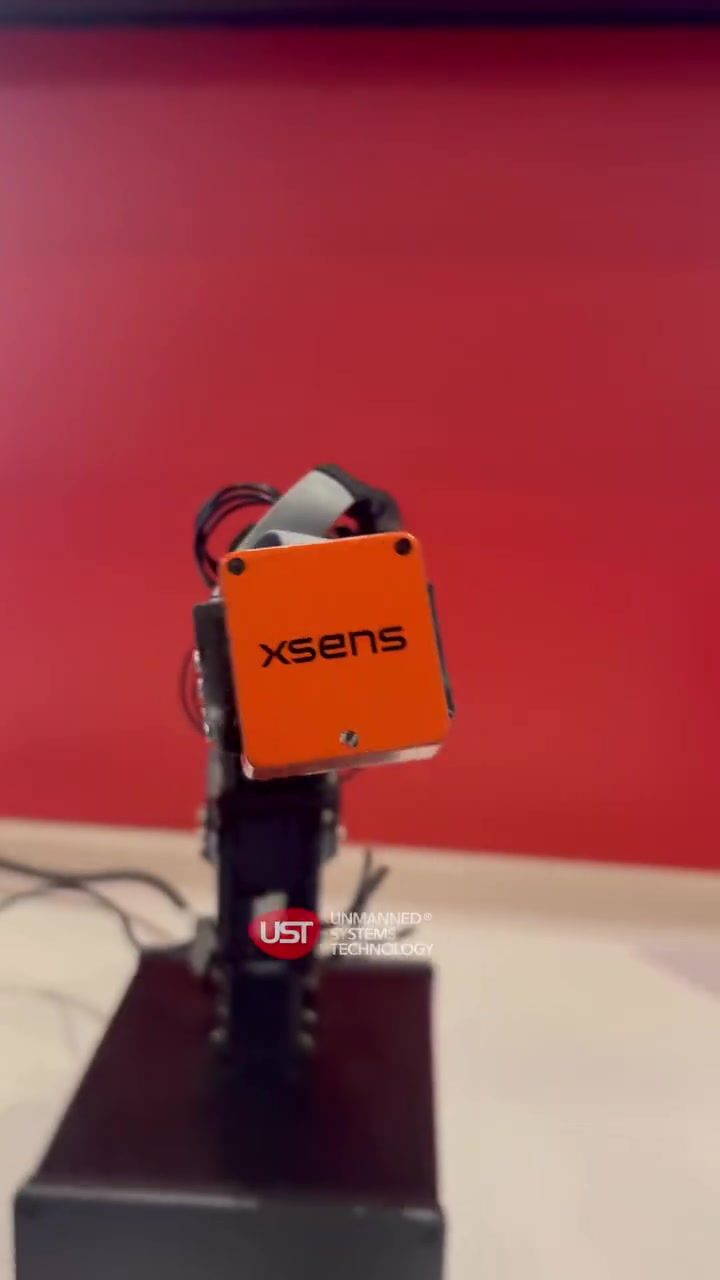
The Xsens Avior is the company's latest product, designed to be integrated onto a Printed Circuit Board (PCB). This OEM sensor is versatile and can be used for various applications, including wave compensation and collecting C data. The Avior is showcased at the top of a robotic arm, demonstrating its real-time data processing capabilities. The sensor collects and displays acceleration, angular velocity, and magnetic field data, which are crucial for providing roll, pitch, and heading outputs.
Integration and Applications
The Avior is designed for seamless integration into existing systems, making it a valuable addition to any UAV setup. Its compact and efficient design means it can be used in small, lightweight vehicles without compromising performance. This makes it ideal for applications that require precise navigation in tight spaces, such as indoor drone operations or precision agriculture.
Advanced Sensor Fusion
One of the key features of Xsens' technology is its advanced sensor fusion. This involves combining data from multiple sensors to provide a more accurate and reliable output. For example, the Avior uses acceleration, angular velocity, and magnetic field data to provide precise orientation and heading information. This fusion of data sources enhances the overall performance and reliability of the UAV.
Key Features of Xsens Inertial Sensors
Compact and Efficient Design
Xsens' sensors are designed with a focus on compactness and efficiency. The low SWaP design means they consume minimal power and space, making them ideal for small UAVs. This is particularly important for applications where weight and size are critical, such as in portable or handheld devices.
High Rate Motion Data
The high rate of motion data ensures that the sensors can capture and process data in real-time, providing immediate and accurate feedback. This is essential for applications where rapid responses are required, such as in autonomous navigation or real-time obstacle avoidance.
Reliability in Demanding Environments
Xsens' sensors are built to withstand harsh conditions, making them reliable in demanding operational environments. This includes extreme temperatures, high vibrations, and other challenging conditions that can affect the performance of less robust sensors.
Practical Tips for Using Inertial Sensors
-
Choose the Right Sensor: Select a sensor that matches the specific needs of your application. Different sensors have different capabilities, so it's important to choose one that provides the necessary data and accuracy.
-
Proper Calibration: Ensure that your sensor is properly calibrated before use. Calibration helps to eliminate errors and improve the accuracy of the data.
-
Regular Maintenance: Regularly inspect and maintain your sensors to ensure they are functioning correctly. This includes checking for any physical damage, ensuring proper connectivity, and updating firmware as needed.
-
Integration with Other Systems: Integrate your inertial sensors with other systems, such as GNSS, to enhance overall performance. This allows for more accurate positioning and navigation.
-
Data Processing: Use advanced data processing techniques to analyze and interpret the data collected by your sensors. This can involve sensor fusion, data filtering, and other methods to improve accuracy and reliability.
Important Takeaways
- Xsens offers high-performance inertial sensors designed for precise UAV navigation.
- The Xsens Avior is a versatile OEM sensor that can be integrated into various systems.
- Advanced sensor fusion and high rate motion data improve the accuracy and reliability of the sensors.
- Proper calibration, regular maintenance, and integration with other systems are key to maximizing the performance of inertial sensors.
Conclusion
Inertial sensors are essential for the precise navigation of UAVs, and Xsens' high-performance solutions provide the accuracy and reliability needed for demanding applications. By integrating their sensors, developers can enhance the performance, control, and reliability of their UAVs, ensuring they can complete missions effectively in challenging environments.
Watch the Reel
Questions readers ask
What is the primary function of the Xsens Avior sensor in UAVs?
The Xsens Avior is designed to enhance the precision of robotic navigation in UAVs by providing accurate orientation and stability. It uses advanced sensor fusion and real-time data processing to ensure reliable performance in challenging environments.
How does the Xsens Avior improve UAV navigation?
The Xsens Avior improves UAV navigation through its advanced inertial sensor technology. It offers precise orientation and stability, which are crucial for autonomous flight and efficient operation in various conditions.
What types of inertial sensors are typically used in UAVs?
UAVs commonly use several types of inertial sensors, including Inertial Measurement Units (IMUs), Attitude and Heading Reference Systems (AHRS), and Global Navigation Satellite System (GNSS) Inertial Navigation Systems (INS). These sensors work together to provide accurate positioning and stability.
What is sensor fusion technology and how does it apply to the Xsens Avior?
Sensor fusion technology combines data from multiple sensors to provide a more accurate and comprehensive view of the environment. In the Xsens Avior, this technology is used to integrate data from various sources, enhancing the precision of orientation and stability for UAVs.
Why is real-time data processing important for UAV navigation?
Real-time data processing is essential for UAV navigation as it allows for immediate adjustments and responses to changing conditions. This ensures that the UAV can maintain stability and accuracy in its flight path, even in dynamic and unpredictable environments.
What are the benefits of using Xsens Avior for UAVs?
The Xsens Avior offers several benefits for UAVs, including improved precision, enhanced stability, and reliable performance in demanding operational environments. Its advanced technology ensures that UAVs can navigate autonomously and efficiently, making it a valuable tool for robotic precision systems.
How does the Xsens Avior contribute to robotic stability systems?
The Xsens Avior contributes to robotic stability systems by providing highly accurate orientation and positioning data. This data is crucial for maintaining the stability of UAVs, allowing them to navigate smoothly and respond effectively to environmental changes, even in challenging conditions.
Related deep dives
Similar reads based on topic and creator.


Recent articles
Fresh deep dives from the latest Reels we unpacked.




Comments
Be the first to comment.