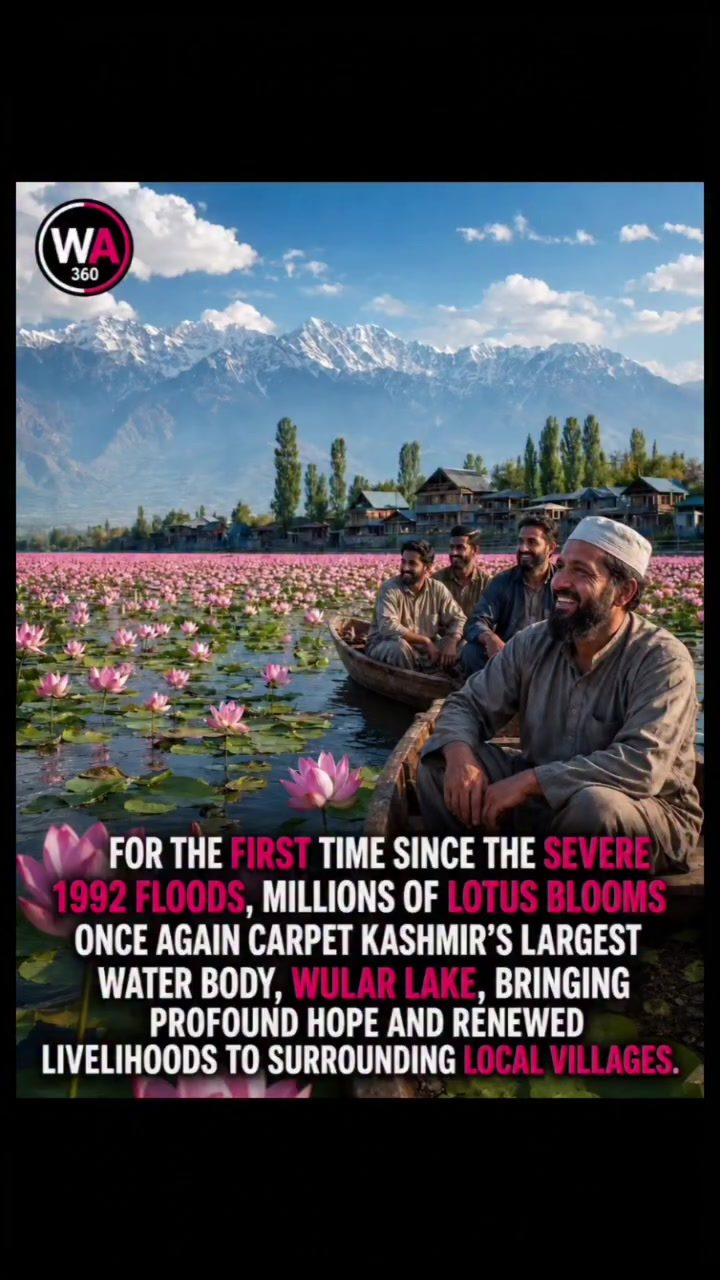
Wular Lake’s Lotus Blooms: A Symbol of Resilience and Renewal
Wular Lake, located in Kashmir, has recently become a breathtaking sight with millions of lotus flowers carpeting its surface. This natural phenomenon, occurring for the first time in 33 years, has transformed the lake into a vast sea of pink, bringing profound hope and renewed livelihoods to the surrounding local villages. The resurgence of the lotus blooms is a testament to nature's resilience and the success of conservation efforts in the region.
Why This Matters
The return of the lotus blooms to Wular Lake is significant for several reasons. Firstly, it highlights the lake's historical and ecological importance. Once the largest freshwater lake in Kashmir, Wular Lake has faced numerous challenges, including severe floods in 1992, which buried much of the lake's natural ecosystem under silt. The reappearance of the lotus flowers signals a vital step towards the lake's ecological restoration.
Secondly, the blooms bring renewed hope and livelihoods to the local communities that depend on the lake. Local villagers can once again engage in activities such as fishing and tourism, which were severely disrupted by the floods. The lake's restoration not only supports the local economy but also fosters a sense of community pride and environmental stewardship.
The Resilience of Nature
The lotus blooms serve as a powerful symbol of nature's resilience in the face of adversity. Despite the devastating floods of 1992, which buried the lake under silt, the lake's ecosystem has shown remarkable recovery. The lotus flowers, which had been absent for over three decades, have returned en masse, transforming the lake into a vibrant and picturesque landscape.
This natural comeback is a testament to the resilience of the lake's ecosystem and the potential for natural systems to recover from significant disturbances. The lotus blooms are a living example of how nature can find its way back, given the right conditions and conservation efforts.
Conservation Success
The return of the lotus blooms is also a success story for conservation efforts in the region. Over the years, various initiatives have been undertaken to restore Wular Lake to its former glory. These efforts include desilting the lake, promoting sustainable fishing practices, and implementing measures to protect the lake's biodiversity. The reappearance of the lotus flowers is a testament to the effectiveness of these conservation efforts and the positive impact they have had on the lake's ecosystem.
Practical Tips for Enriching Local Tourism
Wular Lake Tours
Tour operators offering boat rides on the lake should capitalize on the lotus bloom spectacle. Guided tours can provide visitors with insights into the lake's history, ecology, and the significance of the lotus blooms. Special tours during the blooming season can attract nature enthusiasts and photographers, boosting local tourism revenue.
Local Craft and Cuisine
Local artisans and chefs should take advantage of the increased tourism by showcasing their crafts and culinary skills. Workshops and demonstrations of traditional crafts, as well as local cuisine, can enhance the visitor experience and provide additional economic opportunities for the community.
Community Involvement
Local communities can play a significant role in promoting ecotourism. Hosting local festivals and events around the lotus blooms can create a unique cultural experience for visitors, fostering a deeper appreciation for the area's natural and cultural heritage. Community-driven initiatives can also ensure that tourism benefits are shared equitably among residents.
Environmental Education
Educational programs focusing on the significance of the lotus blooms and the importance of conservation can be introduced. Schools and local organizations can collaborate to develop educational materials and activities that teach visitors and residents about the lake's ecology and the need for sustainable practices.
Important Takeaways
The resurgence of the lotus blooms in Wular Lake offers several important lessons:
- Nature's Resilience: The lake's ecosystem has shown remarkable resilience, recovering from significant disturbances like floods and demonstrating the potential for natural systems to bounce back.
- Conservation Efforts: The return of the lotus blooms highlights the success of conservation initiatives. These efforts are crucial for maintaining and restoring natural ecosystems.
- Community Benefit: The blooms not only enhance the lake's beauty but also bring economic benefits to local communities, supporting livelihoods and fostering a sense of environmental stewardship.
- Tourism Potential: The natural phenomenon provides an opportunity to promote ecotourism, attracting visitors and boosting local economies. This can also be an avenue to engage visitors in conservation efforts and environmental education.
The current bloom season offers a unique opportunity to appreciate the beauty and resilience of nature. It also serves as a reminder of the importance of conservation and the potential for natural ecosystems to recover from significant disturbances.
Conclusion
The return of lotus blooms to Wular Lake is a remarkable story of resilience and renewal. It underscores the importance of conservation efforts and the potential for natural ecosystems to recover from severe disturbances. The blooms not only add to the lake's natural beauty but also bring economic benefits to local communities, fostering a sense of pride and environmental stewardship. As the lake continues to flourish, it serves as a beacon of hope for sustainable conservation and the restoration of natural habitats.
Watch the Reel
Questions readers ask
Why is the lotus bloom in Wular Lake significant?
The lotus bloom in Wular Lake is significant because it marks the first time in 33 years that the lake has witnessed such a spectacle, indicating a successful ecological restoration. The bloom also brings hope and renewed livelihoods to the local villagers who rely on the lake.
What challenges has Wular Lake faced in the past?
Wular Lake has faced numerous issues, including severe floods in 1992 and environmental degradation. The lake's ecological importance and historical significance have been at risk due to various factors affecting its health.
How does the lotus bloom impact the local villages around Wular Lake?
The lotus bloom has brought renewed hope and livelihoods to the local villages. It has transformed the lake into a breathtaking sight, attracting visitors and potentially boosting local tourism and economy.
What is the Largest lotus bloom in Kashmir?
The largest lotus bloom in Kashmir is currently at Wular Lake. It consists of millions of lotus flowers blooming across the surface, showcasing a vast sea of pink. This is a result of the lake's ecological restoration and resilience.
What conservation efforts have contributed to the return of the lotus blooms at Wular Lake?
The return of the lotus blooms is a testament to the success of various conservation efforts in the region. These efforts have focused on restoring the lake's ecological health and addressing past challenges such as floods and environmental degradation.
What is the significance of the Mahav garden in relation to Wular Lake?
The Mahav garden is significant to Wular Lake because it is a part of the region's natural beauty and contributes to the overall ecological health of the area. The garden, along with the lotus blooms, highlights the natural splendor of Kashmir and the successful ecological restoration efforts.
Related deep dives
Similar reads based on topic and creator.



Recent articles
Fresh deep dives from the latest Reels we unpacked.




Comments
Be the first to comment.