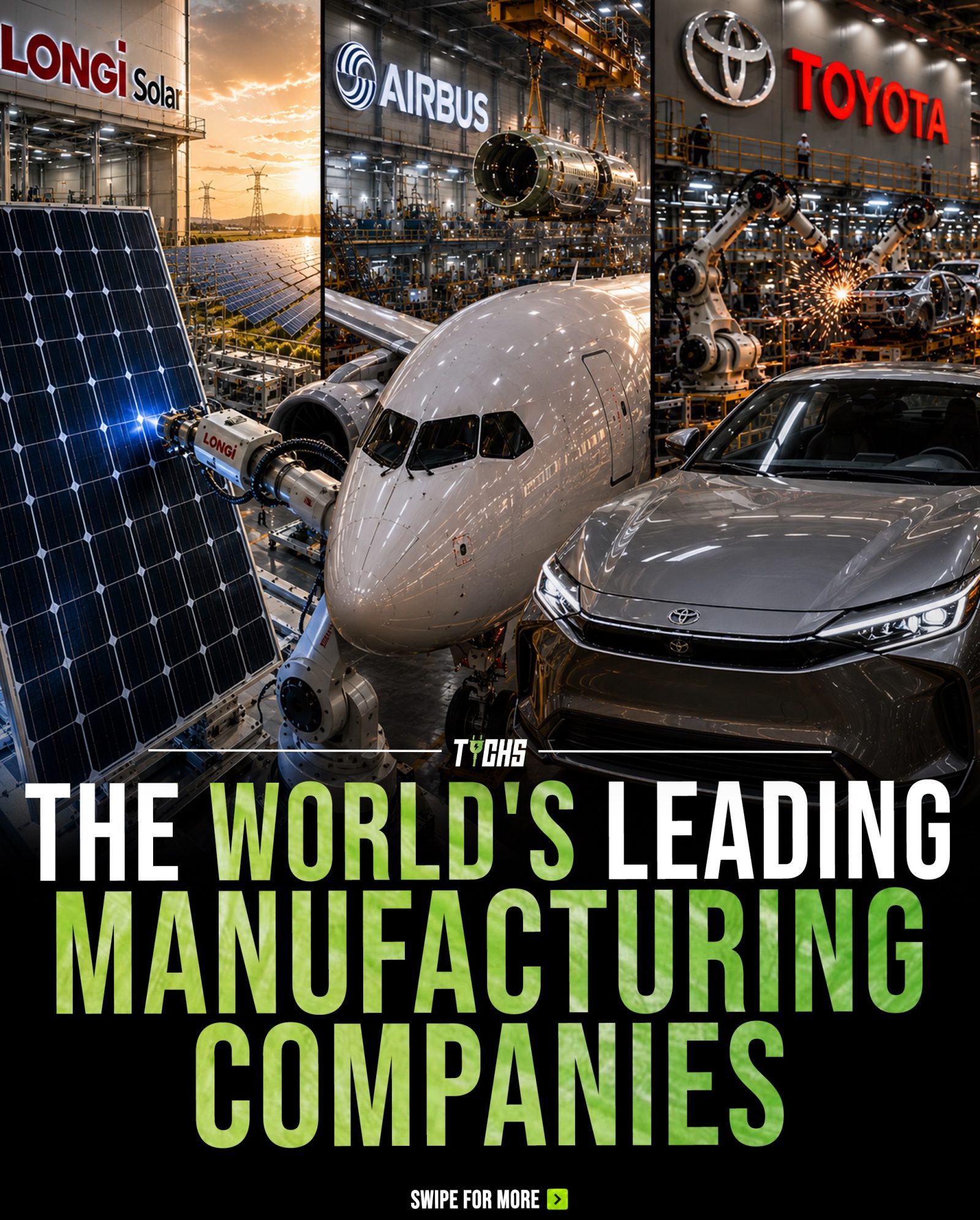
Manufacturing: The Engine of Modern Technology
Manufacturing is the backbone of the technologies that define our daily lives, from the cars we drive and the smartphones we use to the aircraft that transport us and the solar panels that power our homes. Companies like Toyota, Samsung, Airbus, TSMC, BYD, CATL, DJI, and LONGi are at the forefront of this industrial revolution, driving innovation, scaling production, and setting industry standards.
Why This Matters
Behind every major technological breakthrough, there is a world-class manufacturing process. These companies shape everything from transportation and energy to consumer electronics and advanced technology, making them some of the most important industrial forces driving the future.
Industry Leaders in Action
Automotive Innovation: Toyota
Toyota is a global leader in automotive manufacturing, renowned for its commitment to innovation and quality. The company's factories are a testament to the scale and precision of modern manufacturing. Robotics and automated systems are integral to Toyota's production lines, ensuring consistent quality and efficiency. Toyota's relentless pursuit of technological advancements has made it a benchmark in the automotive industry, influencing everything from vehicle design to manufacturing techniques.
Aerospace Excellence: Airbus
Airbus is a pioneering force in the aerospace industry, shaping modern aviation with its cutting-edge aircraft manufacturing. The company's facilities showcase the complexity and precision of aircraft assembly. From the assembly of the fuselage to the installation of intricate electronic systems, Airbus's manufacturing processes are a marvel of engineering. The company's expertise in aviation has set industry standards, driving innovation in aircraft design and manufacturing.
Energy Innovation: CATL
CATL is a trailblazer in battery technology, powering the future with its innovative manufacturing processes. The company's plants are equipped with state-of-the-art robotic systems that assemble battery packs with unparalleled precision. CATL's focus on innovation has positioned it as a leader in the energy sector, driving advancements in battery technology and sustainable energy solutions. The company's commitment to research and development ensures that it stays at the forefront of energy innovation, contributing to a greener and more sustainable future.
Solar Power: LONGi
LONGi is a key player in the renewable energy sector, specializing in solar panel manufacturing. The company's state-of-the-art facilities produce high-efficiency solar panels that harness the power of the sun. LONGi's manufacturing processes are designed to maximize energy output while minimizing environmental impact, making it a leader in sustainable technology. The company's commitment to innovation and quality has positioned it as a global leader in the solar energy industry, driving advancements in renewable energy solutions.
The Role of Automation
Automation plays a crucial role in modern manufacturing, enabling companies to produce high-quality products at scale. Robotics, automated systems, and advanced manufacturing techniques are essential for achieving the precision and efficiency required in industries like automotive, aerospace, and energy. These technologies not only enhance productivity but also ensure consistency and reliability in manufacturing processes, driving innovation and setting industry standards.
Practical Tips for Investing in Manufacturing
1. Prioritize Innovation
Investing in research and development is crucial for staying competitive in the manufacturing sector. Companies that prioritize innovation are more likely to drive advancements in their respective industries, setting new standards and staying ahead of the curve. By fostering a culture of innovation, companies can develop cutting-edge technologies and manufacturing processes that set them apart from the competition.
2. Embrace Automation
Automation is a key driver of efficiency and precision in manufacturing. Companies should invest in automated systems and robotics to enhance their production capabilities. Embracing automation not only improves productivity but also ensures consistency and reliability in manufacturing processes, enabling companies to meet the demands of a rapidly evolving market.
3. Focus on Sustainability
Sustainability is becoming an increasingly important consideration in manufacturing. Companies that prioritize sustainable practices are better positioned to meet the growing demand for environmentally friendly products. By investing in renewable energy solutions and implementing sustainable manufacturing processes, companies can reduce their environmental impact while driving innovation in their respective industries.
4. Set Industry Standards
Setting industry standards is essential for maintaining a competitive edge in manufacturing. Companies that lead in their respective industries are often at the forefront of setting new benchmarks for quality, efficiency, and innovation. By staying ahead of industry trends and driving advancements in manufacturing, companies can establish themselves as leaders in their fields, influencing everything from production techniques to product design.
Important Takeaways
Manufacturing is the driving force behind the technologies that shape our world. Companies like Toyota, Airbus, CATL, and LONGi are at the forefront of this industrial revolution, driving innovation and setting industry standards. Their commitment to precision, efficiency, and sustainability ensures that they remain leaders in their respective fields, shaping the future of technology and manufacturing.
Conclusion
Manufacturing companies like Toyota, Airbus, CATL, and LONGi are shaping the technologies we use every day. Their commitment to innovation, precision, and sustainability makes them some of the most important industrial forces driving the future. By investing in automation, prioritizing innovation, and setting industry standards, these companies are at the forefront of the manufacturing revolution, driving advancements in sectors ranging from automotive and aerospace to renewable energy and consumer electronics.
Watch the Reel
Questions readers ask
Who are some of the leading manufacturing companies globally?
Some of the leading manufacturing companies globally include Toyota, Airbus, CATL, Samsung, TSMC, BYD, DJI, and LONGi. These companies are known for their innovative processes and significant contributions to various industries, from automotive and aerospace to electronics and energy.
What makes Toyota a standout in the manufacturing industry?
Toyota is renowned for its innovation in the automotive industry, particularly through its pioneering work in lean manufacturing and continuous improvement processes. The company's commitment to quality and efficiency has set industry benchmarks that many other manufacturers strive to achieve.
How does Airbus contribute to the global manufacturing landscape?
Airbus is a key player in the aerospace industry, known for its advanced aircraft production processes. The company's innovative manufacturing techniques and commitment to sustainability have positioned it as a leader in the global market, setting standards for efficiency and quality in aviation.
What role does CATL play in the energy sector?
CATL is at the forefront of battery technology, particularly in the development of advanced energy solutions. The company's innovations in battery manufacturing have significantly impacted the electric vehicle market and the broader energy industry, driving progress in sustainable energy storage and usage.
What are some of the latest global manufacturing trends?
Current global manufacturing trends include a strong focus on automation and artificial intelligence, a shift towards sustainable and eco-friendly practices, and the integration of advanced technologies like 3D printing and IoT. These trends are reshaping industrial processes and product innovation across various sectors.
What can we learn from the product innovation strategies of leading manufacturing companies?
Leading manufacturing companies emphasize a combination of cutting-edge technology, continuous improvement, and consumer-centric design. By closely monitoring market trends and consumer needs, these firms ensure their products remain relevant and competitive, thereby influencing the broader industry.
Recent articles
Fresh deep dives from the latest Reels we unpacked.




Comments
Be the first to comment.