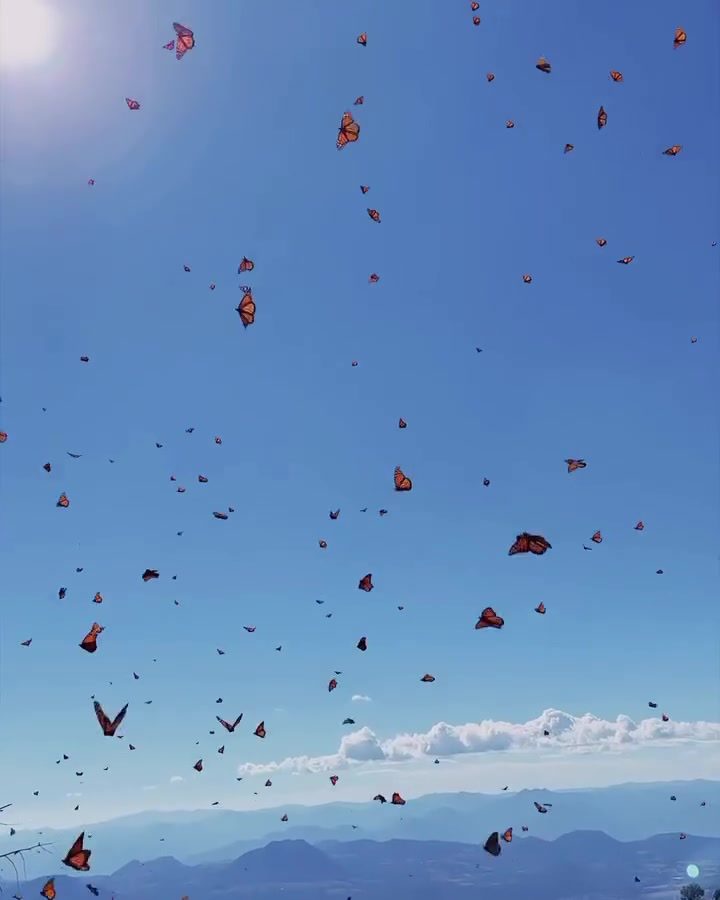
Monarch butterflies are known for their stunning beauty and remarkable migratory journeys. Every year, these delicate creatures undertake one of the most extraordinary migrations in the natural world, traveling thousands of miles between their breeding grounds in Canada and the United States to their overwintering sites in Mexico.
Why this Matters
Understanding the monarch butterfly migration is crucial for several reasons. Firstly, it sheds light on the intricate ecological relationships that exist within nature. Monarchs rely on specific plants, such as milkweed, for food and habitat, making their survival a barometer of ecosystem health. Secondly, their migration serves as a fascinating example of biological navigation and endurance.
The Magnificence of the Monarch Migration
A Spectacle of Nature
The sight of thousands of monarch butterflies in flight is truly breathtaking. Against a backdrop of bright blue skies, scattered clouds, and distant mountains, the butterflies create a moving tapestry of orange and black. This aerial ballet is not just visually stunning but also a testament to the monarch's incredible navigational abilities. Using a combination of the Earth's magnetic field and celestial cues, these butterflies can travel thousands of miles with remarkable precision.
The Journey
The monarch butterfly migration is a multi-generational journey. No single butterfly completes the entire round trip. Instead, it takes four generations of monarchs to make the journey from Canada to Mexico and back. The first generation emerges in the spring and lays eggs in the northern United States. The second generation then continues the journey northward, followed by the third generation, which starts the journey southward. The fourth generation, known as the "Methuselah generation," is the one that migrates to Mexico and overwinters there. These butterflies can live up to nine months, much longer than the typical two to six weeks of other generations.
Habitat and Behavior
Monarch butterflies are not just migrants; they are also highly social creatures. During their journey, they often cluster together on tree branches, forming dense colonies. These clusters provide protection from predators and help regulate body temperature. The footage of monarchs clustered on branches showcases their social behavior and the intricate patterns on their wings, making for a visually captivating scene.
The Life Cycle of a Monarch Butterfly
To fully appreciate the monarch butterfly migration, it's essential to understand their life cycle. Monarchs go through four distinct stages: the egg, the larva (caterpillar), the pupa (chrysalis), and the adult butterfly.
Egg
The life cycle begins when an adult monarch lays its eggs on the underside of milkweed leaves. Each female can lay up to 400 eggs in her lifetime. The eggs are tiny, about the size of a pinhead, and are usually laid singly.
Larva
Within a few days, the eggs hatch into larvae, commonly known as caterpillars. These caterpillars are voracious eaters, consuming milkweed leaves almost continuously. This diet not only provides nourishment but also makes the caterpillars toxic to predators, thanks to the milkweed's natural defenses.
Pupa
After about two weeks, the caterpillar enters the pupa stage, forming a chrysalis. Inside this protective shell, the caterpillar undergoes a remarkable transformation, emerging as an adult butterfly.
Adult
The adult butterflies emerge from the chrysalis, ready to mate and begin the next generation. Adult monarchs have a lifespan of two to six weeks, except for the Methuselah generation, which can live up to nine months.
Practical Tips for Observing Monarch Butterflies
Observing monarch butterflies can be a rewarding experience. Here are some practical tips to help you get the most out of your monarch-watching adventures:
Choose the Right Time
The best time to observe monarch butterflies is during their peak migration periods. In the fall, monarchs migrate southward, and you can often see them congregating in large numbers in certain areas. In the spring, they begin their journey back north, providing another opportunity to witness this natural phenomenon.
Locate Key Sites
Monarch butterflies have specific routes and overwintering sites. Some popular locations for viewing monarchs include the Monarch Butterfly Biosphere Reserve in Mexico, the Monarch Butterfly Sanctuary in California, and various migratory stopover sites in the United States.
Use Binoculars
Binoculars can enhance your viewing experience, allowing you to get a closer look at the butterflies without disturbing them. Choose a pair with good magnification and clarity to fully appreciate the details of their wings and behavior.
Important Takeaways
The monarch butterfly migration is a delicate balance of biology, ecology, and environmental conditions. Here are some key takeaways:
Conservation Efforts
Monarch butterflies face numerous threats, including habitat loss, pesticide use, and climate change. Conservation efforts are crucial to ensure the survival of these remarkable creatures. Planting milkweed, creating butterfly gardens, and supporting organizations that protect monarch habitats are all effective ways to contribute to their conservation.
Ecological Significance
The monarch butterfly migration highlights the interconnectedness of ecosystems. Monarchs rely on specific plants and environmental conditions, making their presence an indicator of overall ecosystem health. Protecting monarchs means protecting a wide range of species and habitats.
Conclusion
The monarch butterfly migration is a natural wonder that showcases the beauty and resilience of these remarkable creatures. From their awe-inspiring flight patterns to their intricate life cycle, monarchs offer a wealth of insights into the natural world. By understanding and appreciating their journey, we can better protect these iconic butterflies and the ecosystems they depend on.
Watch the Reel
Questions readers ask
When is the best time to see monarch butterflies during their migration?
The best time to see monarch butterflies during their migration varies by location. In the eastern United States, peak migration typically occurs from late August to early October. In the western United States, the migration can be seen from September to November. For those in Mexico, the overwintering sites are most spectacular from November to March.
What is the monarch butterfly flight like during migration?
The monarch butterfly flight during migration is a sight to behold. These butterflies travel up to 50 miles a day, and during peak migration, thousands of monarchs can be seen filling the sky, creating a mesmerizing display of orange and black against the blue sky. The journey involves continuous flight with periodic stops for nectar and rest.
How can I find monarch butterfly clusters during migration?
Monarch butterfly clusters can often be found in specific roosting sites along their migration routes. These sites are typically in protected areas with mild temperatures and shelter from the wind. In the United States, these clusters can often be found in trees, especially in forests and parks. In Mexico, the monarchs cluster in specific mountain sites, such as the Monarch Butterfly Biosphere Reserve.
What should I expect from a monarch butterfly migration experience?
A monarch butterfly migration experience is both awe-inspiring and humbling. Witnessing thousands, and sometimes millions, of butterflies in flight or clustered in trees is a sight that leaves a lasting impression. It's an opportunity to appreciate the natural world's wonders and the incredible journey these insects undertake.
Are there any notable monarch butterfly migration events or viewings?
There are several notable monarch butterfly migration events. The Monarch Butterfly Biosphere Reserve in Mexico is a UNESCO World Heritage Site and a must-visit for witnessing large clusters of monarchs. In the United States, the Monarch Watch and Journey North programs offer resources and events for viewing and tracking butterflies. Recently, several monarch migration festivals and celebrations have been organized in various locations across the U.S. and Mexico.
How can I capture the beauty of the monarch butterfly migration in photos?
Capturing the beauty of the monarch butterfly migration in photos involves being in the right place at the right time. Use a wide-angle lens to capture the vastness of the butterfly swarms against the backdrop of distant mountains or clear blue skies. A telephoto lens can help you zoom in on clusters of butterflies or individual specimens in flight. Patience and timing are key, as monarchs are most active in the early morning and late afternoon.
What is the significance of the monarch butterfly migration journey?
The monarch butterfly migration journey is a testament to the resilience and navigational prowess of these insects. It's a multi-generational journey that spans thousands of miles, guided by an innate sense of direction and environmental cues. The migration highlights the interconnectedness of ecosystems and the importance of preserving habitats along the butterfly migration route.
Related deep dives
Similar reads based on topic and creator.




Recent articles
Fresh deep dives from the latest Reels we unpacked.




Comments
Be the first to comment.