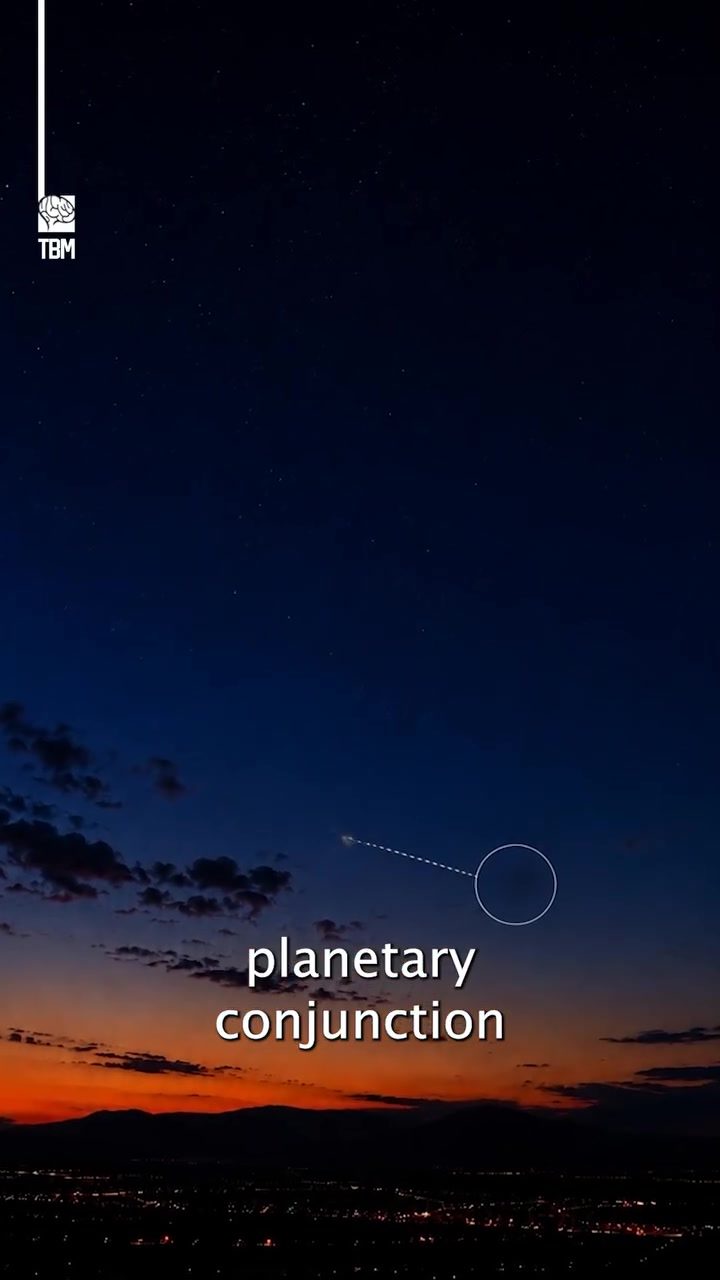
Tonight's Rare Planetary Alignment
Mercury, Venus, and Jupiter are putting on a show for stargazers.
Why this matters
This isn't just another night sky sight. The planets are appearing clustered in the evening sky. This alignment is a rare celestial event that offers a unique opportunity for observation.
The specifics of the planetary alignment
This event is a planetary conjunction, specifically between Mercury, Venus, and Jupiter. These planets will appear clustered along the ecliptic, the plane of the solar system where the planets orbit the Sun. However, this alignment is not a true physical gathering of the planets. It is a line of sight effect created by the Earth's viewing angle.
The alignment features Venus as the dominant planet due to its high reflectivity. Jupiter, the second brightest object in the grouping, is also prominently visible. Mercury, usually difficult to observe due to its proximity to the Sun, will also be visible during this event.
Why Mercury, Venus, and Jupiter?
Venus
Venus will dominate the scene. Known as the "evening star," Venus is the brightest natural object in the night sky after the Moon. Its high reflectivity makes it a standout in this planetary trio, shining brightly in the western sky after sunset.
Jupiter
Jupiter, the largest planet in our solar system, is the second brightest object in this grouping. Its immense size and the reflection of sunlight off its cloud tops make it easily visible to the naked eye. Jupiter's four largest moons—Io, Europa, Ganymede, and Callisto—may also be visible with binoculars or a small telescope.
Mercury
Mercury is the smallest and innermost planet in the solar system. It's usually difficult to observe due to its proximity to the Sun, but during this alignment, it will be visible. Mercury's close orbit to the Sun means it appears low in the sky and sets soon after the Sun, making tonight's observation a rare opportunity.
What does this mean for stargazers?
This planetary alignment offers a striking demonstration of celestial mechanics. It's a great chance for stargazers to observe these planets together. The event is a visual reminder of the dynamic nature of our solar system and the intricate dance of the planets.
Practical tips
To observe this event, find a location with a clear view of the western horizon. The planets will be visible in the evening sky, so you should have a good view right after sunset. Binoculars or a small telescope can enhance the viewing experience, but the planets should be visible to the naked eye.
Timing
The planetary alignment will be visible in the evening sky. The best time to observe is just after sunset, when the sky is dark enough for the planets to be visible, but the planets are still high enough in the sky to be easily seen.
Location
Find a location with a clear view of the western horizon. A dark sky location, away from city lights, will provide the best viewing conditions. If you're in an urban area, try to find an elevated spot or an open space where you can get a clear view of the horizon.
Important takeaways
This planetary alignment is a unique opportunity to observe three planets together. It's a great chance to learn about the planets and their orbits. The event is a visual reminder of the dynamics of our solar system and the intricate dance of the planets.
Conclusion
Don't miss out on this rare celestial event. Mercury, Venus, and Jupiter are putting on a show for stargazers.
Watch the Reel
Questions readers ask
What is a planetary conjunction and why is it significant?
A planetary conjunction occurs when two or more planets appear close together in the sky as viewed from Earth. This event is significant because it provides a unique opportunity to observe multiple planets at once, with the added benefit of Mercury, Venus, and Jupiter all being visible.
Why is Mercury usually hard to spot in the sky?
Mercury is usually difficult to observe because it is the closest planet to the Sun. This proximity means it is often obscured by the Sun's glare, making it hard to see from Earth.
What makes Venus stand out in this conjunction?
Venus will be the most prominent planet in this conjunction due to its high reflectivity, which makes it appear very bright. Its brightness will help guide viewers to spot Mercury and Jupiter as well.
At what time of day will the conjunction be visible?
The conjunction will be visible in the evening sky, shortly after sunset. This is the best time to look for the alignment, as the planets will be above the horizon and the sky will be dark enough to see them.
Do the planets actually come close to each other during a conjunction?
No, during a conjunction the planets do not actually come close to each other in physical space. The alignment is a line-of-sight effect created by the Earth's viewing angle, making them appear clustered together.
Which direction should I look to see the planets?
To see Mercury, Venus, and Jupiter, look towards the western horizon after sunset. The planets will be aligned along the ecliptic, the plane where the planets orbit the Sun.
How often does a conjunction of Mercury, Venus, and Jupiter occur?
Conjunctions involving Mercury, Venus, and Jupiter are relatively rare. They occur infrequently, making this a special event for stargazers to observe and enjoy.
Related deep dives
Similar reads based on topic and creator.




Recent articles
Fresh deep dives from the latest Reels we unpacked.




Comments
Be the first to comment.