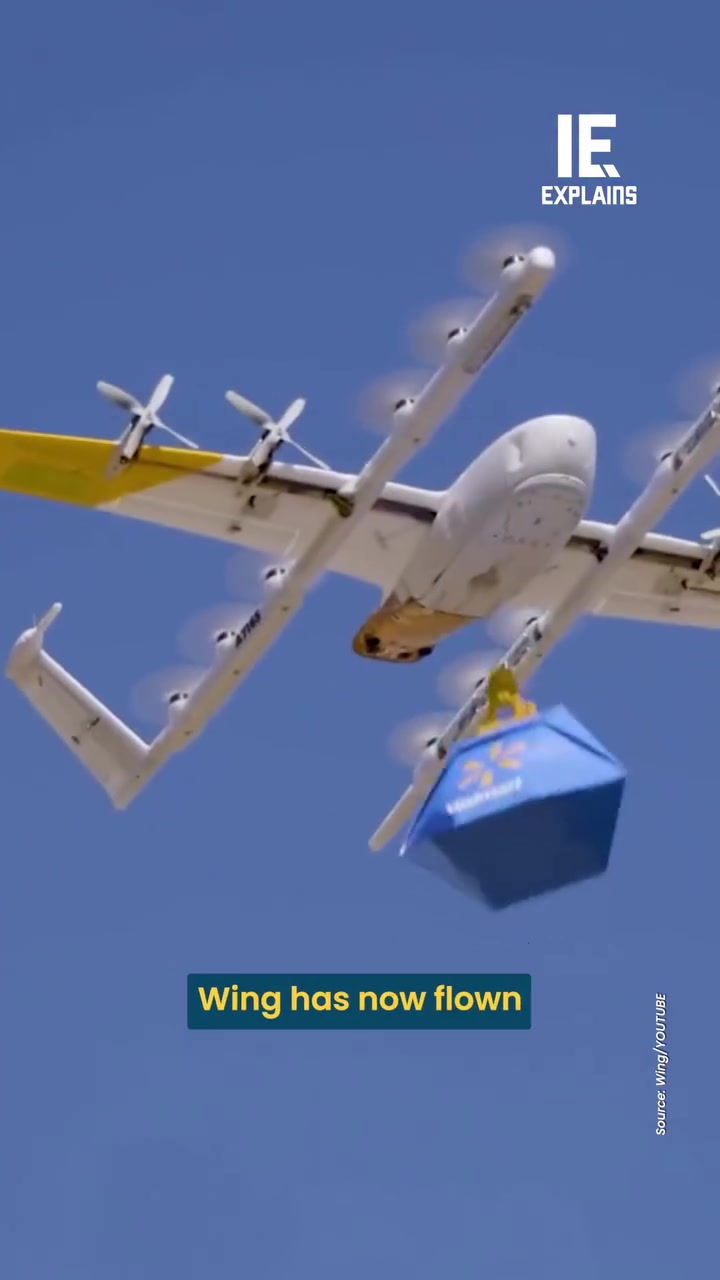
Drone delivery is not a novelty anymore. Alphabet’s Wing recently hit the milestone of over a million commercial deliveries in the US. The drone involves steps worthy of a choreographed dance.
Aerial Cosmic Hopscotch
Alphabet's Wing drone delivery system is a hybrid, with fixed wings like a plane and rotors like a helicopter. The drone has a wingspan under 1.5 meters. The drone consists of two motor sets: one to lift it vertically and another to push it forward, saving energy for efficient cruising. The drone performs its choreographed arial ballet of vertical takeoff and hover at 23 feet, lowering packages on a tether. This process is taking over the boring act of drone ground delivery. The drone system carries packages up to 2.5 pounds, with the newer model carrying up to five pounds. The drone can deliver to 40 million Americans. Store staff load the order onto a curbside auto loader that fits into a single parking space. The drone rotates the box and maintains a safe, level distance of 23 feet. This reduces the likelihood of injury.
Drone Delivery in the Race for Speed
Drone delivery is a microcosm of a much larger shift in tech-driven logistics. While other delivery innovations focus on smaller scale deliveries a la Amazon delivery cars, Alphabet's Wing drone delivery system is expanding to 270 locations by 2027 across the US. This is a gleam from a future where the drone delivery infrastructure, like traffic lights and roads, defines technology-enabled urban landscapes. The new FAA Part 108 also signals the future, as it protects against potential risks with a standardized rule book. As the Federal Aviation Administration (FAA) and drone companies like Wing extend the technology and the infrastructure required for drones to safely navigates cities, drones are evolving into modern-day delivery couriers.
Novel Vertical Takeoff
The drone's hybrid setup has a vertical takeoff and landing system to lift off and land without the need for a fixed runway or tethered platforms. The drone takes off and lands like a helicopter and flies forward like an airplane. The drone, with a wingspan of under 1.5 meters, can carry a standard payload of up to 2.5 pounds.
Where & How Drone Delivery Warehouses Work
Loading is the clever part. Store staff hook the order onto a curbside auto loader that fits in a single parking space. The drone arrives overhead, winches the box up while the shopkeeper is preoccupied with the next package, and it leaves — without any human handoff. The open-air warehouse concept in drone delivery is quite innovative, with the drone functioning as a warehouse as it flies through space, delivering without requiring much human interaction. This eliminates the need for a human to interface with the drone.
Drone Delivery Precision
On arrival, the drone hovers over its destination, lowering the package on a tether. It is programmed to spot obstacles like cars or trampolines. If it detects any, it repositions until it finds a clear area the size of a picnic blanket. The drone performs vertical takeoff and landing, using a hover of about 23 feet to precisely deliver a package. The drone returns to base after the delivery.
Safe Navigation
A pilot manages many flight paths at once, routing is automatic, and Wing's Open Sky system keeps aircraft clear of each other. The drone can safely navigate through obstacles and deliver the package at the exact location.
The FAA's New Role
The new FAA rule book helps drones navigate airports and populated areas. Drone delivery is hitting headwinds from airport authorities — in some cases, requiring individual waiver applications. New FAA Part 108 rules solve this issue by giving flights like this a standardized safety rule book. FAA allows a vertical takeoff and landing drone system for a standardized safety rule book to navigate airports and populated areas. A pilot can manage many flight paths at once, routing is automatic, and Wing’s Open Sky system keeps aircraft clear of each other.
The Delivery of Tomorrow
How the Delivery System Might Impact Your Life
- Manage Your Expectations: This is a future service with growing support but for the time being, drone deliveries may be restricted during unfavorable weather conditions or if ground support is unavailable.
- Inspect Your Delivery Area: Most drone delivery systems require the delivery spot to be clear. Protect your local wildlife and keep your delivery space clear of trees, animals, and plants.
- Drone Delivery False Alarms: False alarms happen when people think drones could cause harm. Think twice before reporting one.
- Drone Strikes Cost: If the drone crashes on your property, you may lose the goods being delivered. False drone strikes may cost you financially.
- Prepare for an Arrival: The drone delivery's more convenient than driving to the grocery store. Ensure you have enough space for a drone to deliver to you.
- Clear Your Delivery Area: People who cannot receive a drone will need to deliver it to a drone delivery location.
- Visualize a Drone Delivery Route: Imagine a drone flying over a cityscape. The drone delivery system is navigating the city, delivering packages to each house.
- Drone Delivery Limits: Sometimes drones may struggle to deliver in extreme winds, weather conditions, or electrical issues. It's important to remember drone deliveries' limitations.
While Drone Deliveries Are Not Quite Here Yet . . .
There are many benefits to using a drone delivery system, but there are also some drawbacks to consider. For instance, the drone delivery system has a limited capacity for payload. This means that it may not be suitable for all types of deliveries, especially larger or heavier items. With the new FAA Part 108 rule, drones are becoming increasingly integrated into urban environments. This shift could mean more deliveries via drones, which could lead to a decrease in the need for human couriers. This could have a significant impact on the delivery industry and the way logistics are managed.
Watch the Reel
Questions readers ask
How does Wing's drone delivery system actually work?
Wing's drone delivery system uses a hybrid design with both fixed wings and rotors. It takes off and lands vertically like a helicopter, then transitions to horizontal flight like an airplane. The drone hovers at 23 feet to lower packages on a tether, ensuring safe and precise delivery.
What makes Wing's drone delivery system different from other delivery methods?
Unlike traditional ground delivery methods, Wing's drones can take off and land vertically without needing a runway. This allows them to deliver packages directly to customers' doorsteps, often in less time than traditional delivery services. Plus, the drones can navigate through urban landscapes efficiently, making them a unique addition to the logistics scene.
How does the drone system handle package loading and delivery?
Store staff load orders onto a curbside auto loader that fits in a single parking space. The drone then arrives overhead, winches the box up, and leaves without any human handoff. This innovative process eliminates the need for direct human interaction during delivery.
Can Wing's drones deliver to all areas in the US?
Currently, Wing's drones can deliver to 40 million Americans, and the company plans to expand to 270 locations by 2027. This expansion will likely increase the number of people who can receive drone deliveries, but it's not yet available nationwide.
How does the drone system ensure safety during delivery?
The drone hovers at a safe height of 23 feet and uses a tether to lower packages. It is programmed to spot obstacles and repositions itself to find a clear area before delivering the package. This reduces the likelihood of injury and ensures precise delivery.
What kind of regulations govern drone delivery in the US?
The Federal Aviation Administration (FAA) oversees drone delivery regulations in the US. The new FAA Part 108 provides a standardized rule book to protect against potential risks, ensuring that drone delivery services like Wing's operate safely and efficiently.
How does the drone's hybrid design contribute to its efficiency?
The drone's hybrid design allows it to take off and land vertically like a helicopter, which saves energy and space. Once airborne, it can fly forward like an airplane, making the most of its energy for efficient cruising. This design makes the drone both versatile and energy-efficient.
Related deep dives
Similar reads based on topic and creator.

Recent articles
Fresh deep dives from the latest Reels we unpacked.

Comments
Be the first to comment.