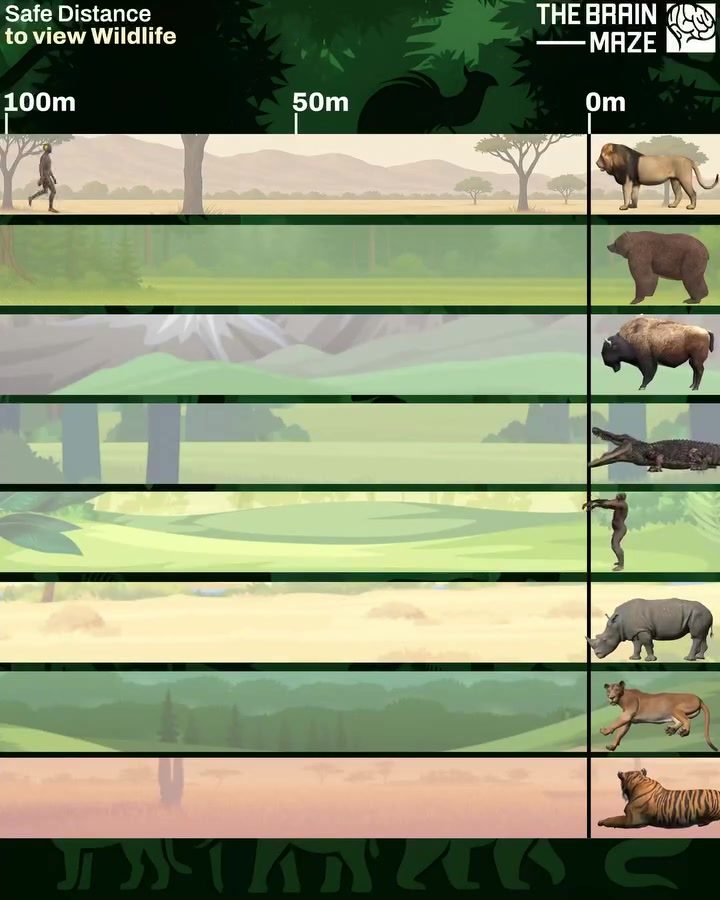
Wildlife Safety Distances: Observing Animals Responsibly
Wildlife observation is a thrilling experience that connects us to nature. However, it's crucial to understand and maintain safe distances from various animals to ensure both your safety and theirs. The guidelines below provide essential information for observing wildlife responsibly, based on the types of animals you may encounter and their specific behaviors.
Why This Matters
Respecting wildlife and maintaining safe distances is about more than just personal safety. It's about preserving the natural behaviors and habitats of these animals. When people get too close, they can disrupt feeding, mating, and other critical activities. This disruption can lead to stress for the animals, altered behaviors, and even harm to both humans and wildlife.
Understanding Safe Viewing Distances
Big Cats: Tigers, Lions, and Mountain Lions
Tigers, lions, and mountain lions are powerful predators known for their swift and unpredictable reactions. Observing these big cats requires significant caution.
For tigers, maintain a minimum distance of 100 meters. Tigers are apex predators and can cover large distances quickly, making them particularly dangerous if they feel threatened. Lions, while social animals, also need space. Keep a safe distance of 50 meters to avoid startling or provoking them. Mountain lions, also known for their stealth and agility, require a 90-meter distance to ensure safety.
These distances are crucial because big cats can react swiftly and unpredictably, and their powerful jaws and claws can inflict severe injuries.
Bears
Bears, especially those in areas with human activity, require a 90-meter safe distance. These omnivorous animals are known for their strength and can be unpredictable, especially when protecting their young or food sources.
Rhinos
Rhinos are large, herbivorous mammals that can be quite territorial. Keep a 30-meter distance from these animals. Rhinos have poor eyesight but excellent hearing and sense of smell, making them sensitive to human presence and prone to defensive behavior.
Bison
Bison are large, strong animals that can be surprisingly fast and aggressive, especially during mating season or when protecting their young. The recommended safe distance for bison is 23 meters. Although they are herbivores, bison can charge if they feel threatened or if cows have calves nearby.
Crocodiles
Crocodiles are highly efficient ambush hunters, capable of launching sudden attacks with little warning. These reptiles can move surprisingly quickly, especially in water. Stay at least 9 meters away from crocodile habitats to avoid the risk of an attack. They are often found near water sources and can be more active during the warmer months.
Monkeys
While monkeys may seem harmless, they are notorious for opportunistic behavior. They can snatch food, personal items, or anything left unattended. Maintain a 15-meter distance from monkeys to avoid any unwanted interactions. Some species can be aggressive, especially if they associate humans with food.
Why Staying Informed Matters
Staying informed about the habits and behaviors of wildlife is crucial for any nature enthusiast. Understanding the boundaries and safe distances for different animals ensures that you can enjoy nature responsibly. The Brain Maze provides essential guidelines for observing wildlife, which are crucial for both your safety and the well-being of the animals.
Practical Tips for Wildlife Observation
Research the Area
Before venturing into wildlife habitats, research the specific animals you might encounter. Knowing the behavior and safe distances for each species will help you stay safe and enjoy the experience.
Use Binoculars or a Telephoto Lens
Bringing a pair of binoculars or a camera with a good telephoto lens can greatly enhance your wildlife viewing experience. These tools allow you to observe animals from a safe distance without disturbing their natural behaviors.
Be Quiet and Patient
Animals are sensitive to noise and sudden movements. Being quiet and patient increases your chances of seeing wildlife in their natural state. Avoid making loud noises or sudden movements that could startle or provoke the animals.
Respect Wildlife Boundaries
Always respect the boundaries of wildlife. Do not approach animals or attempt to feed them. Feeding wildlife can disrupt their natural behaviors and lead to dependency on human food sources, which can be harmful.
Carry Bear Spray or Other Defensive Tools
If you are in an area with known bear or big cat populations, carrying bear spray or other defensive tools can provide an added layer of safety. Always know how to use these tools effectively.
Important Takeaways
Observing wildlife responsibly is about respecting the boundaries of the animals and understanding their behaviors. By maintaining safe distances, staying informed, and being prepared, you can enjoy the beauty of nature while ensuring the safety and well-being of both humans and animals.
Conclusion
Respecting wildlife safety distances is essential for a safe and enjoyable experience. Whether you're observing tigers, crocodiles, or monkeys, understanding the specific behaviors and safe distances for each species is crucial. By following these guidelines, you can ensure a responsible and respectful wildlife observation experience. This approach not only keeps you safe but also helps preserve the natural behaviors and habitats of these magnificent creatures.
Watch the Reel
Questions readers ask
What is the recommended safe distance for observing tigers?
The recommended safe distance for observing tigers is 100 meters. This distance helps ensure the safety of both the observer and the tiger, as well as minimizes disruption to the animal's natural behaviors.
How close can I get to bison while observing them?
When observing bison, it's best to maintain a safe distance of at least 75 meters. Bison can be unpredictable and may charge if they feel threatened, so keeping a safe distance is crucial for your safety.
What is the recommended distance for observing mountain lions?
For mountain lions, the recommended safe distance is 100 meters. Mountain lions are elusive and solitary animals, so it is important to maintain a respectful distance to avoid disturbing them.
How close can I get to monkeys while observing them in the wild?
When observing monkeys in the wild, try to maintain a distance of at least 20 meters. This helps to avoid disrupting their natural behaviors and reduces the risk of aggressive behavior from the monkeys.
What is the safe distance for observing lions in their natural habitat?
The recommended safe distance for observing lions is 50 meters. Lions are powerful predators, so maintaining a safe distance is essential for your safety and to avoid disturbing their natural behaviors.
What precautions should I take when observing crocodiles?
When observing crocodiles, it is important to stay a safe distance of at least 50 meters from the water's edge. Never approach a crocodile on land or in the water, as they are extremely dangerous and can attack without warning.
Why is it important to maintain safe distances from wildlife?
Maintaining safe distances from wildlife is crucial for both your safety and the well-being of the animals. It helps to preserve their natural behaviors and habitats, and reduces the risk of stress or harm to both humans and animals.
Related deep dives
Similar reads based on topic and creator.




Recent articles
Fresh deep dives from the latest Reels we unpacked.




Comments
Be the first to comment.