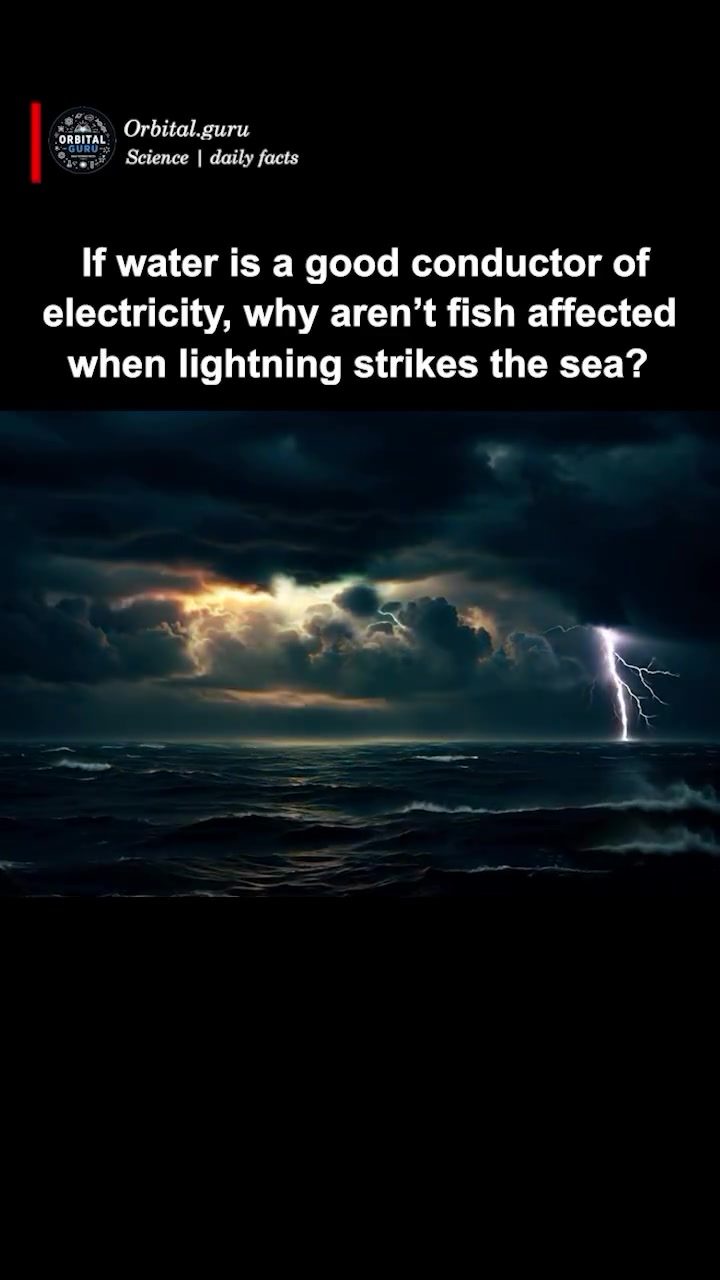
Lightning and Fish
Lightning striking the sea is a dramatic sight, and it raises an intriguing question: Why aren't fish affected by the electrical charge? To answer this, we need to understand how electricity behaves in water and the factors that protect aquatic life.
Why This Matters
Understanding the interaction between electricity and water is crucial for various fields, including marine biology, environmental science, and electrical engineering. It helps in designing marine structures, studying the impact of electrical discharges on aquatic ecosystems, and ensuring the safety of underwater operations.
How Electricity Behaves in Water
The Path of Least Resistance
Electrical current tends to follow the path of least resistance. This principle is key to understanding why fish are not constantly being electrocuted. While pure water is a good insulator, the water in natural bodies like lakes, rivers, and oceans is rich in dissolved salts and minerals, making it an excellent conductor. A fish's body, covered in scales, slime, and oils, typically has a higher electrical resistance than the surrounding water, especially in the ocean. Therefore, when an electrical current enters the water, it tends to flow around the fish rather than through it. This means the fish are shielded by the water's conductivity.
Surface Dissipation
When a massive electrical discharge, such as a lightning strike, hits a body of water, the current doesn't plunge straight down into the depths. Instead, it spreads out horizontally across the surface. The electrical energy dissipates radially and weakens drastically the deeper it goes. Most fish live and swim below the surface layer, so the intense electrical charge passes right over their heads, leaving them unharmed.
Rapid Dilution of Energy
Bodies of water are vast. A lightning strike contains an enormous amount of voltage, often hundreds of millions of volts. However, this energy is rapidly diluted as it expands outward into a giant three-dimensional volume of water. Just a short distance away from the direct impact point, the electrical field is neutralized. This rapid dilution ensures that the electrical charge does not penetrate deeply enough to affect marine life.
Are Fish Ever Affected?
While the mechanisms described above protect fish from most electrical discharges, there are exceptions. If a fish happens to be swimming right at the surface exactly where a lightning bolt strikes, the sheer localized energy is likely to kill it. Additionally, fish near underwater electrical installations or other sources of direct electrical current may also be affected.
Practical Tips for Understanding Electrical Behavior in Water
Conductivity and Resistance
When dealing with electrical systems in or around water, it's essential to understand the conductivity and resistance of the environment. This knowledge is crucial for designing safe and efficient systems, whether for marine research, industrial applications, or environmental monitoring.
Safety Measures
For those working in marine environments, especially during storms, it's important to be aware of the potential for lightning strikes. Always follow safety protocols, including staying away from open bodies of water and avoiding contact with metal objects that could conduct electricity.
Environmental Considerations
For environmental scientists and marine biologists, understanding the impact of electrical discharges on aquatic ecosystems is vital. This knowledge can inform conservation efforts, help in the management of marine protected areas, and guide the development of sustainable practices.
Important Takeaways
The Role of Water's Conductivity
Water's conductivity plays a crucial role in protecting fish. The dissolved salts and minerals create a conductive environment that allows electrical currents to flow around rather than through aquatic life.
Surface Dissipation and Energy Dilution
Understanding how electrical energy dissipates and dilutes in water helps explain why most fish are unaffected by lightning strikes. The rapid spreading and weakening of electrical charges ensure that the energy does not penetrate deeply enough to harm marine life.
Exceptions and Safety
While the mechanisms described protect most fish, exceptions exist, especially in direct strike scenarios. For those working in marine environments, safety measures and environmental considerations are paramount.
Conclusion
The interaction between electricity and water is a complex but fascinating subject. Understanding how electrical currents behave in water and the factors that protect aquatic life is essential for various fields, from marine biology to electrical engineering. By grasping these principles, we can better appreciate the natural world and develop safer, more efficient systems for our interactions with it.
Watch the Reel
Questions readers ask
How does the conductivity of saltwater protect fish from lightning strikes?
Saltwater's high conductivity allows electrical currents from lightning to disperse quickly and spread out. This means the electrical charge flows around fish rather than passing through them, minimizing harm to aquatic life.
What role does surface dissipation play in protecting fish from lightning?
When lightning strikes water, the electrical energy dissipates rapidly at the surface. This rapid spread of energy reduces its intensity, making it less likely to harm fish nearby.
Why do electrical currents from lightning tend to flow around fish?
Electrical currents follow the path of least resistance. In saltwater, this path is typically around rather than through the fish because the water offers a more conductive medium than the fish's body.
Are all aquatic animals safe from lightning strikes in the sea?
While the high conductivity of saltwater and the rapid dissipation of energy protect most aquatic life, individual factors such as proximity to the strike and the specific environment can influence outcomes. Larger animals or those closer to the strike point may still be affected.
How does understanding lightning behavior in water benefit environmental science?
Knowing how lightning interacts with water helps scientists study the impact of electrical discharges on marine ecosystems. This information is vital for assessing potential threats to aquatic life and developing strategies to protect marine environments during storms.
What safety measures can be taken to protect fish farms and aquaculture facilities during storms?
To protect fish farms and aquaculture facilities during storms, it's essential to use grounding systems and lightning protection devices. Ensuring that structures are well-grounded can help dissipate electrical charges safely, minimizing the risk to aquatic life.
How does the rapid energy dilution of lightning in water help aquatic life?
The rapid energy dilution of lightning in water means that the electrical charge does not concentrate in one area. This dilution reduces the intensity of the electrical field, making it safer for aquatic life to remain unaffected by the lightning strike.
Related deep dives
Similar reads based on topic and creator.




Recent articles
Fresh deep dives from the latest Reels we unpacked.




Comments
Be the first to comment.