Wettest and Driest Countries
Climate varies widely across the globe, and one of the most striking differences is the amount of annual precipitation. This variation influences everything from local ecosystems to human activities and infrastructure. Colombia is renowned for being the wettest country, while Egypt stands out as the driest. It's important to understand these extremes not just for curiosity but also for their implications on water resources, agriculture, and daily life.
The Wettest and Driest Countries
The Wettest Countries
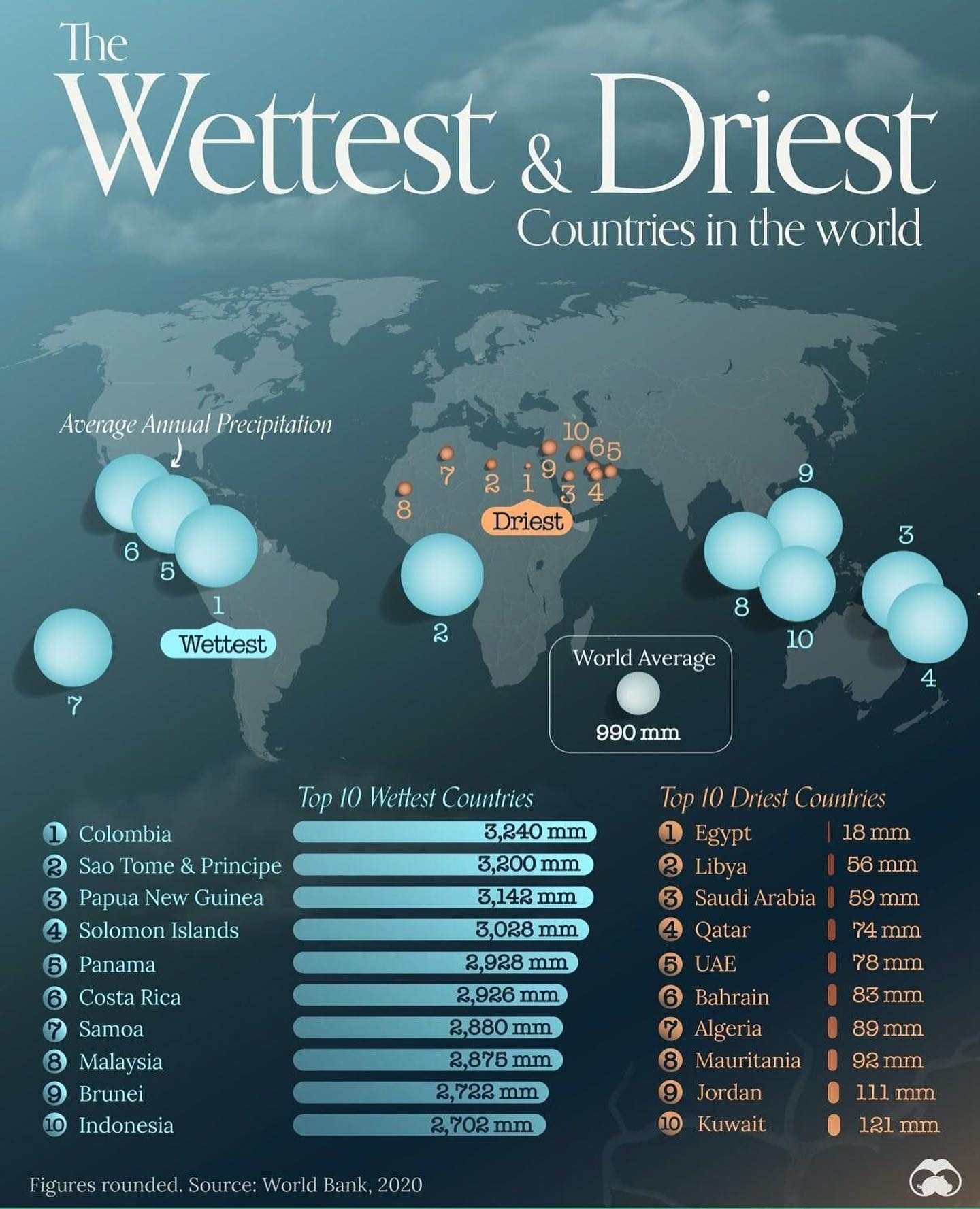
Colombia, located in South America, is the wettest country globally. Its unique geography and location in the tropical zone make it an epicenter of extreme rainfall year after year. The country receives an average of 3,240 millimeters (128 inches) of precipitation annually. Colombia's high rainfall is due to a combination of factors including its diverse ecosystems, which range from lush rainforests to high-altitude Andean regions.
Other countries that make the top 10 wettest list include:
- Sao Tome & Principe
- Solomon Islands
- Panama
- Costa Rica
- Samoa
- Brunei
- Indonesia
These nations share similar climatic characteristics, such as tropical rainforests and maritime climates, which contribute to their high annual precipitation levels.
The Driest Countries
On the opposite end of the spectrum, Egypt stands as the driest country in the world. Located in North Africa, Egypt receives an average of only 18 millimeters (0.7 inches) of precipitation per year. This stark difference, nearly 180 times less than Colombia, is a result of its arid desert climate. The country is dominated by the Sahara Desert, which covers most of its landmass and significantly limits rainfall.
The other countries in the top 10 driest list are:
- Libya
- Saudi Arabia
- United Arab Emirates (UAE)
- Bahrain
- Algeria
- Jordan
- Kuwait
These countries are predominantly covered by deserts, which contribute to their extremely low rainfall. The aridity of these regions makes water management a critical issue for inhabitants.
The World Average
The world average annual precipitation is around 990 millimeters. This figure helps put the extremes into perspective. While some countries receive far more than the global average, others struggle with rainfall far below it. This global disparity underscores the importance of understanding and managing precipitation patterns, especially as climate change continues to alter weather patterns worldwide.
Why This Matters
Precipitation patterns significantly impact various aspects of life, from agriculture to tourism. For wettest countries, excessive rainfall can lead to challenges like flooding and soil erosion, while also providing abundant water resources. In driest countries, water scarcity can pose significant threats to agriculture, public health, and economic development. Understanding these extremes helps in planning for water management, infrastructure development, and agricultural practices.
The Top 10 Wettest and Driest Countries
Top 10 Wettest Countries
- Colombia
- Sao Tome & Principe
- Solomon Islands
- Panama
- Costa Rica
- Samoa
- Brunei
- Indonesia
Top 10 Driest Countries
- Egypt
- Libya
- Saudi Arabia
- UAE
- Bahrain
- Algeria
- Jordan
- Kuwait
Practical Tips
Managing Water Resources in Wettest Countries
Living in a country with high rainfall can pose unique challenges, especially around flood management and water conservation. It is essential to invest in infrastructure that can handle heavy rainfall, such as drainage systems and reservoirs. Additionally, conserving water through rainwater harvesting techniques can help during periods of high demand.
Water Management in Driest Countries
For countries with little rainfall, efficient water management is crucial. Desalination plants can convert seawater into freshwater, while advanced irrigation techniques can maximize the use of available water. Public awareness and educational programs on water conservation can also play a significant role in managing water resources sustainably.
Climate Change and Precipitation
Climate change is altering precipitation patterns, making it essential to adapt to these changes. Investing in climate-resilient infrastructure and adapting agricultural practices can help mitigate the impacts. Additionally, communities can benefit from early warning systems and disaster preparedness plans.
Important Takeaways
Understanding the precipitation patterns of the wettest and driest countries provides valuable insights into global water distribution and its impacts. From the lush rainforests of Colombia to the arid deserts of Egypt, each region has unique challenges and opportunities related to water management. Recognizing these extremes helps in planning for sustainable water use, infrastructure development, and agricultural practices.
Conclusion
The extremes of rainfall in countries like Colombia and Egypt highlight the diverse ways in which precipitation shapes our world. From lush rainforests to arid deserts, these regions face unique challenges and opportunities related to water management. By understanding these extremes and preparing for future changes, especially in the face of climate change, we can work towards creating a more resilient and sustainable world.
Watch the Reel
Questions readers ask
What makes Colombia the wettest country in the world?
Colombia's position as the wettest country is due to its tropical location and unique geography. The country's position in the equatorial zone and the influence of the Andes and other mountain ranges lead to high levels of annual precipitation, with some areas receiving up to 3,240 millimeters of rain per year. This has significant impacts on Colombia's rainforests and agriculture.
How does precipitation affect daily life in the wettest countries?
In the wettest countries, heavy rainfall influences daily routines, infrastructure, and housing design. Residents often adapt by using durable materials for construction, developing efficient drainage systems, and planning outdoor activities around weather forecasts. Additionally, the constant moisture can affect transportation, with roads and bridges sometimes becoming impassable during heavy downpours.
Which countries are the driest in the world, and what are their average rainfall statistics?
Egypt is one of the driest countries in the world, with extremely low levels of annual precipitation. The average rainfall in Egypt is less than 200 millimeters per year, with some areas receiving virtually no rain. This lack of precipitation shapes the country's ecosystems, necessitating innovative water management strategies and making agriculture a significant challenge.
What are the top 10 driest countries, and how does their climate impact their inhabitants?
The top 10 driest countries include Egypt, which is the driest in the world, followed by countries like Libya, Djibouti, and Western Sahara. The extremely low levels of rainfall in these countries have a profound impact on water resources, agriculture, and overall lifestyle. Residents must rely heavily on desalination and other water conservation techniques, requiring significant adaptations in farming, housing, and daily activities.
How does annual precipitation impact the ecosystems in these countries?
Extreme precipitation levels, whether high or low, shape the ecosystems in these countries. In the wettest countries, abundant rainfall supports lush rainforests and diverse plant and animal life. In contrast, the driest countries often have arid landscapes with sparse vegetation and unique adaptations among the flora and fauna that can survive in these harsh conditions.
What are the implications of extreme precipitation on water resources and agriculture?
Extreme precipitation patterns have significant implications for water resources and agriculture. In the wettest countries, excess water can lead to challenges with water management, soil erosion, and flooding. In contrast, the driest countries face severe water scarcity, making agriculture highly dependent on irrigation systems and other water management techniques. Both extremes require strategic planning and resource management.
Related deep dives
Similar reads based on topic and creator.


Recent articles
Fresh deep dives from the latest Reels we unpacked.




Comments
Be the first to comment.