AI and web traffic
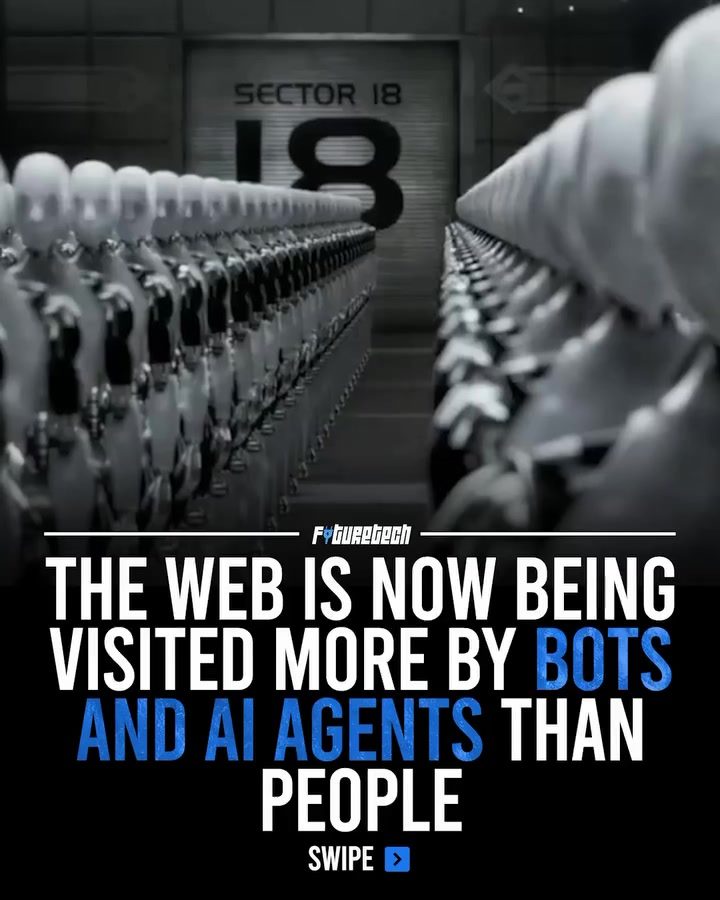
Automated traffic is becoming the majority of web activity. Recent data from Cloudflare shows that automated traffic now makes up about 57.5% of webpage requests, while human activity has dropped to around 42.5%. This means that more webpages are being loaded, scanned, clicked, and navigated by software than by actual people.
Why this matters
This shift in web traffic is more than just a statistical anomaly; it represents a fundamental change in how the internet operates. The web was originally designed with human users in mind, but the rise of AI agents and bots is challenging this paradigm. These automated entities can read pages, compare products, fill out forms, and complete tasks almost like real users. This creates a serious problem for the internet's business model, as websites, ads, analytics, online stores, subscriptions, and sales funnels were all designed around human attention. But if more of the web is being visited by bots, it becomes harder to know who is real, what traffic matters, and how websites should measure value.
Understanding the shift
The rise of AI agents
AI agents are not just old-school scrapers. They have evolved to perform tasks that mimic human behavior online. These agents can read and understand web pages, compare products across different sites, and even complete forms and make purchases. This level of sophistication means that AI agents can navigate the web in ways that were previously only possible for humans. They can interact with web interfaces, click through menus, and spend time on pages, making it difficult to distinguish their activity from that of real users.
The impact on web analytics
The increase in automated traffic poses significant challenges for web analytics. Traditional analytics tools were designed to track human behavior, but they struggle to differentiate between real users and sophisticated bots. This makes it difficult for website owners to understand their audience, measure engagement, and optimize their content. As a result, the data that websites rely on to make decisions may be skewed, leading to misinformed strategies and ineffective marketing efforts.
The Dead Internet Theory
The rise of automated traffic has led to discussions about the "Dead Internet Theory." This theory suggests that the internet is becoming increasingly dominated by bots and automated agents, reducing the amount of genuine human interaction. While this theory may still sound extreme, the data from Cloudflare highlights a growing concern about the authenticity of online activity. The line between real human activity and automated online behavior is becoming much harder to see, raising questions about the future of the internet as a platform for human connection and commerce.
Practical tips
Differentiating bots from humans
There are several strategies that can help differentiate between bot traffic and human traffic:
- Behavioral Analysis: Monitor user behavior patterns. Bots often exhibit repetitive or predictable behavior, such as visiting the same pages in the same order or clicking links in a specific sequence. Human users, on the other hand, have more varied and unpredictable behavior.
- IP Address Tracking: Keep an eye on IP addresses. Bots often come from a limited number of IP addresses or data centers, whereas human users typically have a wide range of IP addresses. Tracking and analyzing IP addresses can help identify bot traffic.
- User Agent Strings: Check user agent strings. Bots often use generic or outdated user agent strings, which can be a red flag. Human users, on the other hand, use a diverse range of user agent strings from different devices and browsers.
Adapting web analytics
To make the most of web analytics in the age of AI, consider the following steps:
- Advanced Analytics Tools: Invest in advanced analytics tools that are specifically designed to handle bot traffic. These tools use machine learning algorithms to distinguish between human and automated traffic, providing more accurate data.
- Custom Reporting: Create custom reports that focus on key metrics that are less likely to be affected by bots, such as conversion rates, engagement time, and user journeys. This can help you gain a clearer understanding of your audience and their behavior.
- Real-Time Monitoring: Implement real-time monitoring to detect and address bot traffic as it happens. This can help you take immediate action to mitigate the impact of bots on your analytics data.
Important takeaways
The internet is evolving, and so is the nature of its traffic. Here are the key points to remember:
- Automated Traffic is Rising: AI agents and bots are now responsible for a majority of web activity, outnumbering human users.
- Challenges for Web Analytics: Traditional analytics tools struggle to differentiate between bot and human traffic, leading to skewed data and misinformed decisions.
- Adapting to Change: Website owners need to adopt new strategies and tools to handle the rise of automated traffic and ensure that their analytics data remains accurate and actionable.
Conclusion
The shift towards automated traffic represents a significant change in how the web operates. While AI agents and bots offer new opportunities for automation and efficiency, they also pose challenges for web analytics and user engagement. As the line between real human activity and automated online behavior becomes increasingly blurred, it is essential to adapt and evolve our strategies to keep pace with this changing landscape. By understanding the nature of automated traffic and implementing the right tools and techniques, we can navigate this new digital terrain with confidence and success.
Watch the Reel
Questions readers ask
How has the distribution of web traffic changed in recent years?
Recent data from Cloudflare indicates a significant shift in web traffic, with automated traffic, including bots and other AI agents, now accounting for nearly 57.5% of web activity. This means that human traffic has decreased to around 42.5% of all webpage requests.
What challenges do websites face due to the increase in bot traffic?
With the rise of sophisticated AI agents, websites are finding it increasingly difficult to distinguish between genuine human users and automated bots. This makes it hard to implement effective strategies for website bot management, monitor user behavior, and tailor content to a human audience.
Why do bots pose a problem for the internet's original business model?
The web was built to engage and serve human users, so the surge in AI-driven traffic challenges the fundamentals of web activity. Businesses and websites rely on human engagement to generate revenue and improve user experiences, but bots often disrupt these purposes by performing tasks like scanning and navigating pages without contributing to the site's goals or revenue.
What is the impact of bots on website performance and metrics?
The increase in bot traffic can skew website performance metrics, making it difficult to gauge true user engagement. Bots may inflate page views, clicks, and other key metrics, giving an inaccurate picture of a website's success. This can lead to misinformed decisions about content and site development, which can hinder the site's ability to attract real human users.
Can websites effectively manage and distinguish between bots and human users?
Distinguishing bots from humans is a growing challenge for websites. While there are tools and methods available for identifying automated traffic, sophisticated bots can mimic human behavior, making it harder to separate the two. Websites must constantly update their strategies to keep up with the evolving capabilities of AI agents to maintain accurate insights into user behavior.
What are some common forms of bot activity on the web?
Bots perform a variety of tasks, including scanning pages for information, comparing products, filling out forms, and navigating websites. Some bots may be used for malicious purposes, such as data scraping or launching cyberattacks, while others serve legitimate purposes, like indexing web content for search engines.
How is the internet's business model being affected by the rise of AI-driven web activity?
The increase in bot traffic is significantly impacting the internet's business model, which relies heavily on advertising revenue and user engagement to drive profits. Bots can interfere with these models by consuming resources without generating revenue, making it difficult for websites to monetize content and maintain sustainability.
Related deep dives
Similar reads based on topic and creator.


Recent articles
Fresh deep dives from the latest Reels we unpacked.




Comments
Be the first to comment.