Volvo's Engine Bay Safety System: A Revolution in Car Safety
Engine safety is a critical aspect of automotive engineering, especially during severe frontal impacts. When a massive head-on crash occurs, the tremendous force can push a car's heavy engine block backward, violently crushing into the passenger cabin and potentially causing severe leg injuries to the driver and front passenger. Volvo's innovative approach to engine bay safety addresses this issue head-on, literally.
Why This Matters
Volvo's strategy to engine safety is not just about avoiding injury; it's about rethinking the fundamental mechanics of a crash. The system is designed to protect occupants by sacrificing the engine's position, ensuring the survival space remains intact. This approach exemplifies Volvo's commitment to safety engineering, a tradition that includes inventing the three-point seatbelt in 1959 and making it freely available to other automakers.
The Design and Functionality
To understand the significance of Volvo's engine safety system, let's delve into its components and functionality.
The Breakthrough: Specialized Brackets and Mounts
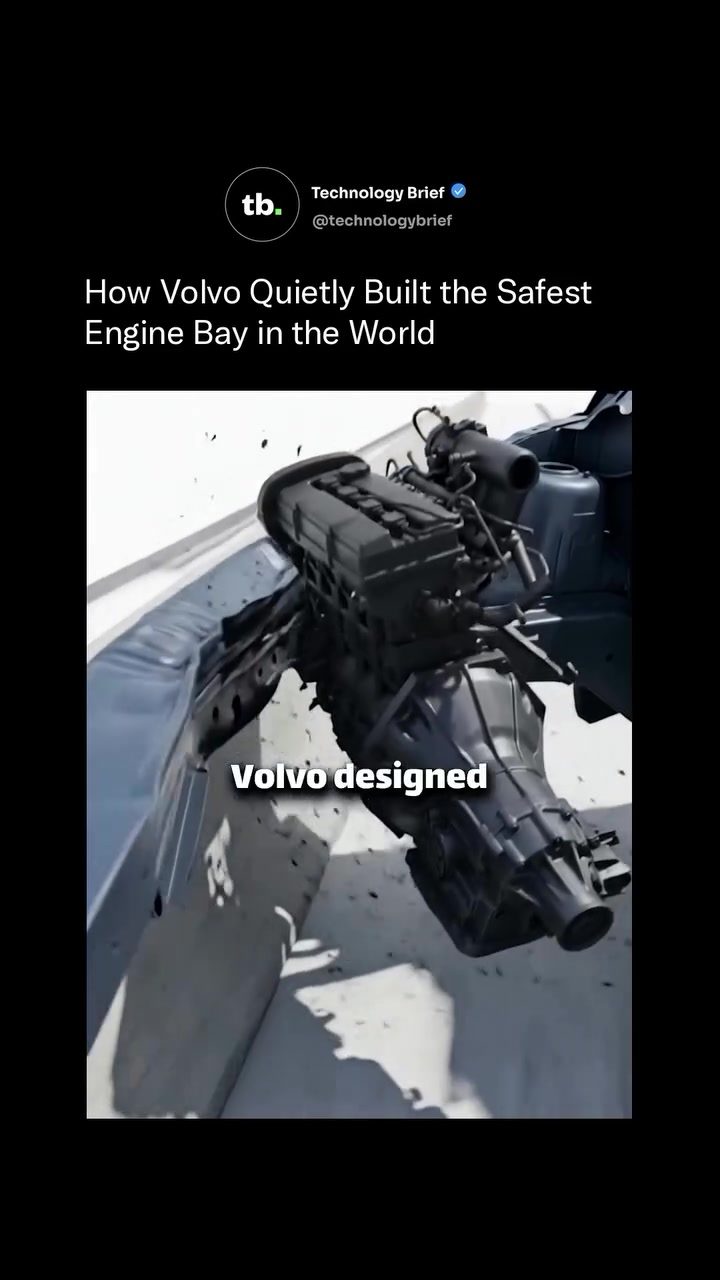
Volvo has engineered a system where the engine drops down and slides beneath the car during a severe frontal crash. This is achieved through specialized breakaway mounts attached to an angled metal frame. When a big impact hits, these mounts are designed to snap intentionally. The angled frame then redirects the engine block downward, safely sliding it underneath the floorboard.
This design is a significant departure from traditional car engineering. In most standard cars, the heavy engine block is pushed straight backward during a severe impact, crushing into the passenger cabin. Volvo's system, however, ensures that the engine is redirected downward, minimizing the risk of injury to the driver and front passenger.
The Physics of a Crash
Volvo engineers realized they had to rewrite the physics of a crash to achieve this level of safety. This involved more than just redesigning the mounts; it required a fundamental shift in how the engine bay interacts with the rest of the car during an impact. By mounting the engine on specialized breakaway mounts attached to an angled metal frame, Volvo has created a fail-safe mechanism that sacrifices the engine to protect the passengers.
Practical Tips for Understanding Engine Safety
Know the Components
Understanding the key components of Volvo's engine safety system is crucial. The specialized breakaway mounts and the angled metal frame are essential for redirecting the engine block downward during a crash. These components work together to ensure that the engine does not push backward into the passenger cabin, thereby minimizing the risk of injury.
Recognize the Importance of Design
The design of the engine bay plays a critical role in overall car safety. Volvo's approach to engine safety highlights the importance of innovative design in automotive engineering. By focusing on the mechanics of a crash, Volvo has been able to create a system that prioritizes passenger safety above all else.
Regular Maintenance
Regular maintenance of the engine bay can help ensure that the safety features continue to function as intended. While Volvo's design is highly reliable, regular checks and maintenance can prevent any potential issues from affecting the safety of the passengers.
Important Takeaways
Volvo's engine bay safety system is a testament to the company's commitment to engineering safety. The system's innovative design ensures that the engine block is redirected downward during a severe frontal impact, minimizing the risk of injury to the driver and front passenger. This approach not only protects passengers but also rethinks the fundamental mechanics of a crash, setting a new standard for automotive safety.
Prioritizing Passenger Safety
Volvo's engine safety system exemplifies the company's commitment to prioritizing passenger safety. By redesigning the engine bay to minimize the risk of injury during a crash, Volvo has set a new standard for automotive safety. This approach not only protects passengers but also underscores the importance of innovative design in automotive engineering.
The Evolution of Car Safety
The engine safety system is just one in a long line of safety innovations from Volvo. The company has a long track record of making safety engineering standard rather than optional, including inventing the three-point seatbelt in 1959 and making it freely available to other automakers. Volvo’s commitment to safety is evident in every aspect of its design, from the engine bay to the seatbelts.
Conclusion
Volvo's innovative approach to engine bay safety is a game-changer in the automotive industry. By redesigning the engine bay to minimize the risk of injury during a severe frontal impact, Volvo has set a new standard for car safety. This system, which includes specialized breakaway mounts and an angled metal frame, ensures that the engine block is redirected downward, protecting the driver and front passenger from the force of the impact. Volvo's commitment to safety engineering is evident in every aspect of its design, making it a leader in the industry.
Watch the Reel
Questions readers ask
How does Volvo's engine design protect passengers during a frontal crash?
Volvo's engine design includes specialized mounts and an angled frame that work together to redirect the engine during a frontal collision. This redirection helps to preserve the survival space within the cabin, reducing the risk of the engine intruding into the passenger compartment and causing injuries to the occupants.
What is the purpose of the angled frame in Volvo's engine design?
The angled frame in Volvo's engine design is engineered to guide the engine away from the passenger cabin during a frontal impact. By carefully directing the engine's movement, the angled frame helps to minimize the risk of leg injuries by preventing the engine from pushing backward into the cabin.
How do the specialized mounts contribute to Volvo's engine safety system?
The specialized mounts in Volvo's engine design are crucial for controlling the engine's movement during a crash. These mounts are designed to sacrifice the engine's position, allowing it to move in a controlled manner instead of being violently forced into the cabin, thereby helping to maintain the survival space for the passengers.
What is the primary goal of Volvo's engine safety design during a frontal impact?
The primary goal of Volvo's engine safety design is to safeguard the passenger cabin by sacrificing the engine's position. This approach ensures that the survival space within the cabin remains intact, protecting occupants from severe leg injuries that can occur when the engine intrudes into the cabin during a frontal crash.
How does Volvo's engine safety system differ from conventional designs?
Unlike conventional designs that may focus on absorbing impact through the engine block, Volvo's engine safety system is designed to redirect the engine away from the passenger cabin. By doing so, it prioritizes the preservation of the survival space, ensuring that the engine does not intrude into the cabin and cause harm to the occupants.
What role does the engine play in Volvo's crash safety strategy?
In Volvo's crash safety strategy, the engine serves as a sacrificial element. By using specialized mounts and an angled frame, Volvo ensures that the engine is redirected during a frontal impact. This redirection helps to maintain the integrity of the passenger cabin, reducing the risk of injuries to the driver and front passenger.
Can Volvo's engine safety design help reduce leg injuries in a crash?
Yes, Volvo's engine safety design is specifically designed to minimize leg injuries during a frontal crash. By redirecting the engine and preserving the survival space within the cabin, the design helps to prevent the engine from pushing backward into the passenger compartment, thereby reducing the likelihood of severe leg injuries.
Recent articles
Fresh deep dives from the latest Reels we unpacked.




Comments
Be the first to comment.