Voltera's NOVA: Revolutionizing Soft, Stretchable Electronics with Direct Ink Write
Context / Why this matters
The demand for flexible and stretchable electronics is on the rise, driven by innovations in wearable technology, medical devices, and advanced sensors. Traditional methods of creating printed electronics often rely on masks, screens, and tooling, which can be costly and time-consuming. Voltera's NOVA printer addresses these challenges with a groundbreaking approach: direct ink write (DIW) technology. This method opens new possibilities for manufacturing electronic circuits on a variety of flexible and rigid surfaces.
Main discussion
The Direct Ink Write (DIW) Technology
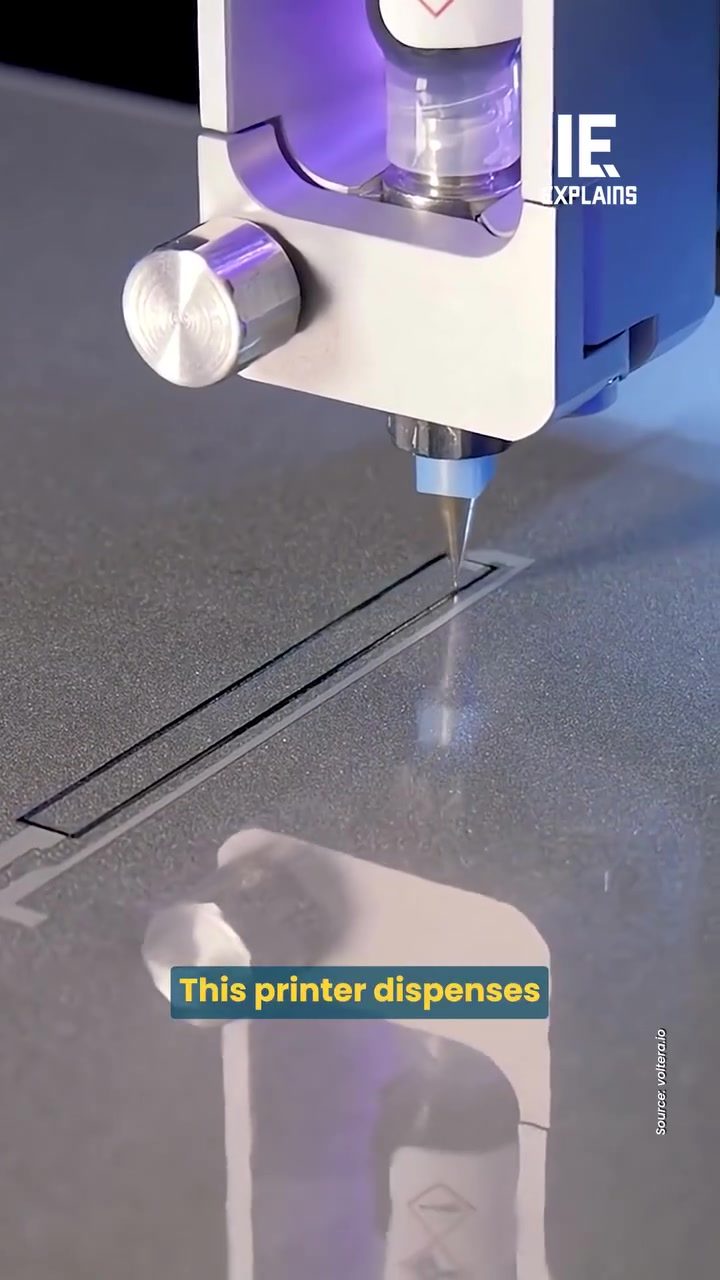
Voltera's NOVA stands out for its use of direct ink write (DIW) technology. Unlike conventional printing methods, DIW eliminates the need for masks, screens, and traditional tooling. Instead, it employs a computer-guided nozzle that precisely deposits functional materials exactly where they are needed. This precision is crucial for creating intricate electronic circuits on flexible substrates.
The DIW process involves a Smart Dispenser, a cartridge that continuously monitors the pressure, temperature, and viscosity of the ink in real-time. This dynamic sensing ensures a consistent material flow, which is essential for maintaining the quality and integrity of the printed circuits. The closed-loop pressure control and material heating up to 40°C further enhance the consistency of the dispensed material, making the process reliable and efficient.
Versatility in Material and Surface
One of the key advantages of the Voltera NOVA is its ability to handle a wide range of inks and materials. From thin inks with a viscosity of 1000 centipoise to thick pastes with a viscosity of 1 million centipoise, the printer can manage it all. This versatility extends to the types of materials it can print on, including flexible polyamide and PET, stretchable TPU, and even paper. The ability to print on such a variety of surfaces makes the NOVA a highly adaptable tool for different manufacturing needs.
The printer can lay down conductive, dielectric, and adhesive materials with a precision down to a 100-micron trace. This level of detail is crucial for creating precise and reliable electronic circuits. The flexibility in material and surface options allows for the creation of electronic components that can bend and stretch, making them suitable for a wide range of applications, from wearable devices to advanced medical sensors.
Practical Applications
The capabilities of the Voltera NOVA open up numerous practical applications. In the field of wearable technology, the NOVA can print flexible circuits that can be integrated into clothing and accessories, providing functionalities such as health monitoring and augmented reality. In the medical field, the printer can create stretchable sensors that can conform to the body, enhancing the accuracy and comfort of diagnostic and therapeutic devices.
Moreover, the NOVA's ability to print on various surfaces makes it valuable for prototyping and small-batch production. Researchers and developers can quickly produce and test new electronic designs without the need for extensive tooling and setup. This agility in production can accelerate innovation and bring new electronic products to market faster.
Practical tips
When working with the Voltera NOVA printer, there are several practical tips to keep in mind to ensure optimal performance and results:
Material Preparation
- Viscosity Control: Ensure that the ink viscosity is within the recommended range (1000 to 1,000,000 centipoise). Adjust the viscosity if necessary to achieve the desired flow characteristics.
- Temperature Management: Maintain the material temperature within the specified range (up to 40°C) to keep the flow steady and consistent.
Printing Parameters
- Pressure Control: Utilize the closed-loop pressure control system to monitor and adjust the pressure in real-time. This helps in maintaining a consistent material flow.
- Nozzle Maintenance: Regularly clean and maintain the nozzle to prevent clogging and ensure precise material deposition.
- Surface Preparation: Prepare the printing surface by ensuring it is clean, flat, and free of contaminants. This will help in achieving better adhesion and print quality.
Post-Printing Care
- Curing and Drying: Allow the printed circuits to cure and dry properly to ensure they adhere well to the surface and maintain their mechanical and electrical properties.
- Testing and Inspection: Conduct thorough testing and inspection of the printed circuits to identify any defects or issues that may need addressing.
Important takeaways
- Innovative Technology: Voltera's NOVA utilizes direct ink write (DIW) technology, which eliminates the need for masks, screens, and traditional tooling, making the printing process more efficient and versatile.
- Versatility: The printer can handle a wide range of inks and materials, from thin to thick pastes, and can print on various surfaces, including flexible and rigid materials.
- Precision: The NOVA can lay down materials with a precision down to a 100-micron trace, ensuring high-quality and reliable electronic circuits.
- Applications: The capabilities of the NOVA make it suitable for a wide range of applications, from wearable technology to medical sensors and prototyping.
Conclusion
Voltera's NOVA represents a significant advancement in the field of flexible and stretchable electronics. With its direct ink write (DIW) technology, the NOVA offers a versatile and efficient way to create high-quality electronic circuits on a variety of surfaces. Whether it's for wearable technology, medical devices, or prototyping, the NOVA's capabilities make it a valuable tool for innovation and development. By embracing this technology, manufacturers and developers can push the boundaries of what's possible in electronic design and production.
Watch the Reel
Questions readers ask
What is Direct Ink Write (DIW) technology and how does it work?
Direct Ink Write (DIW) technology is an innovative method used by Volta's NOVA for printing electronic circuits. It involves depositing conductive inks directly onto a surface, which can be flexible or rigid. This process eliminates the need for traditional masks, screens, and tooling, making it more efficient and cost-effective than conventional methods, as it allows for direct to surface printing, ensuring precision and flexibility in the manufacturing process.
What materials can be used for direct ink printing?
Direct Ink Write (DIW) printing is compatible with a variety of materials. For example, the Voltera's NOVA printer can print circuits on flexible surfaces such as polyamide and stretchable materials like thermoplastic polyurethane (TPU). This versatility opens up new possibilities for applications in wearable technology, medical devices, and advanced sensors.
What are the benefits of using Direct Ink Write for flexible electronics?
Direct Ink Write technology offers several advantages for flexible electronics. It allows for precise and efficient printing of circuits, reducing production costs and time. The direct printing process means that no masks or screens are required, making it easier to print on a variety of surfaces and shapes.
How does Voltera's NOVA improve on traditional electronics manufacturing methods?
Voltera's NOVA improves on traditional electronics manufacturing by using Direct Ink Write (DIW) technology. This innovative approach eliminates the need for masks, screens, and traditional tooling, resulting in a more efficient and cost-effective process. It allows for direct printing on various surfaces, from flexible to rigid, enhancing the production of flexible circuits and wider adoption of printed electronics.
What are some applications of Direct Ink Write technology?
Direct Ink Write technology has a wide range of applications, particularly in the realm of flexible and stretchable electronics. It is used in wearable technology, medical devices, and advanced sensors, where the ability to print circuits on flexible and stretchable materials is crucial. The technology allows for precise and efficient printing, making it ideal for high-tech devices that require intricate circuitry, including fabric sensors and skin-like electrodes.
What is the significance of Voltera's NOVA in the field of flexible electronics?
Voltera's NOVA is significant in the field of flexible electronics because it utilizes Direct Ink Write (DIW) technology, making it a game-changer in the production of flexible and stretchable electronics. By enabling precise and efficient circuit printing directly onto various surfaces, NOVA reduces production costs and time. The innovation opens up new avenues for manufacturing, making flexible electronics more accessible and versatile for applications like wearable devices and advanced sensors.
Can Direct Ink Write technology be used for small-scale production?
Yes, Direct Ink Write technology is highly suitable for small-scale production. The ability to print directly onto various surfaces without the need for masks or screens makes it cost-effective and efficient for producing small batches of flexible and stretchable electronics. This is particularly beneficial for prototyping and custom manufacturing, where flexibility and precision are key.
Related deep dives
Similar reads based on topic and creator.


Recent articles
Fresh deep dives from the latest Reels we unpacked.




Comments
Be the first to comment.