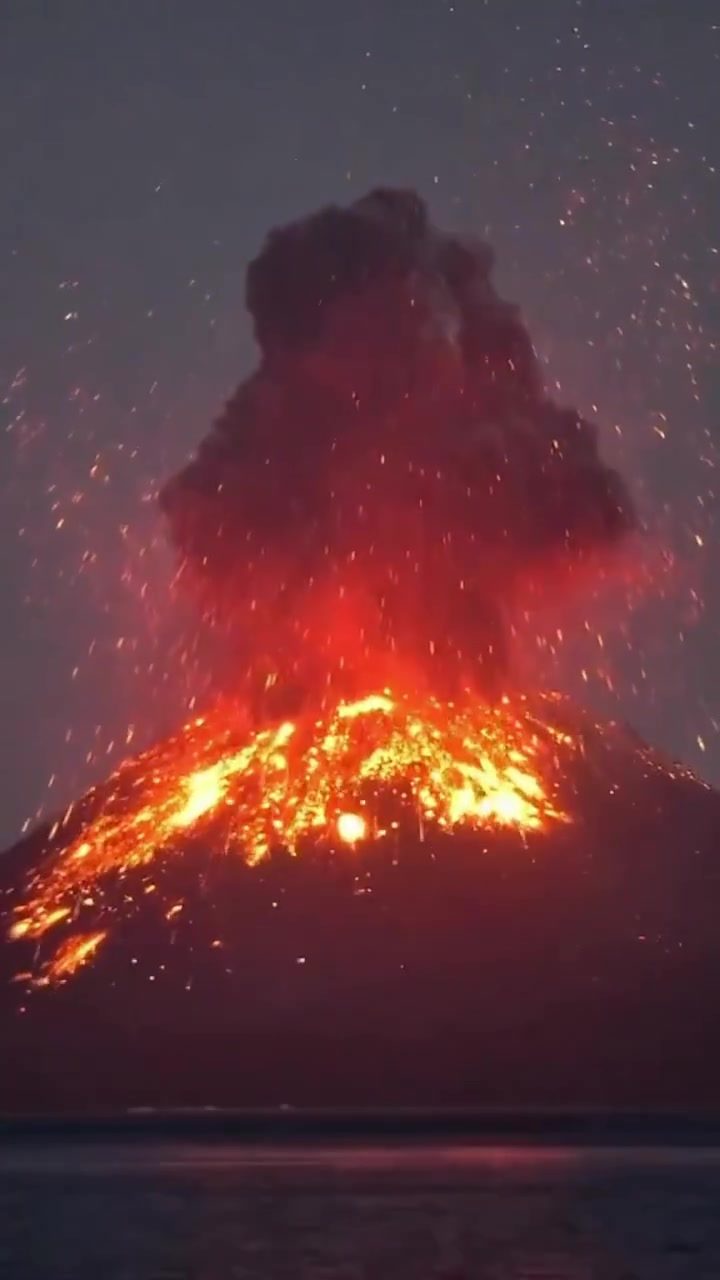
Volcanic Eruptions: The Power of Pressure
It is a common misconception that the heat present in volcanoes is what triggers an eruption. In actuality, it is the mechanism of pressure that plays a critical role. Understanding this mechanism can be quite eye-opening, as the fundamentals of a volcanic eruption are not as simple as their appearance. During the ascent of magma, the pressure that has been holding it down starts to decrease. This reduction in pressure allows the gas trapped within the magma to expand, much like the way a shaken soda bottle behaves when it is opened. The expanding gas creates a buildup of pressure, reaching levels that the surrounding rock can no longer withstand. When the pressure finally breaks free, it forces the magma to erupt. Often, the process is depicted in visualizations and simulations where lava and gas flow freely, presenting a clear picture of the internal workings of a volcano. The real-time imaging showcases the lava spewing, alongside the formation of gaseous bubbles. This creates an immersive visual representation of an eruption.
The False Assumption About Heat
Many assume that the heat from a volcanic eruption is what explodes the magma outward. Indeed, while heat is a significant factor in the heating of the magma, it is not the primary driver of the eruption. This is because magma itself is pressurized and is held down by the rock above. The magma, which is a mixture of melted rock and gases, is prone to expansion when the pressure holding it down is released. The gases inside the magma are dissolved and trapped. As the magma rises, these gases are released suddenly, creating an explosive force. That is why a volcano erupts with such force and violence. Scientists often point to this phenomenon as a fundamental problem in the solid ground of earth science.
The Role of Gas in Volcanic Eruptions
The expanding gas that is released from a pressurized magma is a key factor in volcanic eruptions. It is the sudden increase of gas in the magma that creates the necessary pressure for the eruption to occur. This is due to pressure holding the magma down being released as the magma rises. As observed, the pressure builds up, reaching levels that the surrounding rock can no longer withstand. This results in the explosive eruption, where lava and ash are spewed from the volcanic vent. The expanding gas is more than just a by-product; it is an essential component that makes the entire eruption possible. The gas becomes a force in pushing the magma out, just like a soda bottle pushing out its contents when shaken vigorously. The gases expand and push the magma upwards, causing the volcano to erupt. This expulsion of lava and ash is a direct result of the gas trapped inside the magma seeking a path of least resistance.
Watch the Reel
Related deep dives
Similar reads based on topic and creator.
Recent articles
Fresh deep dives from the latest Reels we unpacked.



Comments
Be the first to comment.