The Wild Science of Volcanic Lightning
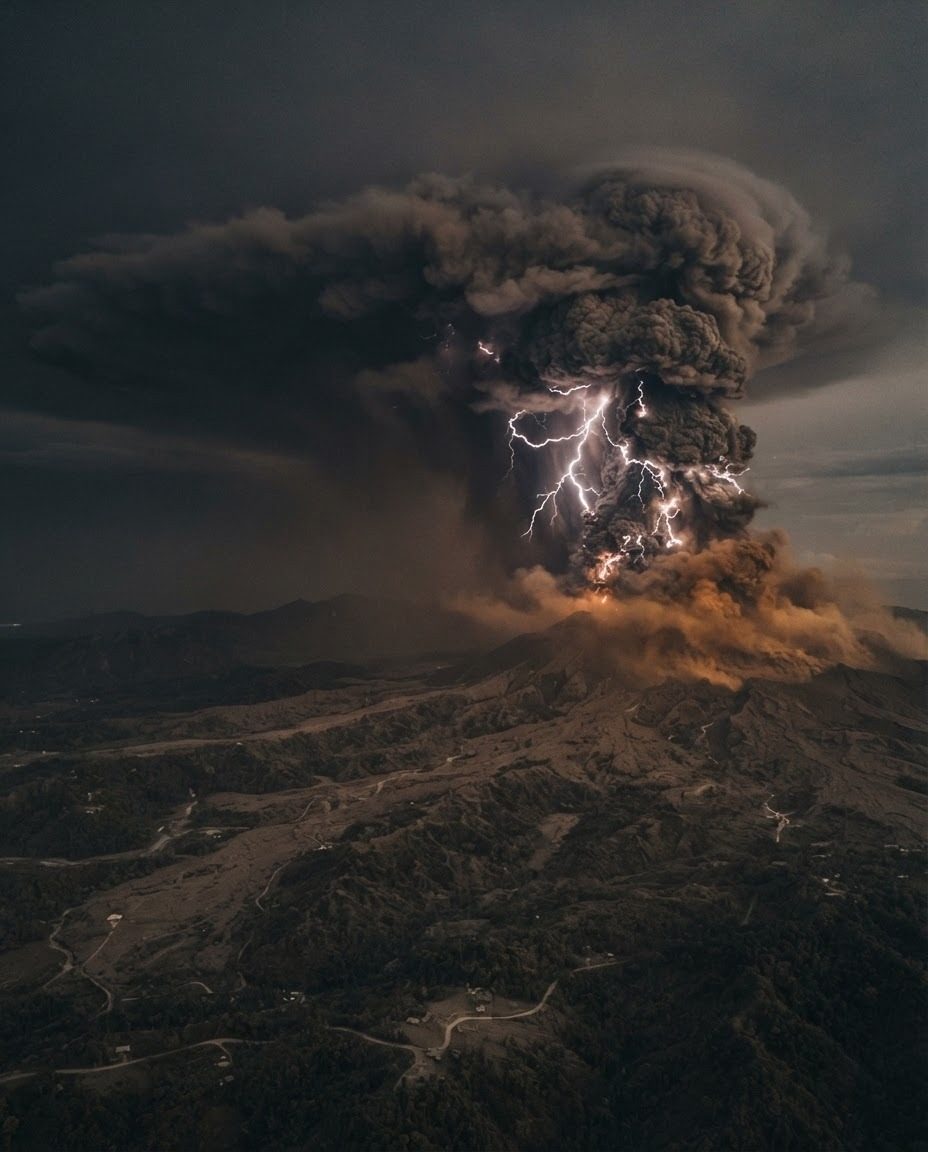
Volcanic eruptions are awe-inspiring spectacles, but when the eruption is accompanied by lightning, the scene transitions into something truly otherworldly. There’s a scientific explanation for this stunning occurrence. The ash cloud that rises from the volcano is filled with particles that collide with one another, building up an electrical charge, much like the kind that builds up and dissipates as static in the air. This charge can form a bolt of lightning within the ash column. Video footage captures the scene, showcasing the stark contrast between erupting ash and lightning bolts. The phenomenon is not fully understood scientifically. While it occurs, the exact way it forms remains a mystery. The act of particles colliding within the ash cloud and releasing energy suggests an intimate connection between the elements that surround the eruptions. Volcanic lightning provides the basis for learning about the behavior of these particles. Researchers have long speculated on the composition of ash clouds. The threat of the eruption isn’t just from ash and rock, but also from the invisible electricity that builds up. Lightning related to eruptions is thought to influence the chemical composition of the ash particles themselves, potentially even altering the weather.
The Impact on the Atmosphere
Volcanic eruptions have a profound impact on the atmosphere. When a volcano erupts, it releases vast quantities of ash and gas into the atmosphere, which can travel thousands of miles. The ash and gas can reflect sunlight, potentially cooling the Earth's surface. Alongside that, volcanic lightning acts as an energy source effecting the atmosphere's electrochemical composition. The heat and electricity can cause the air surrounding the eruption to ionize, which means that the air becomes charged with positive and negative particles. Evidence suggests that these charged particles can alter the atmosphere on a local and global level. The electricity released during a volcanic eruption can affect the ionosphere, the layer of the Earth's atmosphere that is ionized by solar and cosmic radiation. By changing the ionosphere, the eruption can also affect how radio waves are transmitted. The combined effect of ash, gas, and lightning can lead to a significant disruption of the climate, but also create predictable changes in the atmosphere.
The Role of Aerial Photography
Aerial photography has revolutionized the way we view and understand volcanic eruptions. Capturing the scale and magnitude of an eruption from above provides a unique perspective. The surveillance offers a comprehensive view of the eruption, including the surrounding landscape. The power of volcanic lightning can be observed safely from a distance, revealing the intensity of the eruption. The contrast between the chaotic eruption and the calm landscape is striking, offering viewers a profound sense of the forces of nature. When compared to the ground-level view, aerial photographs can highlight the severity of the eruption better and help scientists study the impact of the volcanic ash and gases. They can assist scientists in understanding the dispersal patterns of volcanic ash and gases, which is crucial for predicting the potential impact on nearby communities and ecosystems. By studying these images, researchers can better anticipate the effects of future eruptions and develop strategies to mitigate the risks.
Watch the Reel
Related deep dives
Similar reads based on topic and creator.

Recent articles
Fresh deep dives from the latest Reels we unpacked.


Comments
Be the first to comment.