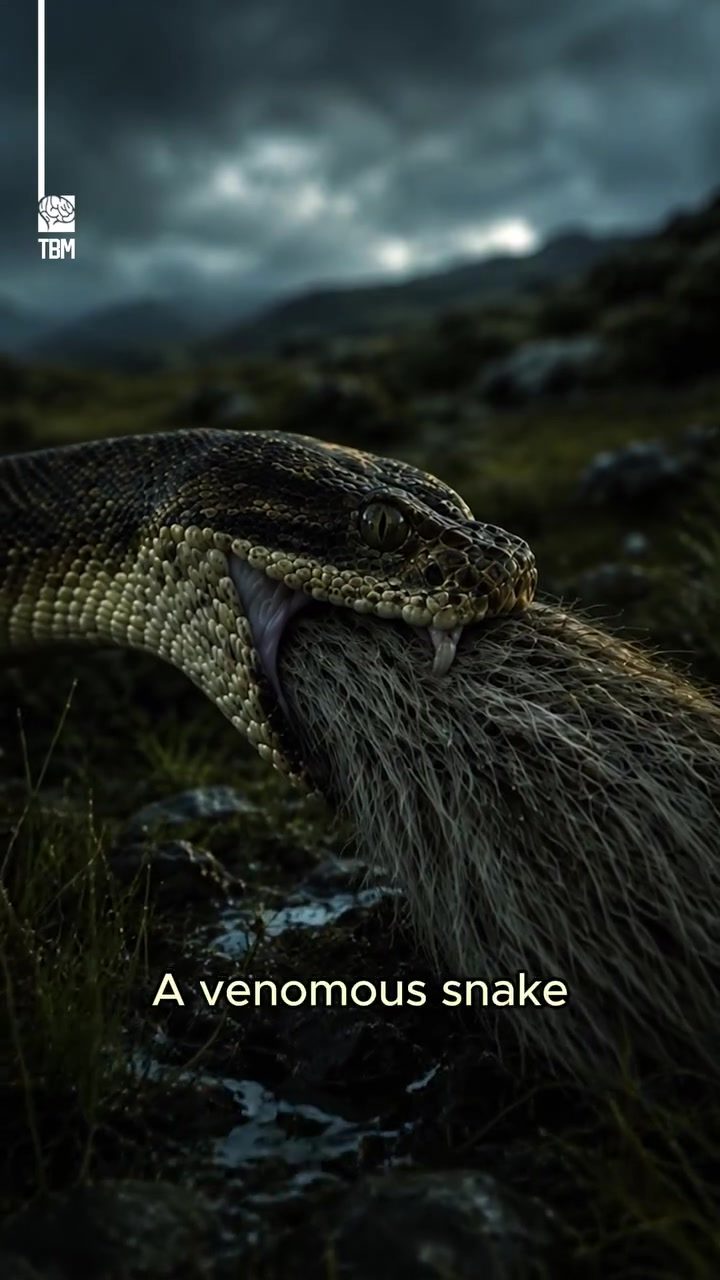
Venomous snakes are fascinating creatures with unique survival mechanisms. One intriguing aspect is their ability to resist their own venom, which is crucial for their survival in the wild. This resistance, however, is not absolute, and deep self-bites can still cause significant harm.
Why This Matters
Understanding how venomous snakes resist their own toxins provides valuable insights into their evolutionary adaptations and the intricate workings of their biological defenses. This knowledge is not only fascinating but also has implications for medical research and the development of new treatments for venom-related injuries.
Venomous Snakes and Their Defenses
The Power of Venom
Venomous snakes possess potent venom capable of killing other animals in a matter of minutes. This venom is a complex mixture of toxins designed to immobilize prey or defend against predators. The potency of the venom varies among species, but its effectiveness is undeniable.
Built-in Defenses
Most venomous snakes have evolved built-in defenses that make them resistant to their own venom. These defenses are present in their blood and cells, acting as a barrier that prevents the toxins from causing serious harm. This immunity is a critical adaptation that allows snakes to survive accidental self-bites, which can occur during hunting, fighting, or periods of stress.
The Evolution of Resistance
The resistance to their own venom evolved as a survival mechanism. Accidental self-bites can happen frequently in the wild, and without defenses, a snake could easily succumb to its own toxins. Over time, natural selection has favored snakes with stronger resistance, ensuring their survival and reproductive success.
The Consequences of Self-Bites
Not Invincible
While venomous snakes have remarkable defenses, they are not invincible. A deep self-bite can still cause swelling, tissue damage, or infection. These injuries, if severe, can compromise the snake's health and survival.
Swelling and tissue damage are immediate consequences of a deep bite. The body's immune response to the venom can lead to inflammation and tissue breakdown. This can hinder the snake's ability to move and hunt, making it vulnerable to predators and reducing its chances of survival.
Infection is another potential consequence. The snake's body, while resistant to its own toxins, is not immune to bacterial infections. A deep bite can introduce bacteria into the wound, leading to infection and further complications.
The Importance of Safety Systems
The resilience of venomous snakes to their own toxins highlights the need for safety systems in other contexts. In fields such as biotechnology, where toxins and venoms are studied for their potential benefits, a safety system is essential to prevent harm to researchers and the environment.
Practical Tips
While encountering a venomous snake in the wild is rare for most people, understanding these creatures can be beneficial. Here are some practical tips to keep in mind:
Avoiding Unnecessary Interactions
Always be cautious when in areas known for venomous snakes. Avoid handling or disturbing them, as this can provoke defensive behaviors. If you encounter a snake, maintain a safe distance and observe from afar. Remember, snakes are more afraid of you than you are of them.
First Aid for Snake Bites
If you are bitten by a snake, seek immediate medical attention. While venomous snakes have defenses against their own toxins, these defenses do not extend to humans. First aid measures include keeping the affected limb still and below the level of the heart to slow the spread of venom.
Safety in Research and Development
For researchers and developers working with venomous toxins, safety is paramount. Ensure proper handling protocols are in place, and always use personal protective equipment. Understand the specific toxins you are working with and their potential effects on humans.
Important Takeaways
Venomous snakes possess unique defenses that allow them to resist their own toxins, making them resilient to accidental self-bites. However, these defenses are not absolute, and deep bites can still cause significant harm. Understanding these mechanisms provides valuable insights into the natural world and has implications for medical research and safety protocols in various fields.
Conclusion
The fascinating world of venomous snakes offers a glimpse into nature's ingenious solutions for survival. Their ability to resist their own toxins is a testament to evolution and adaptation. By learning more about these creatures, we can gain a deeper appreciation for the intricate balance of life in the wild and apply this knowledge to improve safety and innovation in our own endeavors.
Watch the Reel
Questions readers ask
How do venomous snakes resist their own toxins?
Venomous snakes have developed specific proteins and enzymes in their blood that can neutralize the toxins they produce, thereby preventing tissue damage and swelling. This resistance is a result of their evolutionary adaptations, which have allowed them to survive in environments where venom is a constant factor.
Can venomous snakes be harmed by their own venom?
Absolutely. While venomous snakes have a significant level of resistance, their defenses are not perfect. Deep self-bites can cause substantial harm, leading to tissue damage and swelling. This demonstrates that their resistance, while impressive, is not absolute.
What mechanisms do venomous snakes use to defend against their venom?
Venomous snakes employ a variety of mechanisms to protect themselves from their own toxins. These include specialized proteins that bind to and neutralize venom components, and enzymes that break down the toxins before they can cause significant harm.
Why is understanding snake venom resistance important for medical advancements?
Studying how venomous snakes resist their own toxins can offer insights into developing new treatments for venom-related injuries. Medical researchers use this knowledge to develop antivenoms and improve our understanding of how toxins interact with the body.
How have venomous snakes evolved to resist their own toxins?
Over time, venomous snakes have developed unique biological defenses through natural selection. Snakes that were better at resisting their own venom had a higher chance of survival, allowing these traits to be passed down to future generations.
What happens if a venomous snake bites itself?
When a venomous snake bites itself, the outcome can vary based on the depth and location of the bite. Shallow bites may cause minimal harm due to the snake's resistance, but deep self-bites can lead to significant tissue damage and swelling, highlighting the limitations of their defenses.
Do all venomous snakes have the same level of resistance to their own venom?
The level of resistance varies among different species of venomous snakes. Some species may have evolved more robust defenses, enabling them to withstand deeper bites with less harm, while others may be more susceptible to their own toxins. This variation is a result of differing evolutionary pressures and adaptations.
Related deep dives
Similar reads based on topic and creator.




Recent articles
Fresh deep dives from the latest Reels we unpacked.




Comments
Be the first to comment.