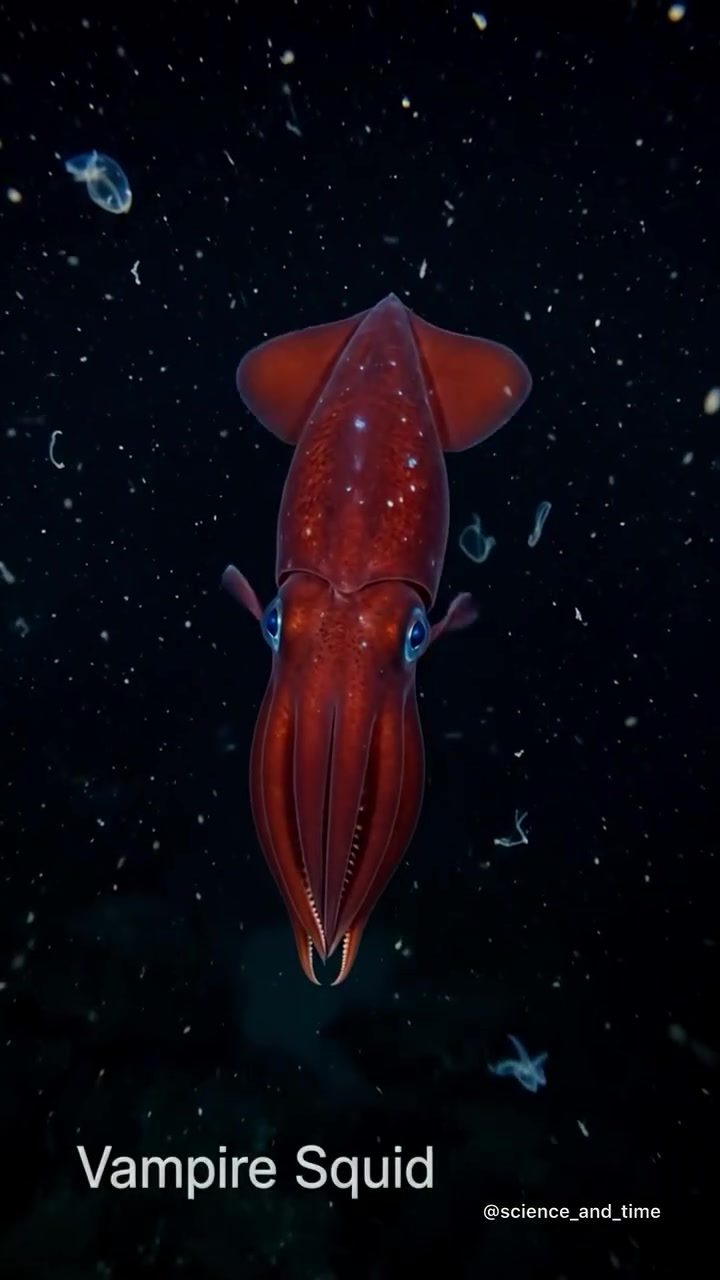
The Truth About the Vampire Squid
Hidden nearly a kilometer below the ocean’s surface, where sunlight never reaches, the vampire squid thrives in one of Earth’s most extreme environments. Despite its menacing name, the vampire squid does not drink blood. Its dark red body and cape-like webbed arms resemble a vampire's cloak, which contributes to its spooky reputation. However, this creature has evolved remarkable adaptations that allow it to survive in an environment with almost no oxygen.
Why This Matters
Understanding the biology of the vampire squid provides valuable insights into the unique adaptations of deep-sea creatures. These organisms face immense challenges in their dark, low-oxygen environments. By examining how the vampire squid thrives, we can gain a deeper appreciation for the incredible diversity of life in the deep ocean.
The Vampire Squid’s Unique Adaptations
An Efficient Oxygen-Binding System
The vampire squid's blue blood is rich in a protein called hemocyanin, which binds oxygen very efficiently. Hemocyanin is particularly effective in cold, low-oxygen environments, allowing the squid to survive where other organisms would struggle. In addition to its efficient oxygen-binding system, the vampire squid has an extremely low metabolism, which further reduces its oxygen needs.
Feeding on Marine Snow
Instead of hunting prey, the vampire squid employs a unique feeding strategy. It extends two long, sticky feeding filaments to collect marine snow, which is a mixture of organic debris, including feces and dead organisms, that drifts through the deep ocean. This passive feeding method is essential for survival in an environment where food can be scarce.
Bioluminescent Defense Mechanisms
The vampire squid has developed several fascinating defense mechanisms to evade predators. When threatened, it can flip its arms over its body, forming a posture that resembles a pineapple. This posture, combined with flashing blue bioluminescent lights, creates a confusing display that disorients predators. The bioluminescence is produced by special organs called photophores, which contain light-producing cells. A chemical reaction within these cells generates the blue flashes that help the squid escape from potential threats.
Large Eyes for Enhanced Vision
The vampire squid's eyes are unusually large, which helps it detect tiny amounts of light in the dark, deep ocean. This enhanced vision is crucial for spotting predators and bioluminescent signals in an environment where light is scarce. The ability to detect predators early is a critical survival adaptation for this creature, allowing it to react quickly and avoid danger.
Practical Tips for Observing the Vampire Squid
While observing the vampire squid in its natural habitat is challenging due to its deep-sea environment, there are several practical tips for those interested in learning more about this fascinating creature:
-
Research and Documentation: Study existing scientific literature and documentaries to gain a comprehensive understanding of the vampire squid's biology and behavior.
-
Participate in Ocean Conservation Efforts: Engage in activities that support deep-sea conservation. Organizations like the Ocean Conservancy and the World Wildlife Fund (WWF) often have initiatives aimed at protecting marine life and their habitats.
-
Join Marine Biology Expeditions: Consider participating in or supporting marine biology expeditions focused on deep-sea exploration. These expeditions often involve researchers who can provide firsthand insights into the lives of deep-sea creatures.
-
Use Technological Advancements: Take advantage of advancements in deep-sea exploration technology, such as remotely operated vehicles (ROVs) and submersibles, which allow scientists to observe and study creatures like the vampire squid in their natural habitats.
Important Takeaways
Understanding the vampire squid's unique adaptations provides valuable insights into the complex ecosystems of the deep ocean. Its efficient oxygen-binding system, passive feeding behavior, and unique defense mechanisms are remarkable examples of how organisms adapt to extreme environments.
Conclusion
The vampire squid is a fascinating example of the incredible adaptations found in deep-sea creatures. Its unique biology and behavior not only highlight the diversity of life in the ocean but also underscore the importance of conservation efforts to protect these delicate ecosystems. By delving into the mystery of the vampire squid, we gain a deeper appreciation for the wonders of the deep sea and the resilience of its inhabitants.
Watch the Reel
Questions readers ask
Why is the vampire squid called a vampire if it doesn't drink blood?
The vampire squid's name is due to its dark red color and webbed arms that resemble a vampire's cape. This appearance, along with its deep-sea habitat, contributes to its spooky reputation, despite having no relation to blood-drinking habits. Although it's a misnomer, the name has stuck since the creature's discovery.
How does the vampire squid survive in low-oxygen environments?
The vampire squid has evolved several unique adaptations to thrive in low-oxygen conditions. It has a slower metabolism and efficient oxygen use, allowing it to survive in environments where other creatures would struggle. Additionally, it can tolerate high carbon dioxide environments and has unique proteins that help it function in low oxygen.
What are the vampire squid's primary feeding habits?
The vampire squid has a unique feeding strategy known as 'arm-feeding.' It uses its long, sticky tentacles to capture small particles of food, along with plankton, from the water. This method allows it to feed in the nutrient-poor deep sea without needing to actively hunt larger prey.
What are the predators of the vampire squid in the deep ocean?
The vampire squid has few natural predators due to its deep-sea habitat and ability to produce bioluminescence for camouflage. Potential predators include deep-sea fish and other squid species, but its environment and adaptations make it a challenging target for these predators.
How does the vampire squid's unique biology contribute to its survival?
The vampire squid's unique biology includes a lower metabolic rate, efficient oxygen use, and specialized proteins. These adaptations allow the vampire squid to survive in the deep ocean’s harsh, low-oxygen conditions. Its ability to produce bioluminescence aids in camouflage and communication, enhancing its chances of survival in the deep sea.
What is the vampire squid's habitat like, and how does it adapt to it?
The vampire squid inhabits the deep ocean, nearly a kilometer below the surface, where sunlight doesn't reach, and oxygen is scarce. It has adapted to this extreme environment with a slow metabolism, efficient oxygen use, and specialized proteins that help it function in low oxygen. Its webbed arms and bioluminescent capabilities also aid in navigating and surviving in this dark, high-pressure habitat.
What can studying the vampire squid tell us about other deep-sea creatures?
By studying the vampire squid, we can learn about the unique adaptations that allow deep-sea creatures to survive in extreme, low-oxygen environments. The vampire squid's metabolism, oxygen use, and feeding habits provide insights into the survival strategies of other deep-sea organisms. Understanding these adaptations can help us appreciate the diversity and resilience of marine life in the deep ocean.
Recent articles
Fresh deep dives from the latest Reels we unpacked.




Comments
Be the first to comment.