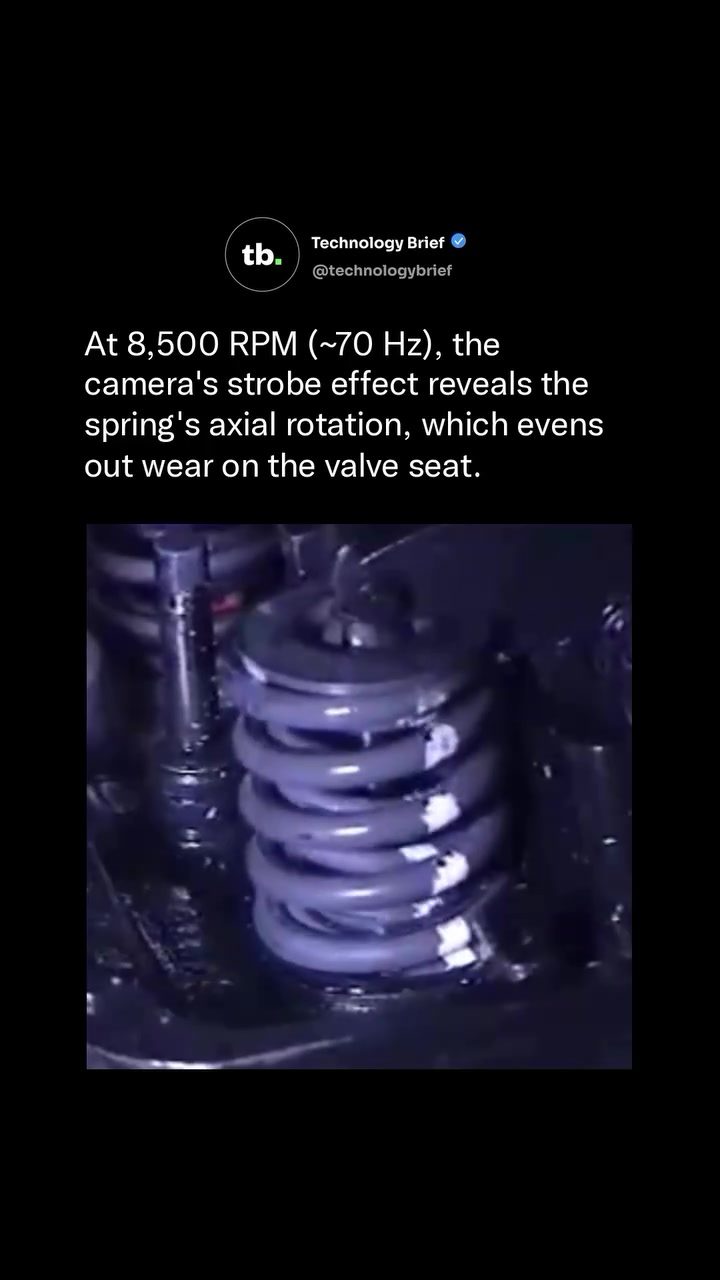
Valve Spring Rotation: An Intentional Design for Longer Engine Life
Valve springs are a critical component in the internal combustion engine, serving a simple yet crucial purpose: they compress and release to control the opening and closing of engine valves. But their function goes beyond this basic mechanism. When an engine is running, the valve spring also rotates slowly along its axis with each cycle. This rotation is not accidental; it serves a vital role in extending the life and efficiency of the engine.
Why This Matters
In a high-performance engine, the valve face strikes the metal seat thousands of times per minute. Without rotation, any single contact point would wear down unevenly, leading to premature valve failure and reduced engine performance. By distributing this contact around the full circumference, the valve spring's rotation evens out the distribution of heat and mechanical wear. This ensures that the valve seals cleanly for a much longer period, maintaining optimal engine efficiency and longevity.
The Mechanics of Valve Spring Rotation
The Rotation Process
When the engine runs at high RPMs, the valve spring undergoes a series of subtle movements. At 8,500 RPM, which equates to approximately 70 rotations per second, the spring's rotation becomes noticeable. This axial rotation is intentional and designed to ensure uniform wear across the valve seat.
Visualizing the Rotation
Visualizing the rotation of a valve spring can be challenging due to its high-speed nature. Using a camera's strobe effect, the rotation can be made visible. This strobe effect captures the spring in a series of still images, making the axial rotation clear and measurable. White marks painted on the coils of the valve spring further enhance visibility, allowing the rotation to be easily observed.
Strobe Effect and RPM
The strobe effect used in the demonstration reveals the spring's axial rotation by capturing a series of still images at specific intervals. By synchronizing the strobe with the engine's RPM, the rotation becomes visible, appearing as a series of distinct positions of the spring.
Practical Tips for Observing Valve Spring Rotation
Observing valve spring rotation in a live engine can be tricky. Here are a few tips to better visualize and understand this process:
Use of Strobe Effects
One of the best ways to observe valve spring rotation is by using a strobe effect. This technique involves synchronizing the strobe light with the engine's RPM to capture the spring's movement in a series of still images. This method is particularly effective at high RPMs, where the rotation is more apparent.
Painting Markers
To enhance visibility, you can paint white marks on the coils of the valve spring. These marks make the spring's rotation easier to follow, especially when using a strobe effect. Without these marks, the movement would be nearly impossible to see.
Important Takeaways
- Intentional Design: The rotation of a valve spring is not accidental but a deliberate design feature to ensure even wear and prolonged valve life.
- Heat and Mechanical Wear: By spreading the contact around the full circumference, the rotation evens out the distribution of heat and mechanical wear, ensuring cleaner valve seals for a longer period.
- Strobe Effect: Using a camera's strobe effect at high RPMs can make the valve spring's axial rotation visible, helping in better observation and understanding.
- High RPM Observation: At 8,500 RPM, the valve spring's rotation is more noticeable and can be effectively visualized using strobe effects and painted markers.
Conclusion
Valve spring rotation is a critical yet often overlooked aspect of engine design. It plays a pivotal role in ensuring that valves seal cleanly and efficiently, extending the lifespan and performance of the engine. By understanding and observing this subtle yet significant movement, one can gain deeper insights into the intricate workings of an internal combustion engine. Whether you are a hobbyist or a professional mechanic, recognizing the importance of valve spring rotation can lead to better maintenance practices and a more durable engine.
Watch the Reel
Questions readers ask
What is the purpose of valve spring rotation in an engine?
Valve spring rotation is designed to distribute wear evenly across valve seats. This intentional design feature helps to prevent uneven wear and prolongs the life of the engine by maintaining optimal valve performance.
How often does valve spring rotation occur?
Valve spring rotation occurs with each engine cycle, which can amount to thousands of times per minute. This consistent rotation is crucial for maintaining engine efficiency and longevity.
What happens if valve springs do not rotate?
If valve springs do not rotate, the contact points between the valve and its seat will wear down unevenly. This can lead to premature valve failure, reduced engine performance, and potentially costly repairs.
How does valve spring rotation help maintain engine performance?
By distributing wear evenly, valve spring rotation ensures that valves maintain a clean seal. This optimal performance helps the engine run more efficiently and reduces the likelihood of performance degradation over time.
Can valve spring rotation be adjusted or maintained?
Valve spring rotation is typically a built-in feature of the engine design and does not require regular adjustment. However, regular maintenance, such as checking valve clearances, can help ensure that the valve springs are functioning properly.
How does valve spring rotation benefit high-performance engines?
In high-performance engines, where valves operate under greater stress, valve spring rotation is particularly beneficial. It helps to mitigate the increased wear and tear, extending the engine's life and maintaining performance under demanding conditions.
What role do valve seats play in engine wear?
Valve seats are the contact points where the valve makes contact with the engine. Without the even wear distribution provided by valve spring rotation, valve seats can degrade rapidly, leading to leaks, reduced performance, and potential engine damage.
Recent articles
Fresh deep dives from the latest Reels we unpacked.




Comments
Be the first to comment.