Streaming Services Dominate U.S. TV Viewing
The landscape of television viewing in the United States has undergone a significant transformation in recent years, with streaming services now commanding the largest share of total TV usage. Among these, YouTube stands out as the most popular platform. The shift is unprecedented, considering that in 2014, only 26% of Americans subscribed to video-on-demand services. By 2024, that number has surged to 83% of households regularly using streaming platforms. This article dives into the current state of U.S. TV viewing by platform, offering a comprehensive look at the trends and preferences shaping modern television consumption.
Why This Matters
Understanding the distribution of TV viewing across different platforms is crucial for content creators, advertisers, and consumers alike. The shift towards streaming reflects broader changes in how people access entertainment, work, and stay connected. By examining these trends, we can better understand the implications for the entertainment industry, the role of traditional broadcasters, and the future of media consumption.
The Current State of TV Viewing
The Rise of Streaming
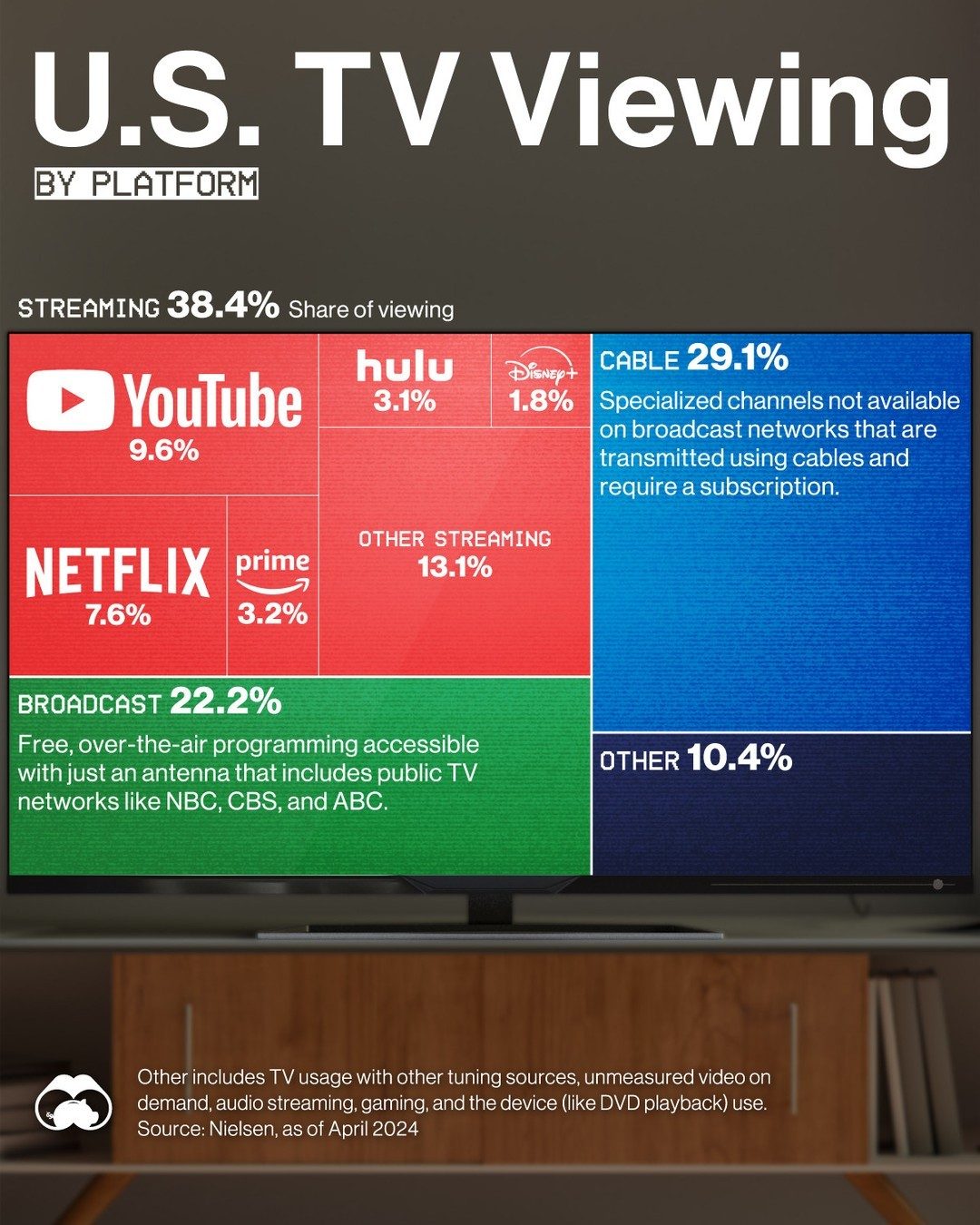
Streaming services have revolutionized the way Americans watch TV. According to the most recent data from Nielsen, streaming accounts for 38.4% of total TV viewing. This is a significant jump from just a few years ago and underscores the growing preference for on-demand content. Among streaming platforms, YouTube leads with 9.6% of the total viewing share, followed by Netflix at 7.6%, Hulu at 3.2%, and Disney+ at 1.8%. The combined share of these major streaming services is a testament to their dominance in the current TV landscape.
Traditional Cable and Broadcast TV
Traditional cable and broadcast television still hold substantial shares of the viewing market, but their influence is waning. Cable TV retains 29.1% of the viewing share, while broadcast TV holds 22.2%. These figures highlight the enduring appeal of traditional platforms, despite the rise of streaming. Broadcast TV, in particular, offers free, over-the-air programming accessible with just an antenna, including major networks like NBC, CBS, and ABC.
The 'Other' Categories
The 'Other Streaming' category, which includes a variety of niche and emerging platforms, claims 13.1% of the viewing share. This category encompasses a diverse range of services, from specialized sports and news channels to international content providers. The 'Other' category, making up 10.4% of the share, encompasses a mix of miscellaneous viewing habits, including linear TV, video game streaming, and other digital platforms.
Factors Driving the Shift to Streaming
Several factors contribute to the shift from traditional TV to streaming services. The convenience of on-demand viewing, the ability to watch shows and movies at any time, and the vast library of content available are key drivers. Additionally, the affordability and flexibility of streaming subscriptions, which often offer various plans and pricing options, make them more accessible to a broader audience.
Personalization and Recommendation Systems
Streaming platforms excel in personalizing the viewing experience. Advanced algorithms analyze viewing habits to provide tailored recommendations, keeping users engaged and satisfied. This level of personalization is a significant advantage over traditional TV, where content is broadcasted on a fixed schedule.
The Role of Technology and Accessibility
The widespread availability of high-speed internet and the proliferation of smart TVs and mobile devices have made streaming more accessible than ever. These technological advancements allow users to enjoy high-quality content seamlessly across multiple devices, further enhancing the appeal of streaming services.
Practical Tips for Viewers and Content Creators
Maximizing Your Streaming Experience
To get the most out of your streaming experience, consider the following tips:
- Explore Different Platforms: Don't limit yourself to one or two streaming services. Experiment with various platforms to find the best content suitable for your preferences.
- Utilize Free Trials: Many streaming services offer free trials. Use these to assess the quality of content and features before committing to a subscription.
- Manage Subscriptions: Keep track of your subscriptions to avoid unnecessary costs. Consider using a subscription management service to stay organized and save money.
Opportunities for Content Creators
For content creators, the shift towards streaming presents new opportunities and challenges. Here are some tips to navigate this landscape effectively:
- Optimize for Different Platforms: Tailor your content to suit the unique audience and format of each streaming platform. For example, YouTube is great for short, engaging videos, while Netflix may be better for longer-form content.
- Leverage Analytics: Use the data provided by streaming platforms to understand your audience better and create content that resonates with them.
- Engage with Viewers: Building a strong connection with your audience is crucial. Engage with viewers through comments, social media, and other interactive features to foster loyalty and grow your following.
Important Takeaways
The dominance of streaming services in the U.S. TV viewing landscape reflects a significant shift in consumer preferences and technological advancements. Key takeaways from this analysis include:
- Streaming's Growing Influence: Streaming services account for nearly 40% of total TV viewing, indicating a strong preference for on-demand content.
- Diversity in Viewing Options: While major platforms like YouTube, Netflix, and Hulu lead the way, there is a growing diversity in the types of streaming services available.
- Enduring Appeal of Traditional TV: Traditional cable and broadcast TV still hold significant shares, showcasing their enduring appeal despite the rise of streaming.
- Personalization and Accessibility: The ability to personalize the viewing experience and the widespread availability of high-speed internet and smart devices are key factors driving the shift to streaming.
Conclusion
Streaming services have become the dominant force in U.S. TV viewing, with platforms like YouTube, Netflix, and Hulu leading the way. While traditional cable and broadcast TV continue to hold significant shares, the convenience, personalization, and affordability of streaming services are driving a widespread shift in viewing habits. As technology continues to evolve, it will be interesting to see how these trends develop and what new platforms and services emerge to shape the future of TV viewing. Whether you are a content creator or a viewer, staying informed about these trends can help you make the most of the ever-changing media landscape.
Watch the Reel
Related deep dives
Similar reads based on topic and creator.


Recent articles
Fresh deep dives from the latest Reels we unpacked.




Comments
Be the first to comment.