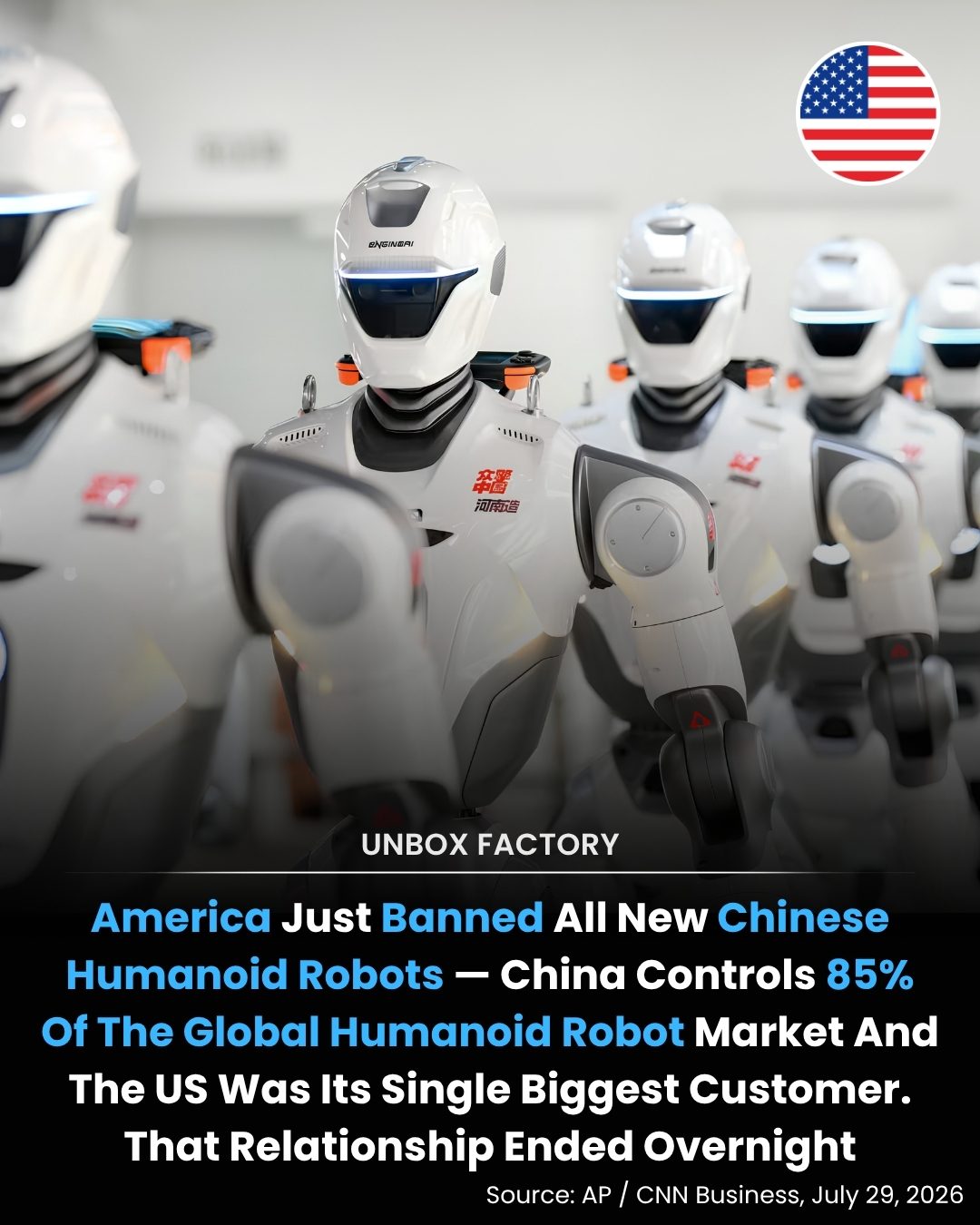
United States Ban on New Chinese Humanoid Robots
The United States has announced significant restrictions on new Chinese-made humanoid robots. This move marks a substantial shift in the global robotics industry, driven by national security concerns over artificial intelligence, advanced sensors, software access, and supply chain dependencies.
Context / Why this Matters
China currently dominates the global humanoid robot market, manufacturing an estimated 85% of the world's supply. This dominance extends to critical components such as actuators, batteries, rare earth magnets, and precision components. The United States' decision to restrict Chinese humanoid robots underscores a broader geopolitical tension and a strategic pivot in technology and defense.
Economic Impact and Market Shifts
Analysts predict that the global humanoid robot market could exceed $100 billion annually by the early 2030s. This makes it one of the fastest-growing technology sectors. The ban is expected to accelerate domestic robot development in the United States while reshaping global robotics supply chains. The move could also prompt other countries to re-evaluate their dependency on Chinese technology, potentially leading to a more diversified global market.
National Security Concerns
The restrictions highlight growing concerns over national security. Issues such as data privacy, software vulnerabilities, and the risk of foreign influence in critical infrastructure have become paramount. By limiting the import of Chinese humanoid robots, the United States aims to mitigate these risks and foster a more secure domestic technology ecosystem.
Potential Impact on the United States
The ban could spur innovation and job creation in the U.S. robotics sector. Companies may invest more in research and development, leading to advancements in humanoid robot technology. However, it also poses challenges, such as the need to rapidly build a robust domestic supply chain and address potential skill gaps in the workforce.
Main Discussion
Market Dominance and Supply Chain Dependency
China's dominance in the humanoid robot market is a result of its strong manufacturing capabilities and extensive supply chain control. The country's control over key components makes it a critical player in the global robotics industry. The United States' ban aims to reduce this dependency and promote self-sufficiency in critical technologies.
Technological and Economic Implications
The ban will have far-reaching implications for both the United States and China. For the United States, it means a push towards domestic innovation and self-reliance. For China, it could lead to a loss in market share and potential economic repercussions. The ban also underscores the growing competition between the two nations in the global technology race.
Strategic Considerations
The ban is part of a broader strategy to secure critical technologies. It reflects a growing awareness of the strategic importance of robotics and AI in shaping the future of warfare, manufacturing, and everyday life. By restricting Chinese humanoid robots, the United States aims to protect its national interests and ensure a more secure technological future.
Practical Tips
For businesses and innovators in the robotics sector, the ban presents both challenges and opportunities.
Investing in Research and Development
Companies should consider investing in research and development to create domestic alternatives to Chinese humanoid robots. This not only supports national security but also positions businesses to capture a growing market share as the industry expands.
Building a Robust Supply Chain
Establishing a robust domestic supply chain is crucial. This includes developing capabilities in manufacturing key components such as actuators, batteries, and precision parts. Collaboration between academia, industry, and government can accelerate this process.
Addressing Workforce Needs
The shift towards domestic robot development will require a skilled workforce. Investing in education and training programs can help address potential skill gaps and ensure a steady supply of talent in the robotics sector.
Important Takeaways
- The United States' ban on new Chinese humanoid robots marks a significant shift in the global robotics industry.
- China controls 85% of the global humanoid robot market, raising concerns about supply chain dependency and national security.
- The ban is expected to accelerate domestic robot development in the United States while reshaping global supply chains.
- Businesses and innovators should invest in research and development, build a robust supply chain, and address workforce needs to capitalize on the growing market.
Conclusion
The United States' ban on new Chinese humanoid robots represents a pivotal moment in the global robotics industry. Driven by national security concerns and a desire for self-sufficiency, the move underscores the strategic importance of robotics and AI. As the industry adapts to this new landscape, businesses and innovators have a unique opportunity to shape the future of robotics and secure a competitive edge in a rapidly evolving market.
Watch the Reel
Questions readers ask
Which specific concerns led the US to restrict Chinese-made humanoid robots?
The US cited national security concerns, particularly focusing on artificial intelligence, advanced sensors, software access, and supply chain dependencies.
How does the US ban affect the global humanoid robot market?
The ban may disrupt supply chains and industry dynamics, as China currently produces about 85% of the world's humanoid robots and supplies critical components.
What components are crucial to the supply chain of humanoid robots?
Key components include actuators, batteries, rare earth magnets, and precision components, many of which are predominantly produced by China.
How might the US restrictions impact the Chinese robotics industry?
The restrictions could lead to a decrease in demand for Chinese-made humanoid robots and may prompt the industry to explore new markets and diversify its production.
What alternatives might the US consider to mitigate the impact of these restrictions?
The US may invest in domestic production capabilities, fostering local manufacturing, and innovation. Additionally, it could seek partnerships with other countries to secure reliable supply chains.
How could the ban influence the future of the global robotics market?
The restrictions may accelerate innovation in the global robotics market, encouraging other countries to develop their own humanoid robot technologies and supply chains.
What industries, besides defense, might be affected by these restrictions?
Industries such as manufacturing, healthcare, and customer service, which heavily rely on humanoid robots for automation and efficiency, could face disruptions and increased costs due to the restrictions.
Related deep dives
Similar reads based on topic and creator.




Recent articles
Fresh deep dives from the latest Reels we unpacked.




Comments
Be the first to comment.