Rare Earth Elements in U.S. Defense Technology
Rare earth elements (REEs) are indispensable in modern U.S. defense technology, from the advanced avionics of fighter jets to the propulsion systems of submarines. These critical materials, though abundant in the Earth's crust, are not widely available in concentrated, mineable deposits. Understanding their role in defense systems provides insights into the broader challenges and strategic considerations facing the U.S. military.
Why This Matters
The reliance on rare earth elements in defense technology is not merely about powering equipment; it's about ensuring the operational readiness and effectiveness of the U.S. military. These elements are essential for a wide range of applications, from precision-guided munitions to advanced radar systems. The strategic importance of rare earths is highlighted by their inclusion in the U.S. government's list of critical minerals, underscoring the need for a stable and secure supply chain.
Main Discussion
The Role of Rare Earth Elements in Defense Systems
Rare earth elements are used in various defense applications due to their unique magnetic and electrochemical properties. For instance, neodymium (Nd) and dysprosium (Dy) are crucial for the production of permanent magnets, which are essential for the operation of drive motors and missile guidance systems. Similarly, gadolinium (Gd) and europium (Eu) are used in advanced radar systems and lasers, respectively.
Fighter Jets
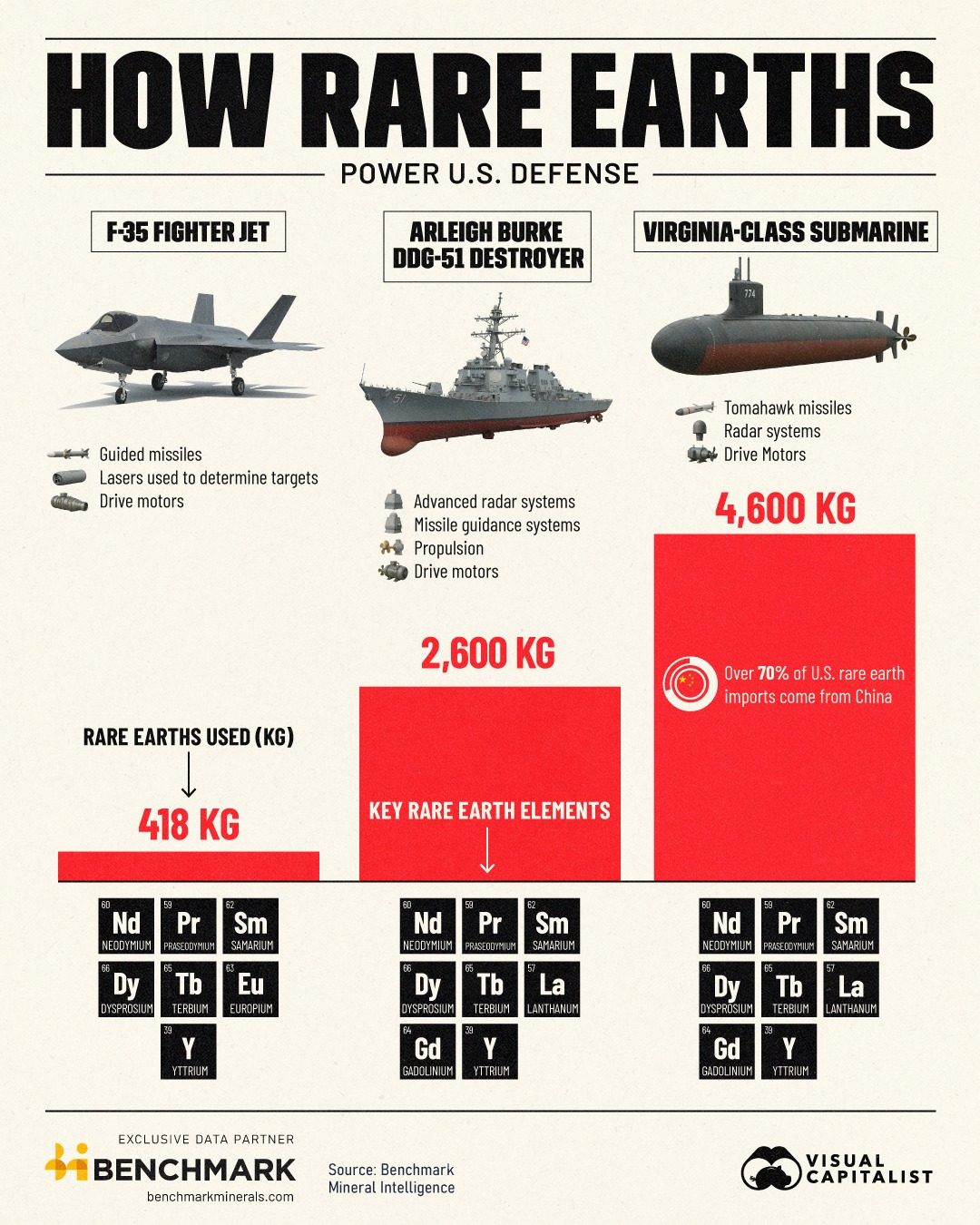
Fighter jets, such as the F-35, require a significant amount of rare earth elements. The F-35 jet, for example, utilizes over 418 kg of rare earths. These elements are critical for the jet's avionics, radar systems, and propulsion systems, ensuring the aircraft can perform at peak efficiency.
Destroyers
Destroyers, like the Arleigh Burke-class (DDG-51), also rely heavily on rare earth elements. These ships use over 2,600 kg of rare earths, primarily for their propulsion systems, advanced radars, and Tomahawk missiles. The use of rare earths in these applications ensures the destroyer's capability to operate effectively in various combat scenarios.
Submarines
Submarines, particularly the Virginia-class, are among the heaviest users of rare earth elements, utilizing more than 4,600 kg. These elements are crucial for the submarine's drive motors, propulsion systems, and missile guidance systems, ensuring stealth and operational effectiveness.
Dependence on Imports
Over 70% of U.S. rare earth imports come from China, highlighting a significant dependency on foreign supplies. This reliance poses several challenges, including supply chain vulnerabilities and potential disruptions due to geopolitical tensions. Ensuring a reliable and secure supply of rare earths is, therefore, a critical priority for the U.S. defense industry.
Key Rare Earth Elements
Several key rare earth elements are particularly important for defense applications:
- Neodymium (Nd): Used in permanent magnets for drive motors and missile guidance systems.
- Praseodymium (Pr): Essential for various defense applications, including lasers and radars.
- Samarium (Sm): Used in samarium-cobalt magnets, which are critical for certain defense technologies.
- Dysprosium (Dy): Enhances the performance of neodymium-based permanent magnets.
- Terbium (Tb): Used in green phosphor for color displays in military equipment.
- Europium (Eu): Used in red phosphor for color displays and laser applications.
- Gadolinium (Gd): Utilized in radars and other defense technologies.
- Yttrium (Y): Critical for various defense applications, including lasers and radars.
Practical Tips
Ensuring Supply Chain Security
Given the critical role of rare earth elements in defense technology, it is essential to ensure a stable and secure supply chain. This can be achieved through several strategies:
- Diversifying Suppliers: Reducing reliance on a single supplier, such as China, by diversifying the sources of rare earth imports.
- Domestic Mining: Encouraging domestic mining and processing of rare earth elements to reduce dependence on foreign suppliers.
- Recycling: Developing efficient recycling methods to recover rare earth elements from end-of-life products and defense equipment.
- Strategic Stockpiling: Maintaining strategic stockpiles of critical rare earth elements to ensure availability during supply disruptions.
Investing in Research and Development
Investing in research and development is crucial for identifying alternative materials that can replace or reduce the reliance on rare earth elements. This includes:
- Alternative Technologies: Exploring alternative technologies that do not require rare earth elements or use them more efficiently.
- Material Innovation: Developing new materials with similar properties to rare earths that can be used in defense applications.
- Collaborative Efforts: Collaborating with academic institutions, industry partners, and government agencies to advance research in this area.
Important Takeaways
Rare earth elements are vital for the operation and effectiveness of U.S. defense systems. Their unique properties make them indispensable for various applications, from fighter jets to submarines. The significant reliance on imports from China poses strategic challenges, highlighting the need for a secure and reliable supply chain. Key rare earth elements, such as neodymium, dysprosium, and gadolinium, play crucial roles in defense technologies, and efforts to ensure their availability and develop alternatives are essential for maintaining military readiness.
Conclusion
Rare earth elements are not just critical for powering defense technology—they are fundamental to the operational capabilities of the U.S. military. Ensuring a stable and secure supply of these elements is a strategic imperative. By diversifying suppliers, investing in domestic mining and recycling, and advancing research and development, the U.S. can mitigate the risks associated with reliance on foreign imports and maintain its technological edge in defense.
Watch the Reel
Related deep dives
Similar reads based on topic and creator.


Recent articles
Fresh deep dives from the latest Reels we unpacked.




Comments
Be the first to comment.