U.S. Interest Rate Hikes
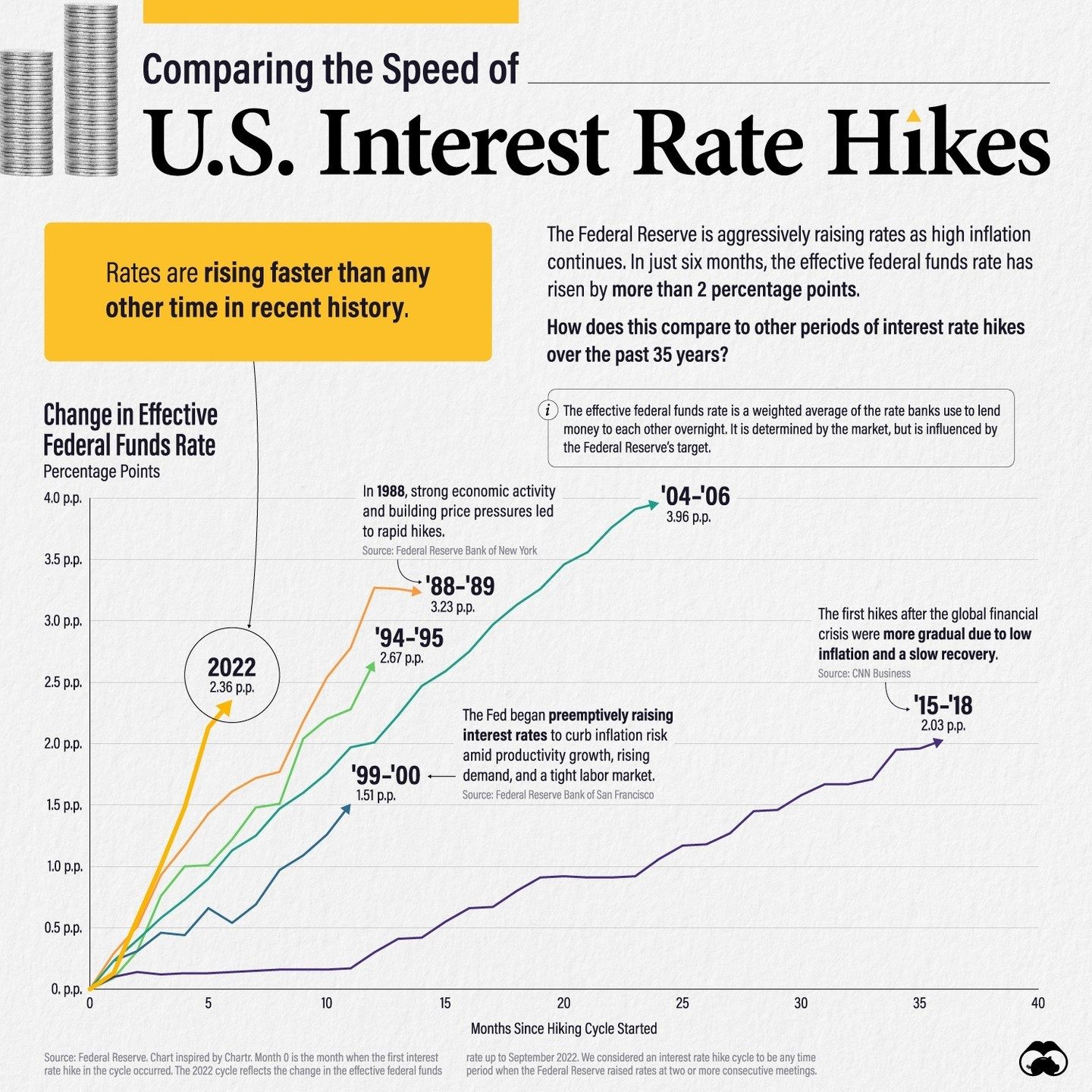
U.S. interest rates have been rising at an unprecedented pace, with the Federal Reserve implementing aggressive hikes to combat inflation. In just six months, rates have surged by more than two percentage points, a trend that outpaces previous periods of monetary tightening.
Why this matters
Understanding the current pace of interest rate hikes requires historical context. The Federal Reserve's actions are influenced by various economic factors, and historical data can provide valuable insights into the potential impacts of these rate changes.
Main discussion
Historical Context of Interest Rate Hikes
Interest rate hikes are a tool used by the Federal Reserve to control inflation and stabilize the economy. By increasing the federal funds rate, the central bank makes borrowing more expensive, which can help to slow down economic activity and reduce inflationary pressures.
Over the past 35 years, there have been several notable periods of rapid interest rate hikes, each driven by unique economic conditions. These periods include:
- 1988: Strong economic activity and rising price pressures led to rapid hikes. The federal funds rate increased by 3.36 percentage points.
- 1994-95: The Federal Reserve began raising rates preemptively to curb inflation risks amid productivity growth, rising demand, and a tight labor market. The rate hikes totaled 2.67 percentage points.
- 1999-00: This period saw a more moderate increase of 1.51 percentage points as the economy grew steadily.
- 2003-06: The federal funds rate rose by 2.36 percentage points, reflecting a cautious approach to managing economic growth and inflation.
- 2015-16: During this period, rates increased by 2.03 percentage points, marking a gradual tightening cycle.
- 2022: The current cycle, driven by high inflation, has seen the federal funds rate rise by 2.36 percentage points in just six months, the fastest pace in recent history.
Current Economic Conditions
The current hikes are driven by inflation levels not seen in decades. High inflation erodes purchasing power and can lead to economic instability if left unchecked. The Federal Reserve’s aggressive approach aims to curb this trend by making borrowing more expensive, which in turn can reduce consumer spending and business investment.
Impact on the Economy
Interest rate hikes have far-reaching effects on various sectors of the economy. Higher borrowing costs can:
- Reduce Consumer Spending: Higher interest rates on loans and credit cards can lead consumers to spend less, impacting retail and other consumer-driven sectors.
- Affect Housing Market: Mortgage rates often rise in tandem with federal funds rates, making home buying more expensive and potentially slowing down the housing market.
- Influence Business Investment: Businesses may delay or cancel investment projects due to higher borrowing costs, which can slow down economic growth.
- Strengthen the U.S. Dollar: Higher interest rates can make the dollar more attractive to foreign investors, potentially leading to a stronger currency.
Practical tips
For consumers and businesses, navigating a high-interest rate environment requires strategic planning:
- Review Debt Management: Consider refinancing high-interest loans or credit cards to take advantage of fixed rates before they rise further.
- Monitor Spending: Tighten budgets and prioritize essential expenses to mitigate the impact of higher borrowing costs.
- Invest Wisely: Look for safe investment options that can offer returns comparable to or higher than the current inflation rate.
Important takeaways
- The Federal Reserve's aggressive interest rate hikes are a response to multi-decade high inflation.
- The pace of the current hikes is unprecedented in recent history.
- Historical data shows that rapid rate hikes are often a response to specific economic conditions, such as high inflation or strong economic growth.
- The impacts of these hikes are broad, affecting consumer spending, the housing market, business investment, and the value of the U.S. dollar.
Conclusion
The rapid increase in U.S. interest rates is a critical economic development with wide-ranging implications. By understanding the historical context and current economic conditions, consumers and businesses can better navigate this challenging environment. Staying informed about these trends and making strategic adjustments can help mitigate the impacts of higher borrowing costs.
Watch the Reel
Questions readers ask
What are the federal reserve interest rates and how do they impact the economy?
Federal Reserve interest rates, also known as the federal funds rate, are the interest rates at which depository institutions (banks and credit unions) lend reserve balances to other depository institutions overnight. These rates impact the economy by influencing borrowing and saving rates, which can affect consumer spending, business investment, and overall economic activity.
What were the historical interest rate hikes of 1988 and how do they compare to those of 2023?
The federal reserve hike cycle of 1988, under the chairmanship of Alan Greenspan, saw significant rate increases to combat inflation. The federal funds rate rose from 6.50% in March 1988 to 9.75% in June 1989. The 2023 rate hikes, while aggressive, have not yet matched the magnitude of the 1988 cycle. However, the speed of the rate increases in 2023 is historic, with rates rising by over 2 percentage points in just six months.
How does the Federal Reserve determine the pace of interest rate hikes?
The Federal Reserve determines the pace of interest rate hikes based on various economic indicators, including inflation rates, employment data, and GDP growth. The goal is to achieve a balance between controlling inflation and promoting economic growth. The Fed's rate hikes aim to reduce inflation by making borrowing more expensive, which can slow down spending and investment, ultimately cooling down the economy.
What are interest rate cycles and why are they important in understanding U.S. interest rate trends?
Interest rate cycles refer to the periods of interest rate increases (tightening) and decreases (easing) implemented by the Federal Reserve. Understanding these cycles is crucial for analyzing U.S. interest rate trends, as they provide historical context for current rate hikes and can help predict future economic conditions, such as inflation and economic growth.
How do interest rates and inflation typically interact?
Interest rates and inflation typically have an inverse relationship. When inflation is high, the Federal Reserve often raises interest rates to make borrowing more expensive, which can slow down economic activity and reduce inflation. Conversely, when inflation is low, the Fed may lower interest rates to stimulate economic growth. This dynamic is essential in understanding the impact of interest rate hikes on the economy.
What are the fastest interest rate hikes in U.S. history and what caused them?
Some of the fastest interest rate hikes in U.S. history occurred in the early 1980s under Fed Chairman Paul Volcker, when rates were raised from 11.25% to 20% to combat skyrocketing inflation. More recently, the rapid rate hikes in 2022 and 2023, where rates have risen by over 2 percentage points in six months, are also among the fastest. These hikes are driven by the need to control high inflation levels.
How often does the Federal Reserve hike interest rates in a typical cycle?
The frequency of interest rate hikes by the Federal Reserve can vary depending on economic conditions. During periods of economic growth and inflation, the Fed may implement several hikes within a year. In contrast, during economic downturns or when inflation is low, rate hikes may be less frequent or non-existent. Currently, the Fed is implementing hikes at a rapid pace to combat high inflation, which is unusual in recent decades.
Related deep dives
Similar reads based on topic and creator.


Recent articles
Fresh deep dives from the latest Reels we unpacked.




Comments
Be the first to comment.