Understanding U.S. Home Affordability Trends
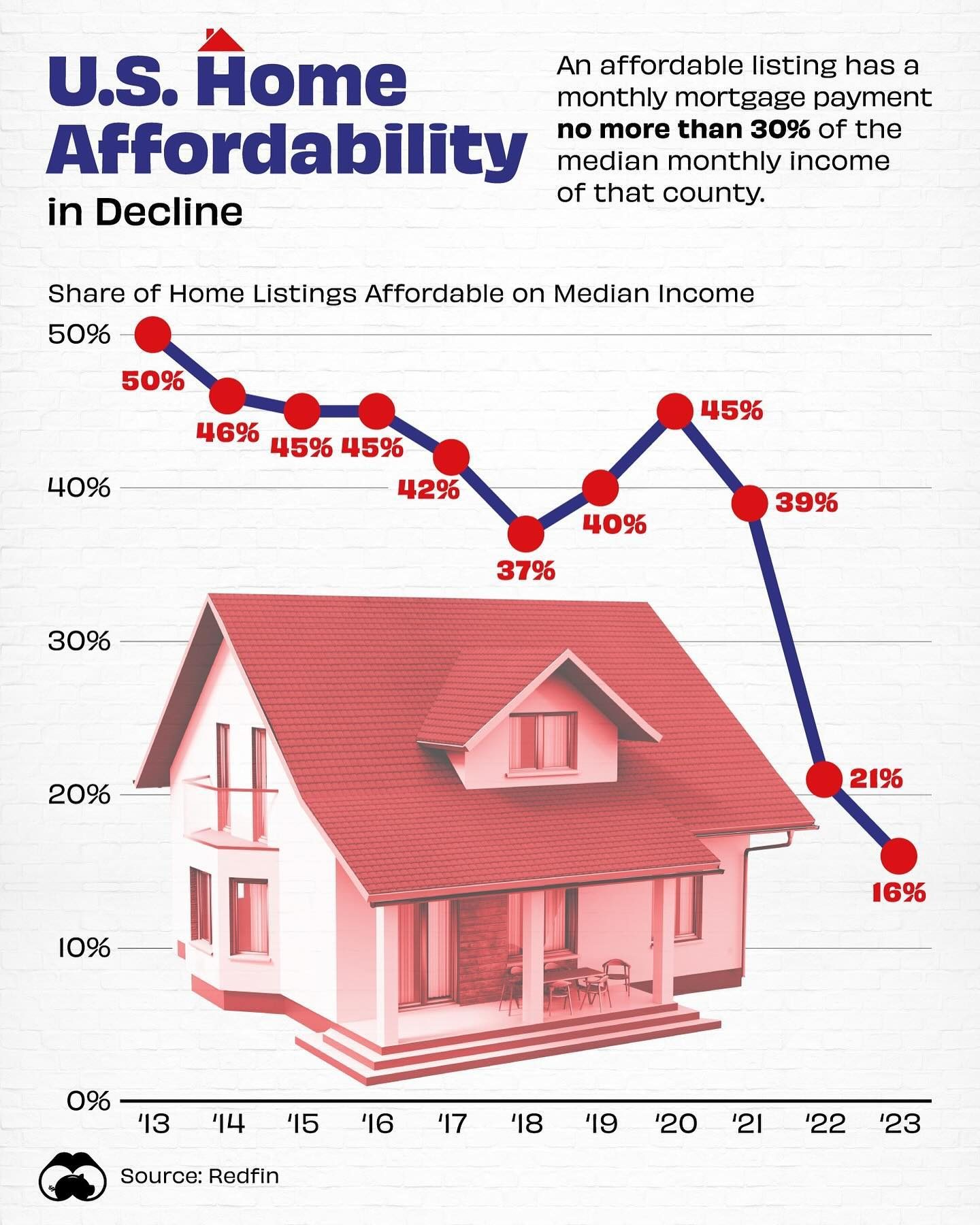
In 2023, home affordability in the United States reached a critical point. With mortgage rates more than doubling in just two years, a significant portion of house listings demanded mortgage payments exceeding 30% of the local average monthly income. This trend signals a narrowing supply of affordable homes across the country.
Why This Matters
The housing market directly impacts the financial stability and well-being of many Americans. Affordability is a key factor in determining whether individuals and families can achieve the American Dream of homeownership. Trends in home affordability influence economic decisions, public policy, and the overall quality of life for millions of people.
A Historical Perspective
The Affordability Peak
In 2013, around 50% of home listings were considered affordable. This was a high point in recent history, where a majority of homes were within reach for many Americans. This affordability peak was driven by several factors, including low mortgage rates and a recovering economy post-2008 financial crisis.
The Declining Trend
From 2014 to 2022, home affordability steadily declined. This period saw a dramatic shift in the housing market. By 2022, only 16% of home listings were affordable, marking a significant drop from the 2013 peak. Several factors contributed to this decline:
- Increasing Mortgage Rates: Mortgage rates more than doubled, making home loans more expensive.
- Rising Home Prices: The price of houses skyrocketed, driven by high demand and low supply.
- Economic Uncertainty: Economic instability, such as recessions, can make home loans less accessible for many buyers.
The Recent Slight Recovery
In 2023, there was a slight recovery in home affordability, with 21% of listings becoming affordable again. However, this recovery does not undo the significant decline seen over the past decade. The recent upward trend suggests stabilizing mortgage rates and potential policy interventions aiming to improve affordability.
Key Factors Influencing Home Affordability
Mortgage Rates
Mortgage rates play a crucial role in determining home affordability. When mortgage rates are high, monthly payments increase, making homes less accessible to a larger portion of the population. Conversely, low mortgage rates make homeownership more attainable by reducing the financial burden of monthly mortgage payments.
Home Prices
The price of homes is another critical factor. Rising home prices can outpace income growth, making it difficult for many individuals and families to afford a home. Factors such as construction costs, land prices, and market demand influence home prices.
Income Levels
The median monthly income in a region is a fundamental determinant of home affordability. When income levels are low, even moderate mortgage payments can become unaffordable. Conversely, higher incomes can make homeownership more attainable.
Supply and Demand
The supply and demand dynamics of the housing market greatly influence affordability. In areas with high demand and low supply, home prices and mortgage payments tend to be higher. Conversely, regions with a balanced supply and demand can offer more affordable housing options.
Practical Tips for Prospective Homebuyers
Given the current state of home affordability, prospective homebuyers can take several steps to navigate the market more effectively.
Improve Credit Score
A higher credit score can lead to lower mortgage rates. Taking steps to improve your credit score, such as paying bills on time and reducing debt, can make homeownership more affordable.
Save for a Larger Down Payment
A larger down payment can reduce the amount needed for a mortgage and lower monthly payments. Saving for a larger down payment can also help you qualify for better mortgage rates.
Explore First-Time Buyer Programs
Many regions offer programs and incentives for first-time homebuyers. These programs can provide financial assistance, lower interest rates, and other benefits to make homeownership more accessible.
Consider Alternative Housing Options
In some cases, alternative housing options such as condos, townhouses, or fixer-uppers can be more affordable. Exploring these options can help you find a home that fits within your budget.
Work with a Real Estate Professional
Real estate professionals can provide valuable insights into the local housing market and help you find affordable homes. They can also assist with negotiations and the buying process, making it smoother and more efficient.
Important Takeaways
Home affordability in the United States has seen significant fluctuations over the past decade. Key factors such as mortgage rates, home prices, income levels, and market dynamics play a crucial role in determining affordability. Prospective homebuyers should take proactive steps to navigate the current market, including improving their credit score, saving for a larger down payment, exploring alternative housing options, and working with real estate professionals.
Conclusion
The housing market is dynamic and influenced by various economic factors. Understanding the trends and factors that affect home affordability can help prospective homebuyers make informed decisions. By taking proactive steps and leveraging available resources, individuals and families can navigate the current market and achieve their dream of homeownership.
Watch the Reel
Questions readers ask
What were the primary factors contributing to the decline in home affordability from 2013 to 2023?
The primary factors contributing to the decline in home affordability included rising mortgage rates, surging home prices, and economic uncertainty. These elements combined to make homeownership increasingly difficult for many Americans.
How have mortgage rates changed between 2013 and 2023?
Mortgage rates have more than doubled between 2013 and 2023, significantly impacting the affordability of homes. This increase has led to higher monthly mortgage payments, making it harder for potential buyers to qualify for loans.
What does it mean for home affordability when mortgage payments exceed 30% of local average monthly income?
When mortgage payments exceed 30% of the local average monthly income, it indicates that a significant portion of a household's income is allocated to housing costs. This can lead to financial instability and make it difficult for buyers to cover other living expenses.
Why is home affordability a critical issue in the United States?
Home affordability is a critical issue because it directly impacts the financial stability and well-being of many Americans. Affordable housing is essential for achieving homeownership, which is often seen as a key part of the American Dream. It also influences economic decisions, public policy, and overall quality of life.
What are some sources of data that track home affordability trends?
Sources like Redfin housing data provide insights into home affordability trends. They track median home prices, mortgage rates, and the number of affordable home listings, helping to paint a clear picture of the housing market's state and how it affects potential buyers.
How did the economic uncertainty impact home affordability in the United States?
Economic uncertainty, such as doubts about job security and future financial stability, can make potential homeowners hesitate to buy. This hesitancy can decrease demand and further impact the housing market, contributing to the overall affordability crisis.
What steps can potential homeowners take to navigate the current housing market?
Potential homeowners can take steps such as improving their credit score, saving for a larger down payment, and considering more affordable housing options. Additionally, they may want to consult with financial advisors who can provide tailored advice on navigating the current housing market.
Related deep dives
Similar reads based on topic and creator.


Recent articles
Fresh deep dives from the latest Reels we unpacked.




Comments
Be the first to comment.