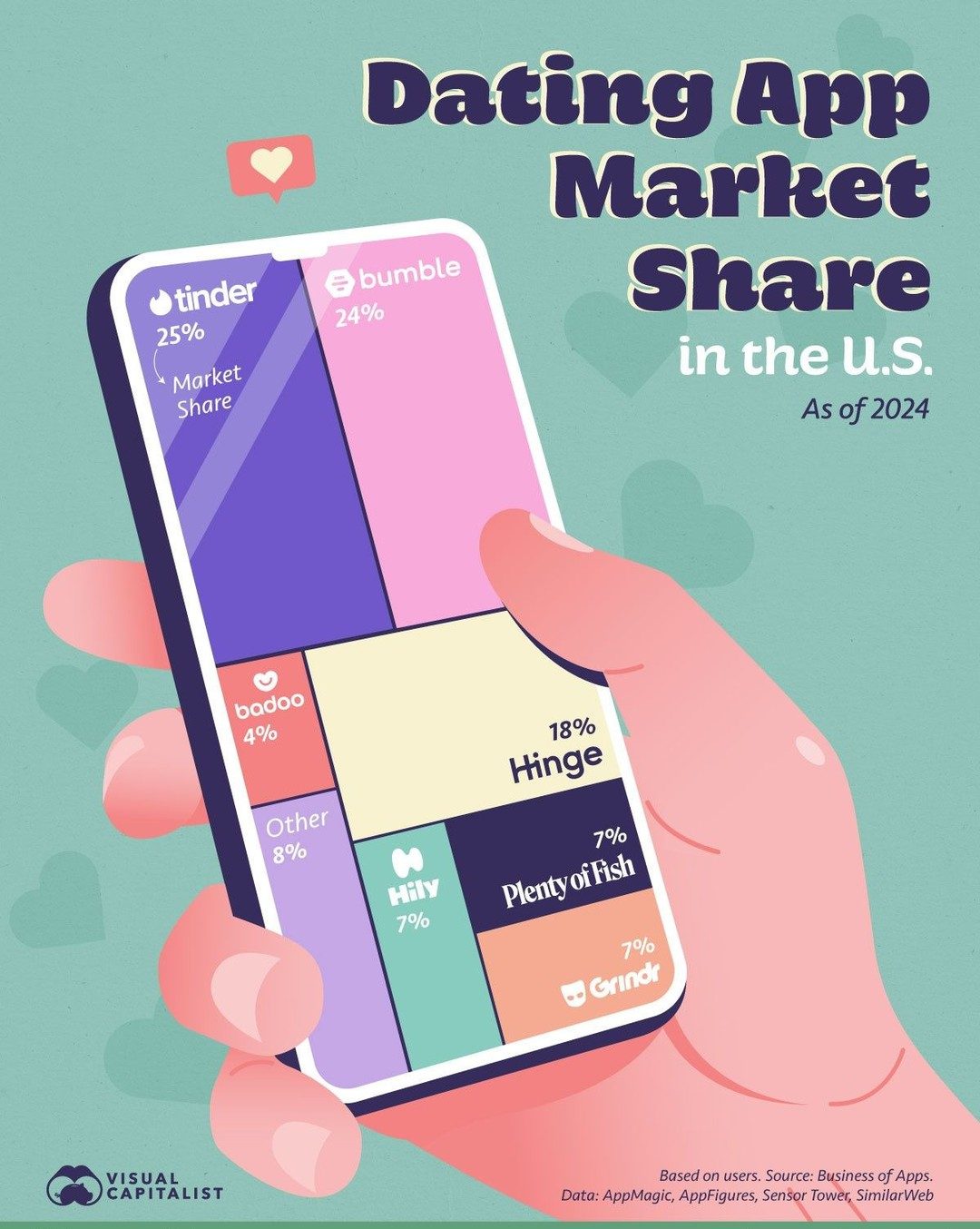
Dating App Market Share in the U.S. in 2024
In 2024, the U.S. dating app landscape is dominated by a few key players, with Tinder and Bumble leading the pack. According to data from Business of Apps, these two apps hold nearly equal market shares, each commanding a significant portion of the user base. This dynamic landscape reflects broader trends in online dating, including user demographics and app features.
Why This Matters
The market share of dating apps is a critical indicator of user preferences and the effectiveness of app features. Understanding which apps are most popular can help users make informed decisions about which platforms to try. For app developers, this information is invaluable for staying competitive and adapting to user needs.
Market Share Breakdown
Tinder and Bumble
Tinder and Bumble are the two most dominant players in the U.S. dating app market, each holding roughly 25% and 24% of the market share, respectively. Tinder's user base is predominantly male, with 75% of its users identifying as such. This demographic skew is notable and influences the user experience and dynamics on the platform. In contrast, Bumble has differentiated itself by allowing only women to initiate conversations in heterosexual matches. This feature has attracted a significant female user base and contributed to its strong market position.
Hinge
Following Tinder and Bumble, Hinge holds an impressive 18% of the market share. Hinge has garnered a reputation for being a more serious dating app, focusing on meaningful connections rather than casual hookups. This positioning has resonated with users looking for long-term relationships, contributing to its substantial market share.
Plenty of Fish and Grindr
Plenty of Fish and Grindr each hold 7% of the market. Plenty of Fish is known for its large user base and free-to-use model, which makes it accessible to a wide range of users. Grindr, on the other hand, is a niche app tailored to the LGBTQ+ community, particularly gay and bisexual men. Its specialized focus has allowed it to carve out a significant share of the market within this demographic.
Badoo and Hily
Badoo and Hily round out the top dating apps, each holding a smaller but notable portion of the market. These apps offer unique features and user experiences, catering to different preferences and needs within the dating app ecosystem. Despite their smaller market shares, they continue to attract users through innovative features and community engagement.
Key Features and User Preferences
Gender Dynamics
Gender dynamics play a significant role in the dating app market. Tinder’s predominantly male user base influences the overall user experience and interactions. Features like Bumble’s "women initiate conversations" policy have helped attract a more balanced user base, enhancing the app’s appeal to female users. This shift in gender dynamics has contributed to Bumble’s strong market performance.
User Experience and Features
User experience and features are critical factors in the success of dating apps. Apps like Hinge have prioritized meaningful connections, focusing on user profiles and compatibility. This approach has resonated with users seeking serious relationships, leading to its notable market share. Grindr’s specialized focus on the LGBTQ+ community has also been a key factor in its success, showcasing the importance of niche targeting in the dating app market.
Practical Tips for Users
Choosing the right dating app can significantly impact your experience. Here are some tips to help you navigate the landscape:
Define Your Goals
Understand what you’re looking for in a dating app. Are you seeking casual dating, serious relationships, or something in between? Apps like Tinder and Bumble are versatile, while Hinge and Badoo cater to more specific preferences. Knowing your goals will help you choose the right platform.
Consider User Demographics
Pay attention to the user demographics of each app. If you’re a woman looking for a more balanced dating experience, Bumble might be a better fit. Conversely, if you’re part of the LGBTQ+ community, Grindr offers a more tailored experience. Understanding the user base can help you make an informed decision.
Explore App Features
Each app offers unique features designed to enhance user experience. Spend some time exploring these features before committing to an app. For example, Hinge’s focus on meaningful connections might appeal to those seeking long-term relationships, while Tinder’s swiping feature is ideal for casual dating.
Important Takeaways
The U.S. dating app market is vibrant and competitive, with Tinder and Bumble leading the way. Hinge, Plenty of Fish, Grindr, Badoo, and Hily each offer unique features and user experiences, catering to a diverse range of preferences. Understanding the market share and key features of each app can help users make informed decisions and enhance their dating experiences.
Conclusion
The U.S. dating app market is dynamic, with Tinder and Bumble dominating the landscape. Each app offers unique features and caters to specific user preferences, from casual dating to serious relationships and niche communities. By understanding the market share and key features of each app, users can make informed decisions and enhance their dating experiences. Whether you're looking for a casual fling or a long-term relationship, the right app can make all the difference.
Watch the Reel
Questions readers ask
Why are Tinder and Bumble the leading dating apps in the U.S. in 2024?
Tinder and Bumble lead the U.S. dating app market in 2024 due to their significant market shares of 25% and 24%, respectively. Tinder’s large male user base and Bumble’s unique messaging rules, which empower women to make the first move, contribute to their popularity and success in attracting users.
What are the key differences between Tinder and Bumble?
The primary differences lie in their user demographics and features. Tinder has a larger male user base, while Bumble’s standout feature is its unique messaging rule, where women must initiate conversations, which can influence user experiences and preferences.
How do the market shares of Tinder and Bumble compare to other dating apps in the U.S.?
Tinder and Bumble are the top players in the 2024 U.S. dating app market, each holding around 24-25% of the market share. Other apps trail behind, indicating that these two apps are the most preferred choices among users.
What makes understanding the dating app market share important for users and developers?
For users, knowing the market share helps in choosing the most popular and effective platforms. For developers, this information is crucial for staying competitive and tailoring features to meet user demands and preferences.
How do the unique features of Bumble set it apart from other dating apps?
Bumble’s unique feature is its messaging rule, which requires women to initiate conversations. This empowers women and can lead to more meaningful interactions, making it a distinct choice for those who prefer a different dynamic in online dating.
What are the visual statistics that highlight the competition between Tinder and Bumble?
Visual statistics comparing the market shares and user demographics of Tinder and Bumble, such as charts and graphs, can provide a clear picture of their dominance and the competitive landscape. These visuals can also show the trends in user preferences and the impact of each app’s unique features.
How do Tinder and Bumble cater to different segments of the dating app market?
Tinder appeals to a broader audience with a larger male user base, while Bumble’s unique messaging feature attracts users, particularly women, who prefer a more controlled and empowering dating experience. This differentiation helps both apps cater to diverse user needs and preferences in the competitive market.
Related deep dives
Similar reads based on topic and creator.


Recent articles
Fresh deep dives from the latest Reels we unpacked.




Comments
Be the first to comment.