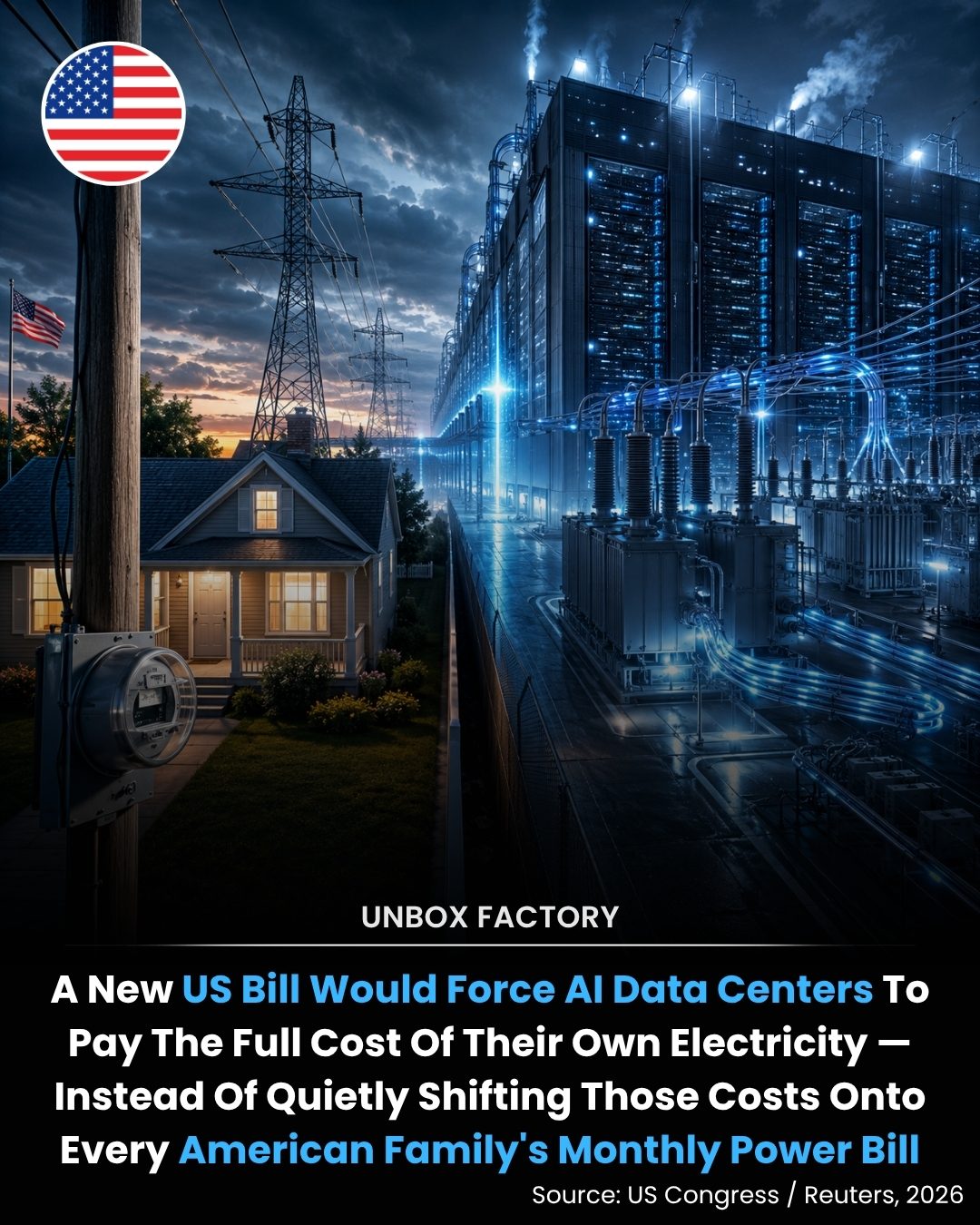
Energy Costs and AI Data Centers
The United States is considering new legislation that directly targets the energy consumption of AI data centers. The proposed bill aims to shift the financial burden of electricity infrastructure from residential customers to the technology companies that operate these facilities. This move could significantly impact how AI data centers are funded and operated, as well as the overall cost of electricity for American families.
Context: Why This Matters
Modern AI data centers, often referred to as hyperscale facilities, consume enormous amounts of electricity. These centers can require anywhere from 500 megawatts to over 1 gigawatt of power, which is enough to supply hundreds of thousands of homes. The sheer scale of their energy consumption necessitates significant investments in new transmission lines, substations, and grid upgrades—often amounting to billions of dollars. Currently, the cost of these infrastructure upgrades is typically distributed among all utility customers, including residential users.
This new legislation seeks to change that dynamic. By requiring AI data centers to pay the full cost of their electricity infrastructure, the bill aims to protect residential customers from rising utility bills. This shift could also ensure that technology companies bear the financial burden of expanding AI capabilities, rather than passing these costs onto consumers.
Main Discussion
The Energy Demand of AI Data Centers
AI data centers are essential for the operation of modern technologies, including cloud computing, artificial intelligence, and big data analytics. These facilities house thousands of servers that process vast amounts of data around the clock. The energy demands of these servers are massive, and they require a robust and reliable power supply to function efficiently.
Current Infrastructure Costs
The electricity infrastructure needed to support AI data centers is extensive. It includes not only the power plants that generate the electricity but also the transmission lines, substations, and other components that deliver that power to the data centers. The construction and maintenance of these infrastructure elements are costly, and these costs are currently shared by all utility customers.
Proposed Legislation: Shifting the Burden
The proposed bill in the United States aims to change this by requiring AI data centers to pay for the full cost of their electricity infrastructure. This would mean that the technology companies operating these facilities would be responsible for funding the construction and maintenance of the necessary power supply infrastructure. By shifting this financial burden, the bill seeks to ensure that the costs of AI expansion are not passed on to residential customers, thereby protecting them from increased utility bills.
Impact on Technology Companies
For technology companies, this legislation could have significant implications. It would require them to allocate more resources to cover the costs of electricity infrastructure, which could potentially impact their profitability and investment strategies. However, it could also incentivize these companies to invest in more energy-efficient technologies and renewable energy sources, as doing so could help reduce their long-term electricity costs.
Potential Benefits for Residential Customers
The primary goal of the proposed legislation is to protect residential customers from rising utility bills. By shifting the cost of electricity infrastructure to AI data centers, the bill aims to ensure that the financial burden of AI expansion is not passed on to individual households. This could result in more stable and predictable electricity costs for homeowners and renters, providing them with greater financial security.
Challenges and Considerations
While the proposed bill has its merits, it also presents several challenges. One of the main concerns is the potential impact on the competitiveness of the AI industry in the United States. If technology companies are required to pay for the full cost of their electricity infrastructure, it could increase their operational costs and make it more difficult for them to compete globally. Additionally, the legislation could potentially slow down the pace of AI innovation if companies are forced to allocate more resources to electricity infrastructure rather than research and development.
Practical Tips
For technology companies operating AI data centers, it is crucial to start planning for potential changes in electricity infrastructure costs. Here are some practical tips to help navigate these challenges:
Invest in Energy-Efficient Technologies
Investing in energy-efficient technologies and renewable energy sources can help reduce long-term electricity costs. This could include upgrades to server hardware, optimizing data center operations, and integrating renewable energy sources like solar or wind power.
Explore Partnerships and Collaborations
Collaborating with other technology companies or utility providers can help spread the costs of electricity infrastructure. Partnerships could involve shared infrastructure, joint investments, or cooperative research and development efforts.
Advocate for Policy Changes
Engaging with policymakers and advocating for balanced legislation can help shape the regulatory environment in a way that supports both innovation and sustainability. Technology companies can work with lawmakers to ensure that any new regulations are fair, effective, and supportive of long-term growth.
Prepare for Increased Costs
It is essential to prepare for the potential increase in electricity infrastructure costs. This could involve budgeting for higher operational expenses, exploring financing options, and developing contingency plans to ensure business continuity.
Important Takeaways
The proposed legislation in the United States to require AI data centers to pay for their electricity infrastructure has significant implications for both technology companies and residential customers. While the bill aims to protect households from rising utility bills, it also presents challenges for the AI industry. Technology companies will need to adapt by investing in energy-efficient technologies, exploring partnerships, and preparing for increased costs. By doing so, they can navigate the changing regulatory landscape while continuing to drive innovation and growth in the AI sector.
Conclusion
The proposed legislation to require AI data centers to pay for their electricity infrastructure is a significant development in the ongoing conversation about energy costs and technological advancement. By shifting the financial burden to technology companies, the bill seeks to protect residential customers from rising utility bills while ensuring that the costs of AI expansion are borne by those who benefit from it. As the legislative process unfolds, it will be essential for all stakeholders—from technology companies to policymakers and residential customers—to engage in constructive dialogue and collaboration to achieve a balanced and sustainable outcome.
Watch the Reel
Questions readers ask
Who will be primarily affected by the proposed US legislation on AI data center electricity costs?
The primary entities affected will be the technology companies that operate AI data centers. These companies will be required to cover the costs of the electricity infrastructure they use, which could potentially change their operating models and budgeting strategies. Additionally, residential customers may see less of an impact on their electricity bills.
What is the main goal of the proposed US legislation targeting AI data centers?
The primary goal is to shift the financial burden of electricity infrastructure from residential customers to tech companies. This aims to prevent residential customers from experiencing increased utility bills due to the high power consumption of AI data centers.
How does AI data center power consumption compare to typical residential use?
AI data centers, particularly hyperscale facilities, consume vast amounts of power. They can require anywhere from 500 megawatts to over 1 gigawatt of power, which is enough to supply hundreds of thousands of homes. This massive power demand necessitates significant grid upgrades.
Why are grid upgrades necessary for AI data centers?
Grid upgrades are necessary to accommodate the enormous power requirements of AI data centers. These facilities consume enough electricity to supply hundreds of thousands of homes, which strain the existing electrical infrastructure and necessitate billions of dollars in upgrades.
What is the potential impact of the new US legislation on AI data center operators?
AI data center operators may need to adjust their financial strategies to cover the costs of the electricity infrastructure. This could involve investing in more efficient technologies, negotiating better energy contracts, or passing some of the costs to their own customers, depending on their business models.
How might this legislation affect residential electricity bills?
The goal of the legislation is to protect residential customers from rising utility bills due to the high power consumption of AI data centers. By shifting the cost burden to tech companies, residential customers may see less of an increase in their electricity bills.
What are the implications of the proposed legislation for the tech industry?
The tech industry may face increased operational costs due to the need to pay for electricity infrastructure. This could potentially slow down the expansion of AI data centers or push companies to invest in more energy-efficient technologies to mitigate costs. The industry may also need to adapt to new financial and operational standards.
Related deep dives
Similar reads based on topic and creator.




Recent articles
Fresh deep dives from the latest Reels we unpacked.



Comments
Be the first to comment.