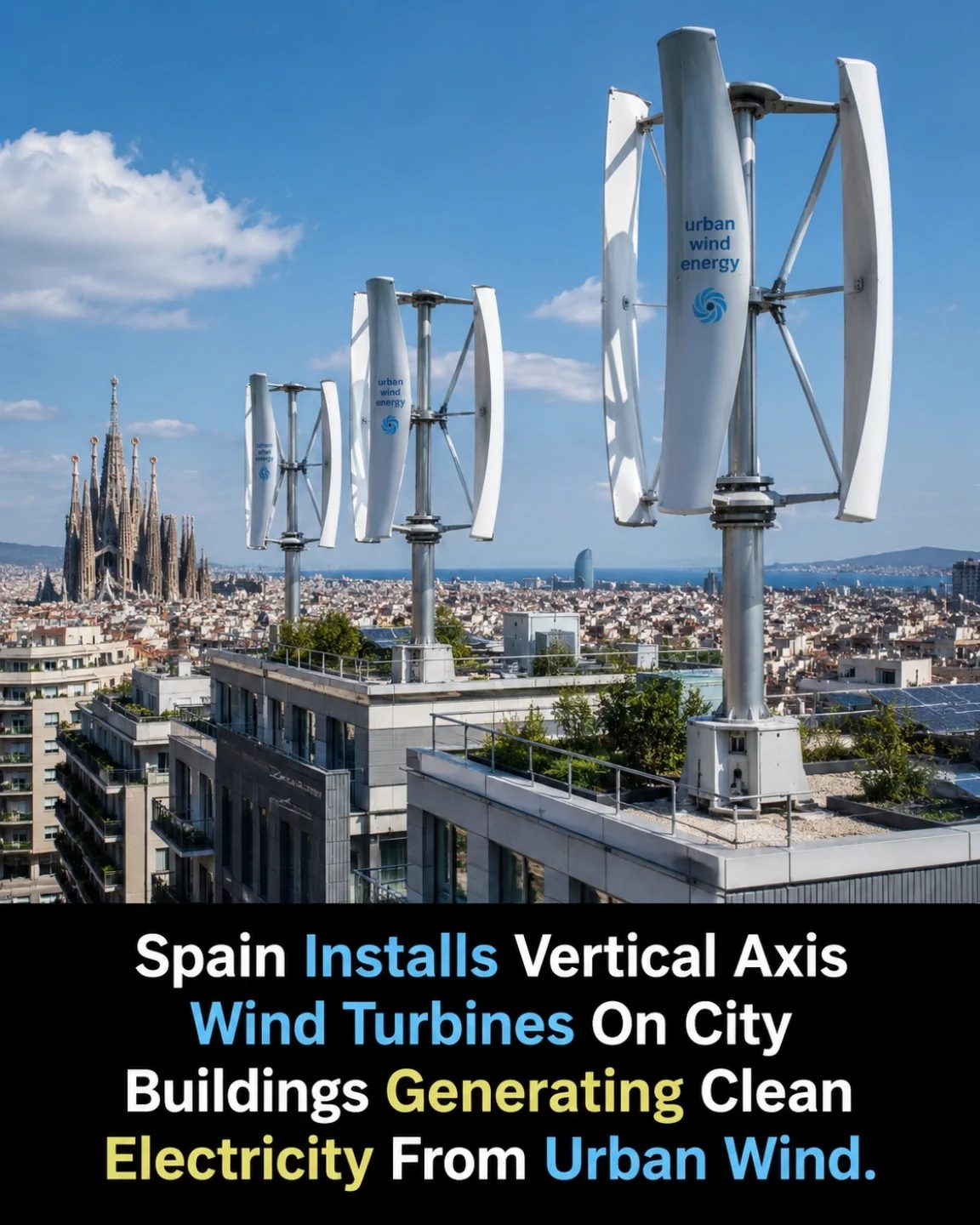
Vertical Axis Wind Turbines in Urban Spain
The integration of vertical axis wind turbines (VAWT) on city buildings in Spain represents a significant step forward in urban renewable energy. These innovative installations harness the power of urban wind to generate clean electricity, providing a sustainable solution to the energy demands of densely populated areas.
Why This Matters
Urbanization has led to a surge in energy consumption, particularly in cities. Traditional energy sources often struggle to meet this demand while maintaining environmental sustainability. Vertical axis wind turbines offer a viable alternative by leveraging the consistent wind patterns found in urban environments.
Urban Wind Turbines: An Overview
Design and Functionality
Vertical axis wind turbines are designed with a vertical rotor shaft that rotates around a vertical axis. Unlike horizontal axis wind turbines, which require specific wind directions, VAWTs can operate efficiently in variable wind conditions. This makes them ideal for urban settings where wind patterns are less predictable. The turbines are often installed on rooftops, maximizing their exposure to wind without interfering with the cityscape.
Installation in Spain
Spain is at the forefront of this urban wind energy initiative, installing VAWTs on city buildings. These installations are particularly notable in cities like Barcelona, where the turbines are positioned on rooftops against the backdrop of iconic landmarks such as the Sagrada Familia. The strategy effectively generates clean electricity from urban wind, contributing to the city's overall energy needs while reducing reliance on fossil fuels.
Practical Tips for Urban Wind Energy
Choosing the Right Location
The effectiveness of VAWTs depends heavily on their location. Rooftops and elevated areas in cities tend to have higher wind speeds and more consistent wind patterns, making them ideal for installation. Conducting a thorough wind assessment is crucial to ensure that the turbines are placed in optimal locations.
Noise and Aesthetic Considerations
While vertical axis wind turbines are generally quieter than their horizontal counterparts, noise levels should still be considered, especially in residential areas. Additionally, the visual impact of these installations should be minimized to avoid disrupting the city's aesthetic appeal. Strategic placement and design can help mitigate these concerns.
Maintenance and Upkeep
Regular maintenance is essential to ensure the turbines operate efficiently over time. This includes checking the blades, bearings, and other mechanical components for wear and tear. Proper maintenance not only extends the lifespan of the turbines but also ensures they continue to generate electricity at peak efficiency.
Important Takeaways
Environmental Impact
The environmental benefits of urban wind energy are substantial. By harnessing wind power, cities can reduce their carbon footprint and lower greenhouse gas emissions. This shift towards renewable energy sources is crucial for combating climate change and promoting sustainability.
Economic Benefits
Investing in vertical axis wind turbines can also yield economic benefits. Reduced reliance on fossil fuels can lower energy costs in the long run. Furthermore, the installation and maintenance of these turbines create job opportunities in the renewable energy sector, contributing to local economic growth.
Community Engagement
Engaging the local community is essential for the success of urban wind energy projects. Educating residents about the benefits and addressing any concerns can foster support and cooperation. Community involvement can also lead to innovative ideas for optimizing the use of wind energy in urban settings.
Conclusion
The installation of vertical axis wind turbines on city buildings in Spain is a testament to the potential of urban wind energy. By leveraging the power of urban wind, cities can generate clean electricity, reduce their environmental impact, and promote sustainable development. As urbanization continues to grow, embracing renewable energy solutions like VAWTs will be crucial for creating sustainable and resilient cities.
Watch the Reel
Questions readers ask
What are vertical axis wind turbines (VAWTs) and how do they work in urban environments?
Vertical axis wind turbines (VAWTs) are designed to rotate around a vertical axis, making them ideal for urban environments where wind patterns can be unpredictable and change direction frequently. These turbines are typically mounted on rooftops or other high structures in cities, allowing them to capture consistent wind patterns and generate clean electricity. In Spain, they are a vital component of the city energy generation infrastructure.
How do urban wind turbines help reduce reliance on fossil fuels?
Urban wind turbines, such as those installed in cities across Spain, produce clean electricity by harnessing wind power, reducing the need for energy derived from fossil fuels. This shift helps lower greenhouse gas emissions and promotes a more sustainable energy mix. Each VAWT contributes to the overall reduction in fossil fuel consumption by generating renewable energy directly within urban areas.
What are the benefits of installing wind turbines in cities like Barcelona?
Installing wind turbines in cities like Barcelona offers numerous benefits. These include generating clean energy, reducing air pollution, and lowering dependence on external energy sources. Additionally, urban wind turbines can be integrated into existing infrastructure such as rooftops, making them a practical and space-efficient solution.
How are wind turbines in cities different from traditional wind farms?
Unlike traditional wind farms, which are typically located in rural areas with strong, consistent winds, urban wind turbines are designed to operate in the unique wind conditions found in cities. These turbines are smaller, more compact, and can be installed on rooftops or integrated into buildings, making them suitable for urban energy revolution.
What are the key considerations for rooftop wind turbine installation in urban Spain?
When installing rooftop wind turbines in urban areas of Spain, several factors must be considered. These include wind speed assessments, structural integrity of the building, potential noise and visual impact, and compliance with local regulations. Proper siting and design are crucial to ensure the turbines operate efficiently and safely within the urban environment.
How does the integration of vertical turbines in Spain contribute to the country's renewable energy goals?
The integration of vertical turbines in Spain's urban areas significantly contributes to the country's renewable energy goals by increasing the amount of clean energy produced within cities. By leveraging urban wind energy, Spain can reduce its carbon footprint and enhance energy security, aligning with broader national and global sustainability initiatives.
What role do urban wind energy solutions play in Spain's broader energy strategy?
Urban wind energy solutions play a pivotal role in Spain's broader energy strategy by diversifying the energy mix and increasing the share of renewable sources. These local energy generation units help balance the energy grid, provide reliable power during peak demand periods, and support the transition towards a more sustainable and resilient energy infrastructure.
Related deep dives
Similar reads based on topic and creator.



Recent articles
Fresh deep dives from the latest Reels we unpacked.




Comments
Be the first to comment.