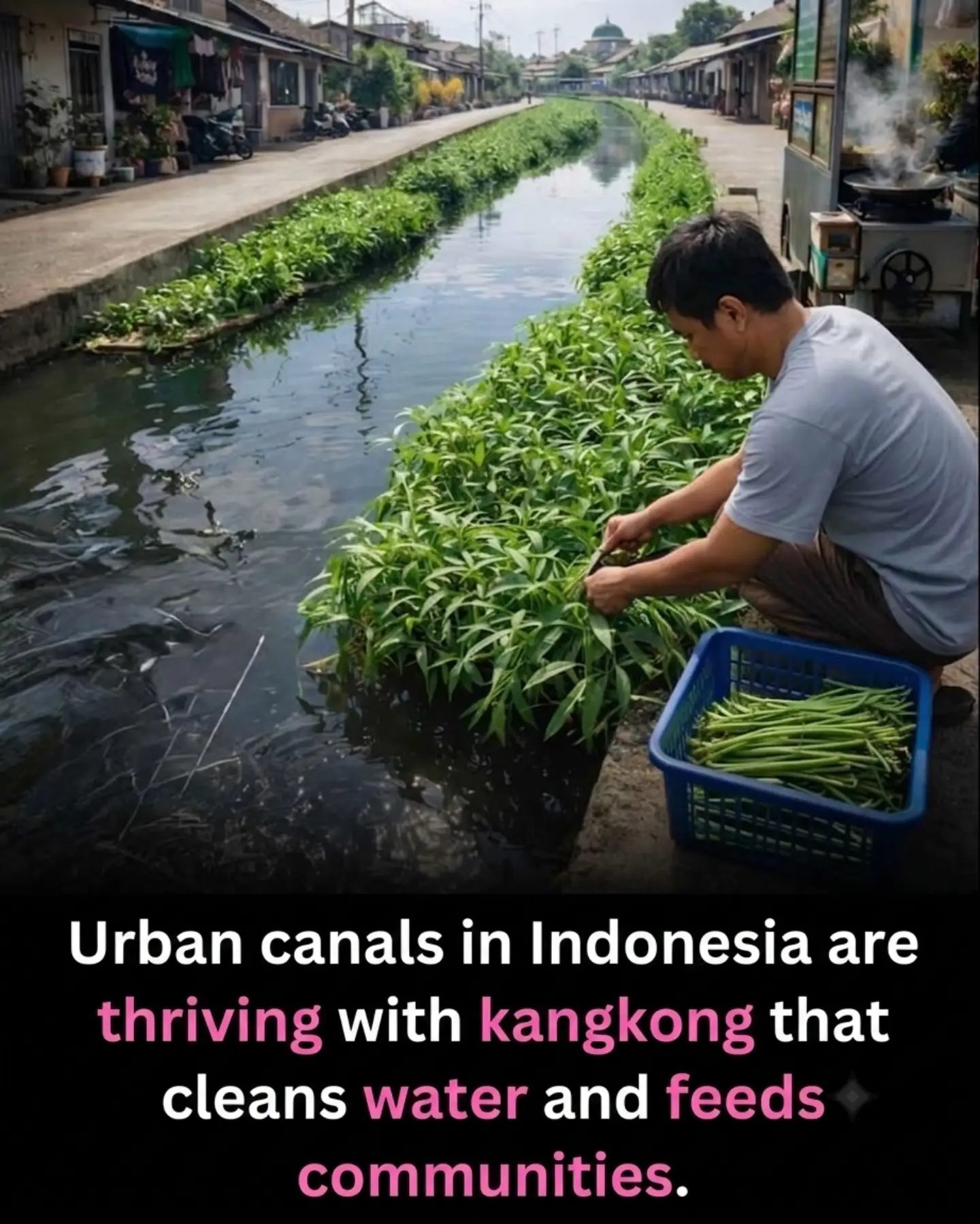
Urban Farming in Indonesia
Urban farming has taken a unique and innovative turn in Indonesia, where communities are transforming drainage canals into thriving kangkong (water spinach) farms. This initiative not only provides fresh, local food but also contributes to environmental sustainability by acting as a natural water filter. Let's explore how this urban farming practice is making a significant impact in cities across Indonesia.
Context / Why this matters
Urbanization often comes with challenges such as limited space for agriculture and the deterioration of water quality in urban canals. However, the innovative practice of growing kangkong in these waterways addresses both issues effectively. This approach is a testament to how creativity and resourcefulness can turn urban challenges into opportunities.
Main discussion
The Benefits of Urban Canal Farming
Natural Water Filter
One of the most significant advantages of growing kangkong in urban canals is its ability to act as a natural water filter. The roots of kangkong absorb excess nutrients and pollutants from the water, significantly improving its quality. This makes the canals cleaner and healthier for the surrounding ecosystem, which is a win-win for both the community and nature.
Fresh, Local Food
Indonesia's urban kangkong farms provide a direct source of fresh, nutritious food within the community. By growing kangkong in canals, residents can easily access this leafy green vegetable, which is rich in vitamins and minerals. This not only ensures a steady supply of healthy food but also reduces the need for transportation, making the food supply chain more sustainable.
Utilizes Urban Space
In crowded cities, every inch of space matters. Transforming drainage canals into kangkong farms is a brilliant way to make the most of urban space. Instead of being an eyesore, these canals are now productive and useful, showcasing how vertical farming and urban agriculture can be integrated into the daily life of urban dwellers. This approach can inspire cities worldwide to think creatively about utilizing otherwise underutilized urban spaces.
Community Connection
These urban farming initiatives often bring neighbors together, fostering a sense of shared responsibility and pride. When communities come together to maintain and harvest these kangkong farms, it strengthens social bonds and encourages collective effort towards a common goal. This sense of community can lead to greater environmental awareness and collective action towards sustainability.
Practical tips
Getting Started with Canal Farming
If you're interested in starting a similar initiative in your community, here are some practical tips:
1. Assess the Water Quality
Before planting, it's crucial to assess the water quality of the canal. Ensure that the water is suitable for growing edible plants, as it will directly affect the safety and health of the produce.
2. Choose the Right Plants
Kangkong is an excellent choice due to its ability to filter water and thrive in aquatic environments. However, you can also explore other aquatic plants that are suitable for your local climate and water conditions.
3. Engage the Community
Community involvement is key to the success of any urban farming initiative. Engage local residents, schools, and organizations to participate in the planning, planting, and maintenance of the farm. This will not only distribute the workload but also create a sense of ownership and pride.
4. Monitor and Maintain
Regular monitoring and maintenance are essential to ensure the health of the plants and the quality of the water. This includes checking for pests, ensuring adequate sunlight, and managing water quality.
5. Utilize Excess Harvest
Once the kangkong is ready for harvest, make sure to utilize the excess produce effectively. This can be done by distributing it to local food banks, selling it at community markets, or using it in community events.
Important takeaways
Sustainable Urban Living
Urban farming in Indonesia’s canals is a prime example of sustainable urban living. It demonstrates how innovative thinking can turn urban challenges into opportunities for growth and sustainability. This approach can inspire other cities to adopt similar practices, fostering a greener and more resilient urban environment.
Community Engagement
Community engagement is at the heart of successful urban farming initiatives. By involving local residents, these projects not only create a sense of shared responsibility but also strengthen social bonds. This collective effort can lead to greater environmental awareness and collective action towards sustainability.
Turning Challenges into Opportunities
Innovative solutions like canal farming in Indonesia highlight the potential of turning urban challenges into opportunities. By utilizing urban spaces creatively, cities can become more sustainable and resilient. This approach can inspire other urban areas to rethink how they use available resources and spaces.
Conclusion
Kangkong farming in Indonesia’s urban canals is a testament to the power of innovation and community engagement. This practice not only provides fresh, local food but also contributes to environmental sustainability by acting as a natural water filter. As cities worldwide face similar challenges, the Indonesian example serves as a valuable model for sustainable urban living. By thinking creatively and involving the community, cities can transform their urban spaces into productive and eco-friendly environments.
Watch the Reel
Questions readers ask
What is urban canal farming and how does it work?
Urban canal farming involves growing crops, such as kangkong (water spinach), in urban waterways. It works by planting kangkong in the canals, which then absorb nutrients from the water, helping to filter and clean it while providing a fresh, local food source. This makes it an eco-friendly solution for urban areas.
Why is kangkong commonly used in urban canal farming in Indonesia?
Kangkong is commonly used in urban canal farming in Indonesia because it is a hardy, fast-growing plant that thrives in aquatic environments. It is also a popular vegetable in Indonesian cuisine, making it a practical choice for both environmental and culinary benefits.
How does urban canal farming help improve water quality in cities?
Urban canal farming helps improve water quality by acting as a natural filter. The plants absorb excess nutrients, such as nitrates and phosphates, from the water, reducing pollution and preventing algal blooms. Additionally, the plants help to oxygenate the water, promoting a healthier aquatic ecosystem.
What are the benefits of urban canal farming in densely populated cities?
Urban canal farming offers several benefits in densely populated cities, including providing a local, fresh food source, improving water quality, and maximizing the use of limited space. It also creates a greener, more sustainable urban environment, as well as opportunities for community engagement and economic development.
Can other crops be grown using the urban canal farming method?
While kangkong is the most common crop used in urban canal farming in Indonesia, other aquatic plants and some varieties of vegetables can also be grown using this method. However, the specific crops that can be successfully grown will depend on the local climate, water conditions, and the plant's growth requirements.
Related deep dives
Similar reads based on topic and creator.

Recent articles
Fresh deep dives from the latest Reels we unpacked.




Comments
Be the first to comment.