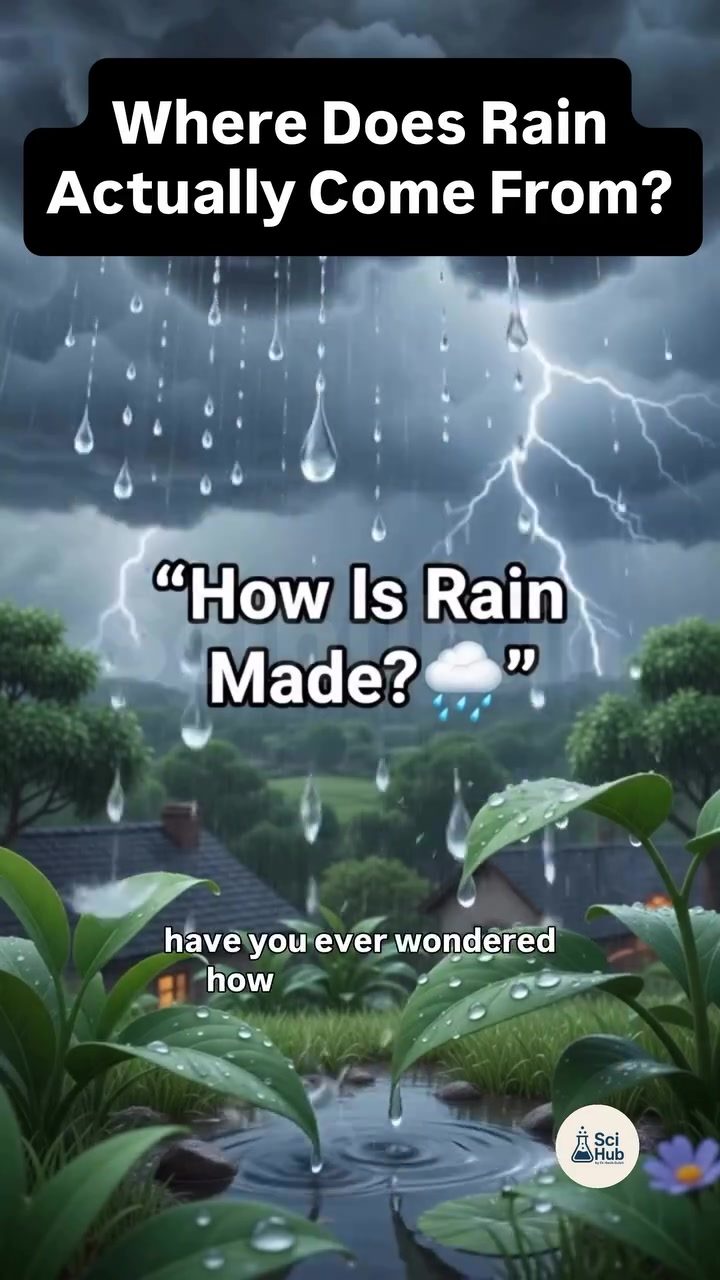
Rain Formation
Rain is a fundamental part of the Earth's water cycle, but have you ever thought about how it actually forms? The journey of a raindrop begins with the sun’s heat, which warms the water in oceans, lakes, and rivers. This heat turns the water into an invisible gas called water vapor. As this vapor rises higher into the atmosphere, it encounters colder air.
Why this Matters
The formation of rain is crucial for life on Earth. It is part of a continuous cycle that ensures the availability of fresh water, supports crop growth, and sustains ecosystems. Understanding this process helps us appreciate the complex interdependencies in nature and the importance of the water cycle.
Main Discussion
The Role of the Sun
The sun plays a pivotal role in the formation of rain. Its heat evaporates water from bodies of water, converting it into water vapor. This vapor is light and rises into the atmosphere. As it ascends, the surrounding air becomes colder, leading to the condensation of the water vapor.
Condensation and Cloud Formation
When water vapor cools, it condenses into tiny water droplets. These droplets stick together to form the clouds we see in the sky. Inside the clouds, the tiny water droplets continue to combine, growing larger and heavier.
Precipitation
As the water droplets within the clouds become too heavy to stay aloft, gravity pulls them down as rain. This process completes the water cycle, returning water to the Earth’s surface. The rain then flows back into oceans, lakes, and rivers, where the cycle begins anew.
Practical Tips
Understanding Weather Patterns
Knowing how rain forms can help in understanding weather patterns. For example, areas with higher temperatures and abundant water bodies are more likely to experience frequent rainfall. This information is useful for agriculture, water management, and even daily planning.
Environmental Considerations
The process of rain formation highlights the importance of maintaining healthy water bodies and ecosystems. Pollution and climate change can disrupt the water cycle, affecting rainfall patterns and availability of fresh water. Conservation efforts and sustainable practices are essential to preserve this natural process.
Important Takeaways
- Rain formation begins with the sun’s heat, which evaporates water from oceans, lakes, and rivers, turning it into water vapor.
- As the water vapor rises and cools, it condenses into tiny water droplets that form clouds.
- Inside the clouds, these droplets combine and grow heavier, eventually falling as rain due to gravity.
- The water cycle is crucial for life on Earth, providing fresh water, supporting crops, and maintaining ecosystems.
- Understanding rain formation can help in predicting weather patterns and managing water resources effectively.
Conclusion
Rain formation is a fascinating and essential process that sustains life on Earth. From the evaporation of water by the sun to the condensation that forms clouds, and finally the precipitation that returns water to the surface, each step of this cycle is interconnected and vital. By appreciating and understanding this process, we can better manage our water resources and work towards preserving the natural balance that supports all life.
Watch the Reel
Questions readers ask
What are the initial steps in the rain formation process?
The rain formation process begins with the sun heating water bodies like oceans, lakes, and rivers. This heat causes the water to evaporate and turn into water vapor, which then rises into the atmosphere.
How does water vapor turn into rain droplets?
As water vapor rises, it encounters cooler air higher in the atmosphere. This cooling causes the vapor to condense and form tiny water droplets around tiny particles, such as dust or pollen, these are cloud droplets, when these droplets become heavy enough they fall as rain.
What role does the sun play in the formation of rain?
The sun is crucial in the formation of rain as its heat drives the water cycle. By warming water bodies, the sun facilitates evaporation, which is the first step in the process of rain formation. Without the sun's energy this process could not occur.
How does rain relate to the water cycle?
Rain is a key component of the water cycle. It starts with the sun's heat evaporating water from various sources, which then rises and condenses to form rain. This rain then falls back to the Earth's surface, replenishing water bodies and continuing the cycle.
Why is understanding rain formation important for weather patterns?
Understanding how rain is made helps meteorologists predict weather patterns more accurately. By knowing the processes involved in rain formation, scientists can better anticipate rainfall, which is crucial for agriculture, water management, and disaster preparedness.
Can rain form from water in lakes and rivers, or only from oceans?
Rain can form from water in lakes, rivers, and oceans. The process is the same: the sun heats the water, causing it to evaporate and turn into vapor. This vapor then rises and eventually condenses to form rain droplets, regardless of the water source.
What are the main steps in how rain is made?
The main steps in how rain is made include: the sun heating water and turning it into water vapor, the vapor rising and cooling, condensation into droplets, and finally, the droplets falling as rain. These steps are part of the larger water cycle that is vital to our planet.
Related deep dives
Similar reads based on topic and creator.



Recent articles
Fresh deep dives from the latest Reels we unpacked.




Comments
Be the first to comment.