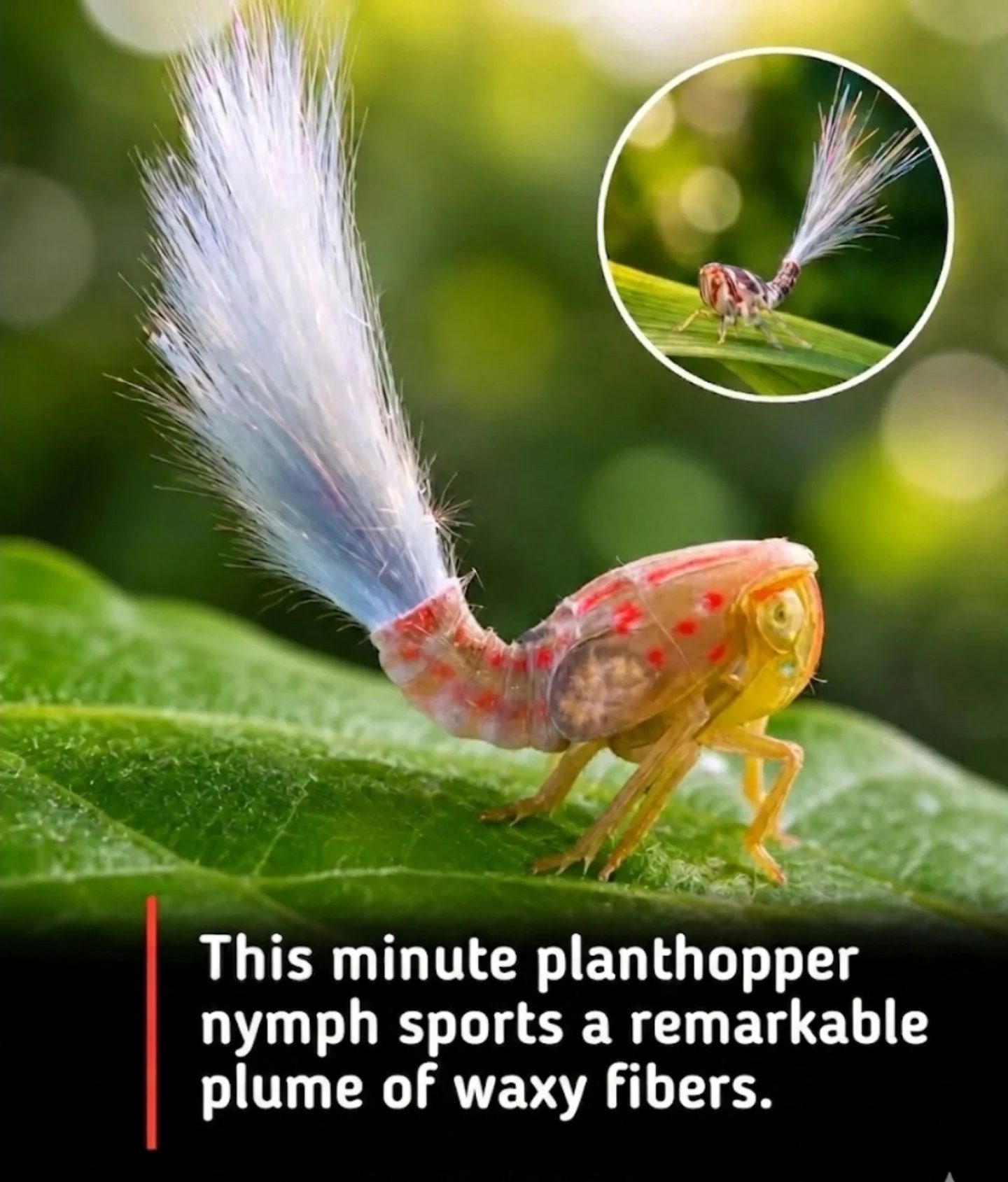
The Fascinating Planthopper Nymph: Nature's Miniature Marvel
The planthopper nymph, a member of the Ricaniidae or Flatidae family, is a tiny, immature insect with a striking appearance. These insects are known for their distinctive, fiber-optic-like tails, which are not actual hair or fur but rather a remarkable plume of waxy fibers. This extraordinary feature is composed of hydrophobic wax secreted by specialized glands at the rear of the nymph's abdomen. Let's delve into the intricate world of these fascinating creatures and explore the critical functions of their unique physical adaptation.
Why This Matters
Understanding the adaptations of planthopper nymphs provides valuable insights into the intricate web of survival strategies in the natural world. These nymphs employ a variety of tactics to avoid predators, navigate their environments, and blend seamlessly into their surroundings. By examining these strategies, we gain a deeper appreciation for the ingenious mechanisms that have evolved to ensure the survival of these tiny creatures.
The Remarkable Plume of Waxy Fibers
Composition and Formation
The extraordinary waxy fibers that make up the nymph's tail are secreted by specialized glands located at the rear of its abdomen. These fibers are composed of hydrophobic wax, which means they repel water. This characteristic is crucial for the insect's survival, as it helps to protect the nymph from moisture and potential fungal infections. The fibers are not only aesthetically striking but also serve several critical functions in the nymph's life.
Predator Distraction
One of the most remarkable adaptations of the planthopper nymph is its ability to use its waxy tail as a predator distraction mechanism. When threatened, the nymph can snap its abdomen or jump away suddenly, leaving behind a mouthful of waxy fibers for the predator. This sudden movement and the disorienting presence of the waxy fibers give the nymph a crucial moment to escape unharmed.
Aerodynamic Aid
The wide, fan-like structure of the waxy fibers acts somewhat like a parachute, aiding the nymph in its powerful, spring-like jumps. This parachute-like feature slows down the nymph's descent, helping it land safely after its jumps. This adaptation is particularly useful for navigating its environment and avoiding potential hazards.
Camouflage
The fluffy white structure of the waxy fibers plays a vital role in camouflage. By breaking up the insect's silhouette, it allows the nymph to blend in with plant fungus, mold, or detritus on leaves. This effective camouflage helps the nymph avoid detection by predators and increases its chances of survival.
The Life Cycle of Planthopper Nymphs
As the nymphs mature into adults, they undergo a final molt where they lose their extravagant waxy tail. This tail is a characteristic of the nymph stage and is replaced by functional wings in the adult stage. This transformation is a significant milestone in their life cycle, marking the transition from a vulnerable, immature stage to a more robust, mobile adult form.
The Role of Waxy Fibers in the Ecosystem
The waxy fibers of the planthopper nymphs play a crucial role in their ecosystem. By serving as a defense mechanism, these fibers help protect the nymphs from predators, ensuring their survival and contributing to the overall biodiversity of their habitat. The fibers also provide a unique form of camouflage, allowing the nymphs to blend in with their surroundings and avoid detection. This adaptation is a testament to the ingenuity of nature and the complex strategies that have evolved to ensure the survival of different species.
Practical Tips for Observing Planthopper Nymphs
Observing planthopper nymphs can be a rewarding experience for nature enthusiasts. Here are some practical tips for spotting these remarkable creatures:
-
Look in the Right Places: Planthopper nymphs are often found on leaves, particularly those covered in fungus, mold, or detritus. These environments provide the perfect camouflage for the nymphs to blend in and avoid detection.
-
Use Magnification: These insects are tiny, so a magnifying glass or a macro lens can be very helpful. This will allow you to get a close-up view of their distinctive waxy fibers and observe their behavior more clearly.
-
Be Patient and Still: Planthopper nymphs are sensitive to movement and disturbance. Staying still and patient can increase your chances of spotting them and observing their unique adaptations in action.
Important Takeaways
-
Unique Adaptation: The waxy fibers of the planthopper nymph are a unique adaptation that serves multiple survival functions, including predator distraction, aerodynamic aid, and camouflage.
-
Critical Functions: The waxy fibers are crucial for the nymph's survival, helping it avoid predators, navigate its environment, and blend seamlessly into its surroundings.
-
Life Cycle: As the nymphs mature, they lose their waxy tail and develop functional wings, marking a significant transition in their life cycle.
-
Ecosystem Role: The waxy fibers play an essential role in the ecosystem, contributing to the overall biodiversity and ensuring the survival of these fascinating creatures.
Conclusion
The planthopper nymph is a testament to the incredible adaptations that have evolved in the natural world. Its distinctive waxy fibers serve multiple survival functions, making it a fascinating subject for nature enthusiasts and scientists alike. By understanding the intricate strategies employed by these tiny creatures, we gain a deeper appreciation for the complex web of life that surrounds us. Whether you're a seasoned naturalist or a curious observer, the planthopper nymph offers a glimpse into the remarkable world of insects and their extraordinary adaptations.
Watch the Reel
Questions readers ask
What exactly are planthopper nymphs and where do they belong in the insect world?
Planthopper nymphs are immature insects, belonging to the Ricaniidae or Flatidae families. They are known for their unique appearance and remarkable physical adaptations, including their distinctive waxy tail.
What is the purpose of the planthopper nymph's waxy tail?
The waxy tail of planthopper nymphs serves multiple purposes. Firstly, it acts as a protective shield, helping the nymphs evade predators by providing camouflage and acting as a deterrent. Secondly, the hydrophobic nature of the tail prevents water retention, thereby reducing the risk of fungal infections.
How do planthopper nymphs produce their waxy fibers?
Planthopper nymphs produce their waxy fibers through specialized glands located at the rear of their abdomen. These glands secrete a hydrophobic wax that forms the distinctive, fiber-optic-like tail, which is integral to their survival and defense mechanisms.
What makes the waxy tail of planthopper nymphs so effective in predator evasion?
The waxy tail's effectiveness in predator evasion comes from its unique structure and properties. It provides a form of mimicry, making the nymph resemble other, less appetizing organisms. Additionally, the tail's ability to sway and move independently can disrupt the focus of potential predators, providing an extra layer of protection.
How does the hydrophobicity of the waxy tail benefit planthopper nymphs?
The hydrophobicity of the waxy tail is crucial for the nymphs' survival, as it prevents moisture from accumulating on their bodies. This characteristic helps the nymphs avoid waterlogging and reduces the risk of fungal infections, which can be fatal in moist environments. This adaptation is essential for their survival, especially in varied and often humid habitats.
Related deep dives
Similar reads based on topic and creator.




Recent articles
Fresh deep dives from the latest Reels we unpacked.




Comments
Be the first to comment.