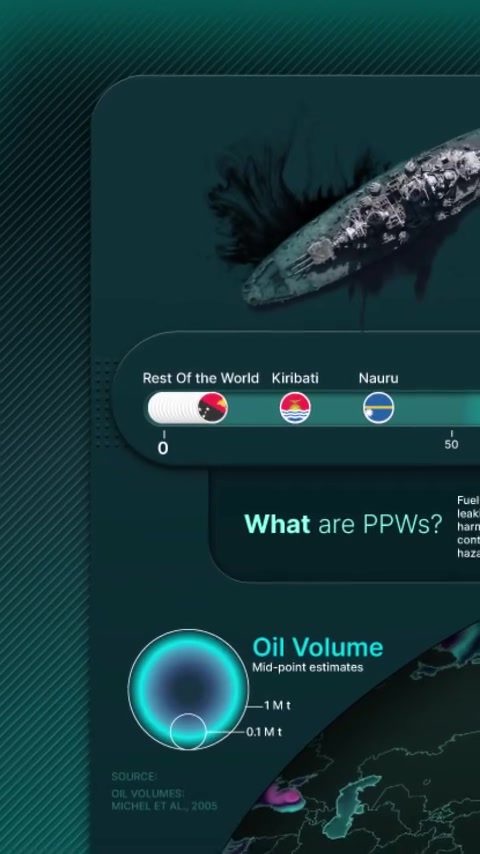
Oil Spill Data Visualization
Thousands of shipwrecks pose a hidden but significant threat to marine ecosystems and coastal communities. These wrecks, especially those from World War II, contain millions of tonnes of oil and other hazardous materials, creating potential environmental disasters. Let's explore the data and implications of this ongoing maritime risk.
Context / Why This Matters
The sea floor is littered with the remnants of historic shipwrecks, many of which contain oil and other toxic hazards. According to the data visualization, there are more than 8,500 potentially polluting shipwrecks (PPWs) worldwide, with a staggering 75% of them sinking during World War II. These wrecks pose a significant threat to marine life and coastal communities. Understanding the extent and severity of this issue is crucial for developing strategies to prevent future disasters.
Main Discussion
Understanding the Threat
The visualization provides a comprehensive overview of oil spill data. It highlights historical shipwrecks and their impact on various locations around the world. Key areas of concern include the North Atlantic and Pacific regions, where the density of PPWs is particularly high. The visualization uses color-coded maps, with pink marking clusters of shipwrecks and blue indicating estimated oil volumes.
Deepwater Horizon in Perspective
To contextualize the scale of the problem, consider the Deepwater Horizon oil spill, which released over 500 million litres of oil and was the largest accidental oil spill in history. In the North Atlantic alone, PPWs are estimated to contain around 5 billion litres of oil, ten times more than the Deepwater Horizon spill. This staggering figure underscores the urgency of addressing these potential disasters.
Case Study: Chuuk Lagoon
Chuuk Lagoon in the Federated States of Micronesia serves as a stark example of the immediate impact of PPWs. The wreck of the Rio de Janeiro Maru, which sank in 1944, has triggered a State of Emergency in September 2025. A major oil slick from the wreck threatens vital island ecosystems and livelihoods, highlighting the real and present danger posed by these historic wrecks.
Practical Tips
Mapping and Monitoring
One of the first steps in addressing this issue is comprehensive mapping and monitoring of PPWs. Lloyd's Register Foundation and the Project Hangaroa Coalition have launched the Malta Manifesto, a global call to action that aims to map, monitor, and clean up these wrecks. By identifying the locations and estimated oil volumes of PPWs, governments and conservation organizations can prioritize areas for mitigation efforts.
Collaboration and Advocacy
Effective mitigation requires collaboration between governments, industry, and the public. Initiatives like the Malta Manifesto emphasize the need for collective action. Governments must enact policies to support the cleanup and monitoring of these wrecks, while industries can contribute through technological innovations and financial resources. Public awareness and advocacy are also crucial for gaining the necessary support and resources for these efforts.
Preventing Future Disasters
Preventive measures are essential to avoiding new disasters. This includes ensuring that new shipwrecks do not add to the existing threat and addressing the degradation of existing wrecks before they release their toxic contents. Regular inspections and maintenance of known PPWs can help mitigate risks and protect vulnerable ecosystems.
Important Takeaways
- Scale of the Problem: There are over 8,500 potentially polluting shipwrecks (PPWs) worldwide, with a significant portion sinking during World War II.
- Environmental Impact: These wrecks contain millions of metric tonnes of oil and other hazardous materials, posing a severe threat to marine ecosystems and coastal communities.
- Urgent Action: Comprehensive mapping, monitoring, and cleanup efforts are essential to prevent new disasters. The Malta Manifesto serves as a global call to action for this purpose.
- Collaboration: Effective mitigation requires collaboration between governments, industry, and the public. Public awareness and advocacy are crucial for driving change.
Conclusion
The threat posed by historic shipwrecks containing hazardous materials is a pressing issue that demands immediate attention. By visualizing and analyzing the data, we can better understand the scale of the problem and develop effective strategies to mitigate the risks. Collaboration between various stakeholders and a proactive approach to monitoring and cleanup can help protect marine ecosystems and coastal communities from potential disasters. The time to act is now.
Watch the Reel
Questions readers ask
What are potentially polluting shipwrecks (PPWs) and why are they a concern?
Potentially polluting shipwrecks (PPWs) are vessels that sank and contain oil and other hazardous materials. They are a concern because they can cause environmental disasters, posing a significant threat to marine life and coastal communities, particularly when the hulls corrode and release their toxic contents.
Why are World War II shipwrecks particularly problematic?
World War II shipwrecks are especially problematic due to their numbers and the types of materials they carry. Approximately 75% of the 8,500 known PPWs are from this era. Many of these ships were sunk quickly and carry millions of tonnes of oil and other toxic substances that can wreak havoc on marine ecosystems if released.
How do oil spills from shipwrecks impact marine ecosystems and coastal communities?
Oil spills from shipwrecks can have devastating effects on marine ecosystems, harming or killing marine life and disrupting habitats. For coastal communities, these spills can contaminate water supplies, damage local economies that depend on tourism or fishing, and pose significant health risks to residents.
What are some of the most significant sources of data on global shipwrecks?
One of the most comprehensive sources of data on global shipwrecks is Lloyd's Register, which maintains detailed records of maritime vessels, including those that have sunk. Additionally, various maritime databases and research initiatives contribute to the global shipwreck database, providing insights into the locations and potential risks posed by these wrecks.
What measures can be taken to mitigate the risks posed by toxic shipwrecks?
Mitigating the risks posed by toxic shipwrecks involves several strategies, including regular monitoring of known PPWs, implementing pollution prevention measures, and developing waste management plans. In some cases, it may be necessary to undertake remedial actions, such as removing oil and other hazardous materials from accessible wrecks to prevent future environmental disasters.
How can individuals and communities stay informed about the risks of shipwrecks in their areas?
Individuals and communities can stay informed by accessing public databases and resources that map out known shipwrecks and their potential risks. Engaging with local maritime authorities and environmental organizations can also provide valuable information and updates on ongoing efforts to manage and mitigate these risks.
What role do international collaborations play in addressing the threat of shipwrecks?
International collaborations are crucial in addressing the threat of shipwrecks, as many of these vessels are scattered across global waters. By sharing data, resources, and best practices, countries can work together to monitor and manage these environmental hazards, ensuring a coordinated approach to protecting marine ecosystems and coastal communities worldwide.
Related deep dives
Similar reads based on topic and creator.




Recent articles
Fresh deep dives from the latest Reels we unpacked.




Comments
Be the first to comment.