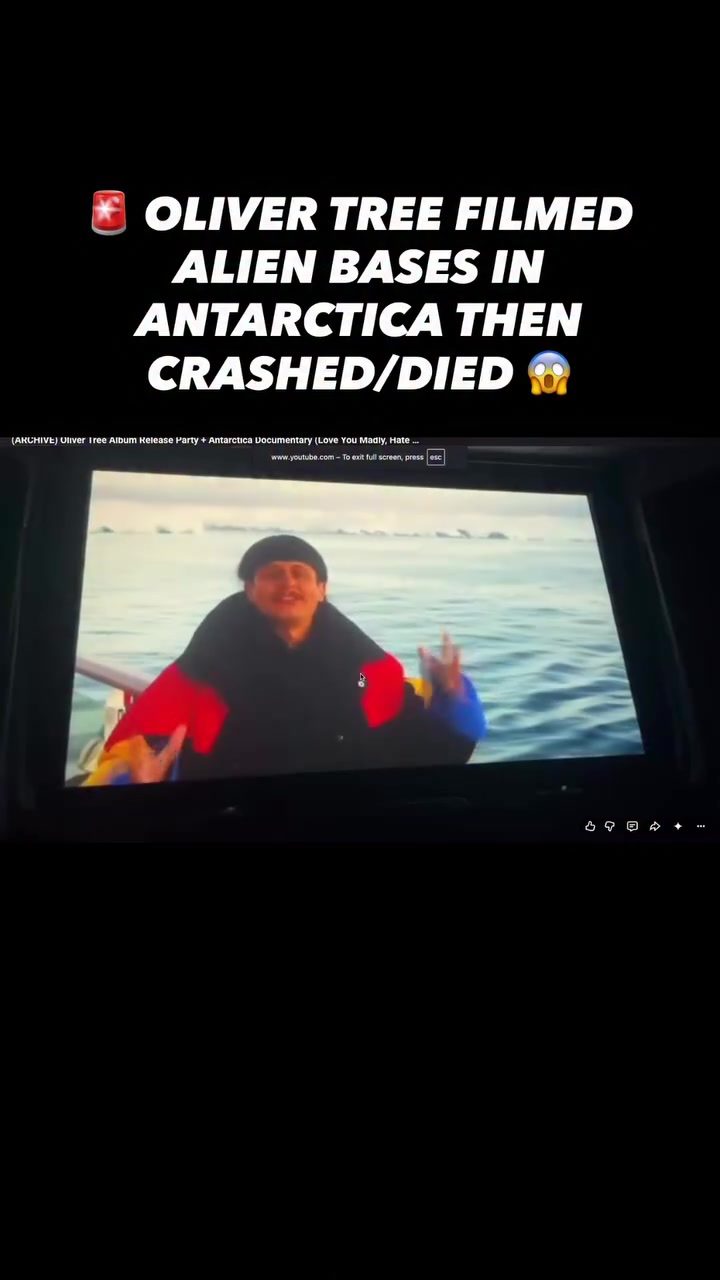
Exploring Alien Bases and UAPs in Antarctica with Oliver Tree
Oliver Tree's recent documentary, which was privately screened before his tragic crash, has surfaced and sparked intense curiosity and debate. In this documentary, Tree spent 300 days in Antarctica investigating alleged alien bases and unexplained aerial phenomena (UAPs). The documentary provides a firsthand account of his experiences and observations, which he claims offer evidence of non-human activity on the continent.
Context
Antarctica is one of the most remote and inaccessible places on Earth, making it a prime location for speculation about extraterrestrial activity. The continent is home to numerous research stations and military bases, as well as areas that are relatively unexplored, adding to its mystique. Tree's decision to spend an extended period in this harsh and isolated environment underscores the seriousness of his quest to uncover the truth about alleged alien bases and UAPs.
The documentary's release has raised several questions, particularly given the timing of its private screening just two weeks before Tree's tragic crash. Some speculate that his findings may have been too sensitive for certain parties, while others see it as a sad coincidence. Regardless, the documentary offers a rare glimpse into the mysteries that lie beneath the icy surface of Antarctica.
Main Discussion
The Search for Alien Bases
Tree's primary mission was to document evidence of alien bases in Antarctica. Throughout the documentary, he describes encountering a diverse array of UAPs, ranging from elongated, missile-like objects to more traditional, circular shapes. Notably, he mentions that these phenomena are often observed emerging from underwater. This assertion aligns with long-standing theories about potential alien bases hidden beneath the ice.
The Challenges and Risks
According to the documentary, Tree's investigations were not without obstacles. He recounts witnessing a UAP emerging from a school, an encounter that highlights the unexpected and sometimes unsettling nature of his observations. Additionally, he mentions being part of a military rifle team, suggesting that his experiences were intertwined with both scientific and military interests in the region.
Military and Government Involvement
Tree also touches on the significant presence of military and government entities in Antarctica. He notes that certain areas, particularly those under NATO jurisdiction, are heavily restricted and often closed off to civilians. This raises questions about what these entities might be hiding or protecting. Despite these challenges, Tree and his team used multiple cameras to document their findings, aiming to share the evidence widely and transparently.
Practical Tips for UAP and Alien Base Investigators
While Tree's experiences are extraordinary, they offer some practical insights for those interested in investigating UAPs and alleged alien bases:
Preparation and Safety
Antarctica is an extreme environment, and any investigation requires thorough preparation. This includes appropriate gear, medical supplies, and a deep understanding of survival techniques. Tree's experience underscores the importance of being self-sufficient and prepared for unexpected situations.
Documentation and Transparency
Tree emphasizes the importance of documenting all observations and making the findings publicly available. This approach not only ensures transparency but also allows for broader analysis and verification by the scientific community and the public.
Emotional Preparedness
Investigating UAPs and alien bases can be emotionally taxing. Tree's openness about his experiences suggests that a balanced mindset, free from fear and prejudice, is crucial. His approach of welcoming the unknown with an open heart and mind may have contributed to his numerous interactions with UFO ships.
Important Takeaways
The Mystery of Antarctica
Antarctica remains one of the most enigmatic places on Earth, with its harsh environment and limited accessibility. Tree's documentary adds to the intrigue, offering firsthand accounts of unexplained phenomena and potential alien activity.
The Need for Further Research
Tree's findings, while compelling, underscore the need for more in-depth, collaborative research. Engaging with scientists, government agencies, and other researchers could lead to a better understanding of the phenomena observed in Antarctica.
The Role of Transparency
Tree's commitment to documenting and sharing his experiences highlights the importance of transparency in UAP and alien base investigations. By making his findings public, he invites others to scrutinize and build upon his work, fostering a more collaborative and informed approach to these mysteries.
Conclusion
Oliver Tree's journey in Antarctica, as documented in his recently surfaced film, offers a unique and captivating insight into the world of UAPs and alleged alien bases. His experiences underscore the challenges, risks, and rewards of investigating such phenomena in one of the most remote and mysterious places on Earth. Whether or not the evidence points to extraterrestrial activity, Tree's documentation and transparency provide valuable contributions to the ongoing quest for understanding the unknown.
Watch the Reel
Questions readers ask
Why did Oliver Tree go to Antarctica?
Oliver Tree traveled to Antarctica to investigate alleged alien bases and unexplained aerial phenomena (UAPs). He spent 300 days in the remote continent to document evidence of non-human activity, which he believed is hidden beneath the icy surface.
What is the significance of Antarctica in the context of alien activity?
Antarctica's remote and inaccessible nature makes it a hotspot for speculation about extraterrestrial activity. The continent's vast, unexplored areas and the presence of research and military bases contribute to its mystique and potential for hidden alien evidence.
What does Oliver Tree's documentary reveal about his experiences in Antarctica?
The documentary provides a firsthand account of Oliver Tree's experiences and observations during his 300-day stay in Antarctica. He claims to have found evidence of non-human activity, which he documented for public viewing after his tragic crash.
What are UAPs, and why are they significant in Oliver Tree's investigation?
UAPs, or Unidentified Aerial Phenomena, are sightings of objects in the sky that cannot be readily identified. In Oliver Tree's investigation, UAPs are significant because he believed they were connected to the alleged alien bases and non-human activity in Antarctica.
What happened to Oliver Tree after his documentary was completed?
Unfortunately, Oliver Tree passed away in a tragic crash, before his documentary could be publicly released. The documentary had a private screening and surfaced after his passing. It sparked intense curiosity and debate about his claims and experiences in Antarctica.
How did Oliver Tree's experiences in Antarctica impact his beliefs about alien activity?
Oliver Tree's experiences in Antarctica reinforced his beliefs about alien activity. He claimed to have found evidence of non-human activity and documented it in his film. Despite skepticism, his findings have contributed to the ongoing debate about the possibility of extraterrestrial life.
What areas of Antarctica did Oliver Tree focus on during his investigation?
While the specifics of the areas Oliver Tree focused on are not detailed, his investigation likely covered the vast, unexplored regions of Antarctica. These areas, combined with the presence of research and military bases, are central to the speculation about hidden alien evidence on the continent.
Recent articles
Fresh deep dives from the latest Reels we unpacked.




Comments
Be the first to comment.