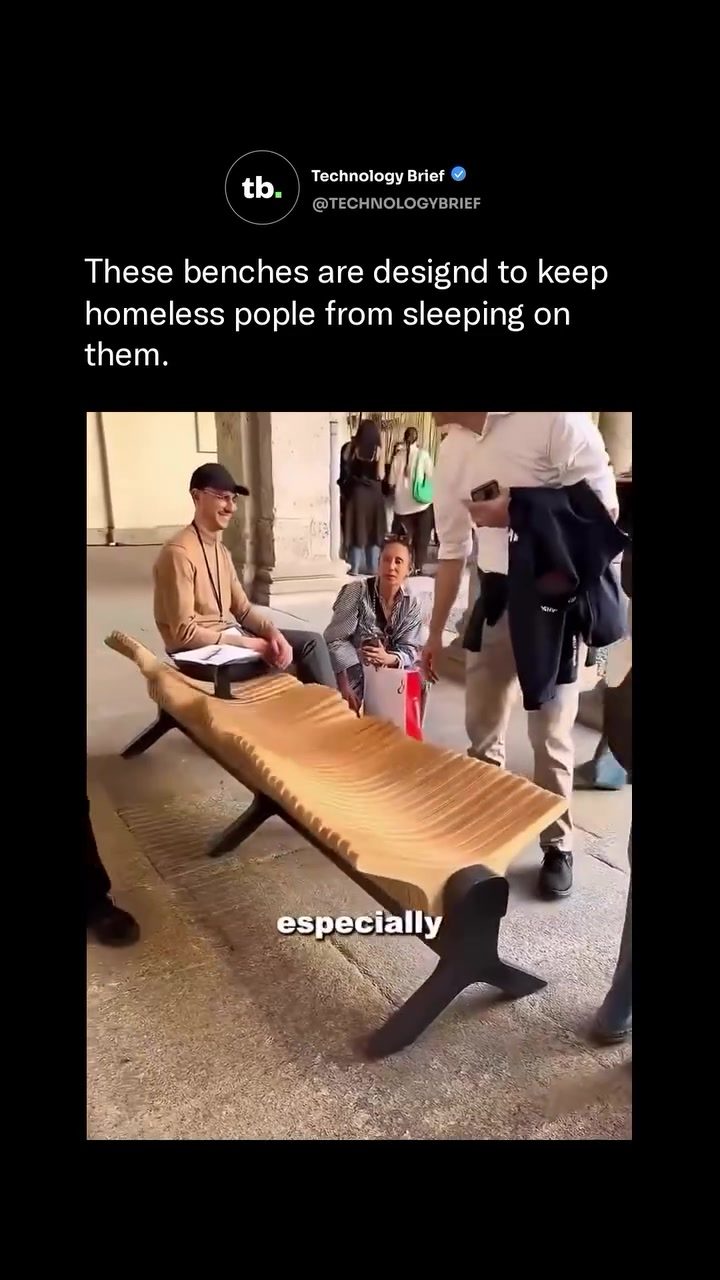
Anti-Homeless Benches
Anti-homeless benches, or hostile architecture, are becoming increasingly common in urban environments. These benches, often found in public spaces like parks, transit stations, and sidewalks, are designed with features that make it difficult for people to sleep or rest on them. These features typically include metal armrests, center dividers, sloped seats, or segmented sections, which make it physically impossible to lie down comfortably. More subtle designs might incorporate metal spikes or curved surfaces to serve the same purpose. Many people are unaware of these features, but they are immediately noticeable to those experiencing homelessness.
Why This Matters
Hostile architecture is a response to a significant urban issue: the use of public benches by homeless individuals for sleeping. Many cities have installed these designs to manage public spaces and deter homeless people from using benches as sleeping areas. While the primary goal is to prevent sleeping on benches, these designs have sparked a contentious debate around urban planning, public policy, and human rights.
Hostile Architecture and Its Intent
The idea behind hostile architecture is straightforward: design features that discourage unwanted behaviors, such as sleeping, in public spaces. This approach is a strategic urban solution to an issue that cities have been dealing with for decades. While the designs are meant to encourage the use of benches for sitting and not for sleeping, they have been criticized for not addressing the root causes of homelessness, which can lead to more significant problems.
Design Features
Benches designed to deter sleeping come in a variety of shapes and sizes, each with unique features that make it difficult to rest comfortably. Here are some of the most common design elements:
- Metal Armrests and Center Dividers: These prevent people from stretching out and lying down. The design ensures that only limited space is available for sitting.
- Sloped Seats: Benches with sloped surfaces make it uncomfortable to sit for extended periods and nearly impossible to lie down.
- Segmented Sections: These benches have multiple sections that are separated, usually by a small gap or divider, making it hard for someone to lie down.
- Metal Spikes and Curved Surfaces: Less obvious but equally effective, these features are often placed on edges or surfaces where someone might try to rest.
Examples Around the World
Hostile architecture is a global phenomenon. Cities across the world, from London to Los Angeles, have installed these features in public spaces. One particularly well-known example is the Camden Bench, introduced in London in 2012. This bench features irregular curves designed to make lying down virtually impossible. These designs, while overtly aimed at preventing sleeping, often go unnoticed by the general public but are immediately felt by those experiencing homelessness.
Practical Tips
For city planners and urban designers, understanding the nuances of hostile architecture can help in making more informed choices. If you’re working on urban design projects, consider these practical tips:
- Consider Human-Centered Design: Focus on creating public spaces that are inclusive and comfortable for all users, regardless of their circumstances.
- Discover Solutions for Homelessness: Implement solutions to address the root causes of homelessness, such as affordable housing and support services, rather than just attempting to push the problem out of sight.
- Evaluate the Impact: Research the effectiveness of hostile architecture in different contexts and its impact on local communities. Are there alternatives that provide a better balance between public use and homelessness?
- Engage the Community: Involve local residents and stakeholders in the design process. A collaborative approach can lead to more holistic and effective solutions.
Important Takeaways
Human Impact
Hostile architecture can have a profound impact on those experiencing homelessness. While these designs may solve immediate issues of public space usage, they do not address the core problems of homelessness. Advocates argue that these designs can make life even more difficult for vulnerable individuals who are already struggling.
Urban Planning and Public Policy
The debate around hostile architecture highlights the delicate balance between public space management and human rights. While city officials may argue that these designs keep public spaces functional for all residents, critics contend that they often exacerbate the challenges faced by homeless individuals. Finding a balance between practical solutions and compassionate design is crucial in urban planning.
Conclusion
Anti-homeless benches, or hostile architecture, are a reflection of a broader debate on how to manage public spaces in urban environments. While these designs aim to prevent sleeping on benches, they often fail to address the root causes of homelessness. As cities continue to evolve, it is essential to consider urban design solutions that are inclusive and compassionate, ensuring that public spaces are available and comfortable for everyone.
Watch the Reel
Questions readers ask
What are anti-homeless benches and where are they commonly found?
Anti-homeless benches, also referred to as hostile architecture, are designed to prevent people from sleeping or resting on them. These benches are commonly found in public spaces such as parks, transit stations, and sidewalks in urban environments. They often feature metal armrests, sloped seats, or other design elements that make them uncomfortable for extended use.
How do anti-homeless benches affect the homeless population?
Anti-homeless benches can significantly impact the homeless population by limiting their access to places to rest or sleep in public spaces. This design can force individuals experiencing homelessness to find alternative, often less safe or comfortable, locations to rest, which can exacerbate their challenges and reduce their visibility to public services.
What are some design features that identify hostile architecture?
Hostile architecture can be identified by various design features such as metal armrests, center dividers, sloped seats, or segmented sections, which make it difficult to lie down. More subtle designs might include metal spikes or curved surfaces that serve the same purpose. These features are often subtle but noticeable to those who need to use the benches for extended periods.
What is the purpose of the sloped seats and metal armrests on these benches?
The sloped seats and metal armrests on anti-homeless benches are designed to make it physically uncomfortable and impossible to lie down on them. The sloped seats prevent people from resting their backs comfortably, while the metal armrests create a barrier that makes it difficult to stretch out and sleep, thus discouraging prolonged use.
What are the controversies surrounding hostile architecture in urban planning?
Hostile architecture, such as anti-homeless benches, sparks debate on public policy and human rights. Critics argue that these designs exacerbate the challenges faced by the homeless population and can be seen as a form of social control. Supporters might view them as a response to urban issues, but the broader implications for social justice and community values often come into question.
Related deep dives
Similar reads based on topic and creator.
Recent articles
Fresh deep dives from the latest Reels we unpacked.




Comments
Be the first to comment.