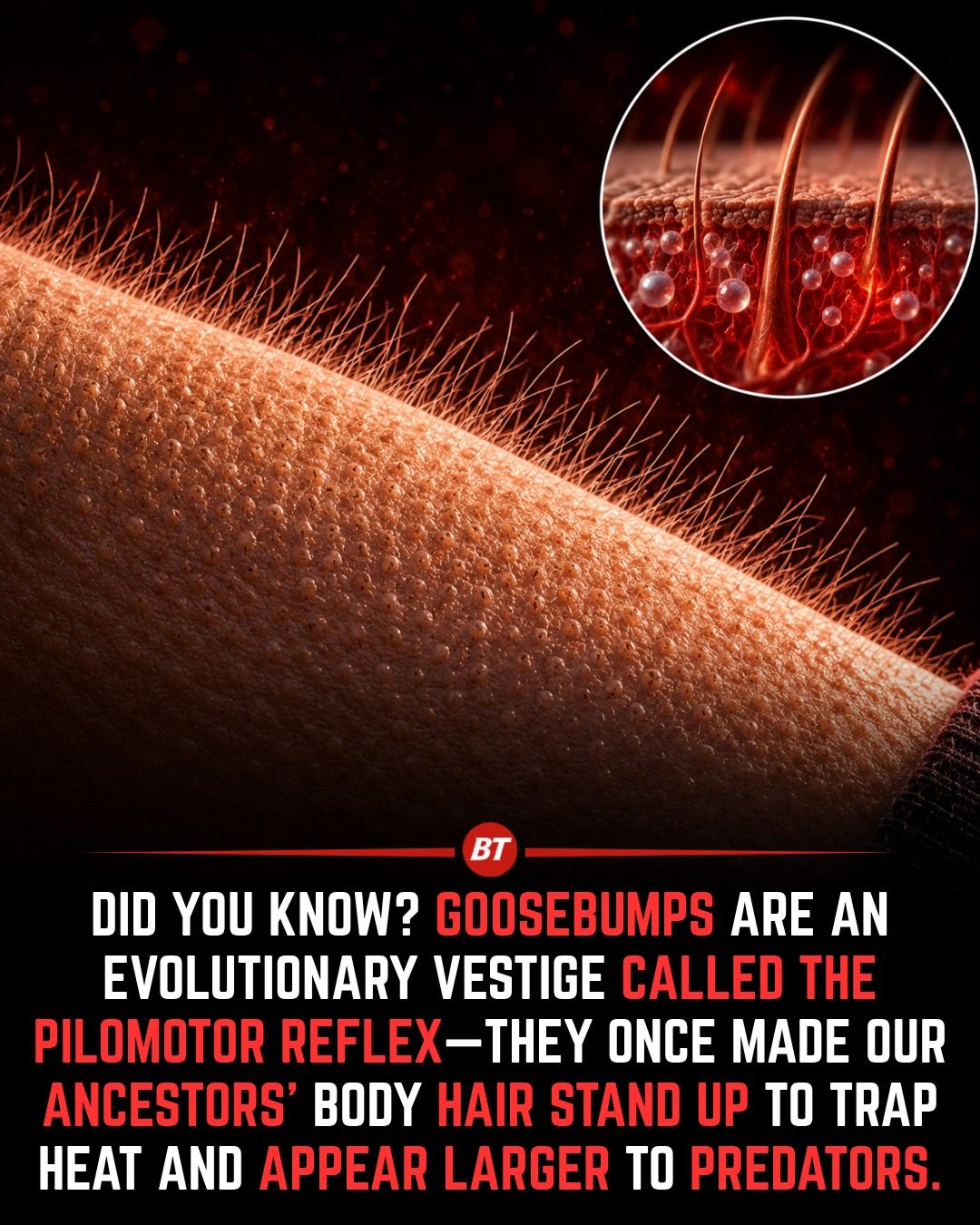
Goosebumps: An Evolutionary Vestige
Goosebumps are a familiar physiological response that most people experience, yet few understand the fascinating evolutionary history behind them. This automatic reaction, known as the pilomotor reflex, is an ancient survival mechanism that has persisted through millions of years of human evolution. The pilomotor reflex, also called piloerection, is controlled by the sympathetic nervous system, the same system responsible for the "fight-or-flight" response. When activated, tiny muscles called arrector pili muscles contract at the base of each hair follicle, causing hairs to stand upright and creating the characteristic bumps on the skin.
Why This Matters
Understanding goosebumps provides insight into the intricate workings of the human body and the evolutionary processes that have shaped us. This knowledge can enhance appreciation for the body's innate mechanisms and the deep-rooted responses that still influence our daily experiences.
The Evolutionary Purpose of Goosebumps
Trapping Heat
For our furry mammalian ancestors, goosebumps served a crucial purpose in cold climates. When the arrector pili muscles contracted, the raised hairs trapped a thicker layer of insulating air against the skin. This helped conserve body heat, making it easier for these ancestors to survive in harsh, cold environments. Although humans have relatively hairless skin today, the reflex remains, albeit with a reduced practical benefit.
Appearing Larger to Predators
Goosebumps also played a defensive role. When faced with fear or aggression, the erect hair made an animal appear larger and more intimidating to predators or rivals. This defensive strategy is still observed in many mammals today, including cats, dogs, and porcupines. The reflex helped our ancestors signal their readiness to fight or flee, increasing their chances of survival in dangerous situations.
Modern-Day Triggers
In modern humans, goosebumps are triggered not only by cold temperatures but also by strong emotions such as fear, awe, excitement, or even listening to powerful music. Neuroscientists believe these "emotional goosebumps" occur because the brain regions involved in emotion and reward interact with the autonomic nervous system, producing the same ancient reflex. This interaction highlights the deep connection between our emotional responses and our evolutionary heritage.
The Pilomotor Reflex in Detail
The pilomotor reflex is an automatic response that involves the contraction of tiny muscles called arrector pili muscles. These muscles are located at the base of each hair follicle and are controlled by the sympathetic nervous system. When the sympathetic nervous system is activated, it signals these muscles to contract, causing the hairs to stand upright. This physical response is typically associated with the "fight-or-flight" response, preparing the body for action in stressful or dangerous situations.
Practical Tips for Understanding Goosebumps
Observing Goosebumps
Paying attention to when and why goosebumps occur can provide valuable insights into your body's responses to different stimuli. Whether triggered by cold, fear, or strong emotions, recognizing these reactions can help you understand your physiological responses better.
Embracing the Reflex
While goosebumps may not serve the same survival purposes they once did, they are still a fascinating reminder of our evolutionary heritage. Embracing this reflex can deepen your appreciation for the intricate processes that govern the human body.
Managing Emotional Reactions
Understanding that goosebumps can be triggered by strong emotions can help you manage your reactions in different situations. Whether you experience goosebumps from excitement, fear, or awe, acknowledging the underlying emotional response can help you respond more effectively.
Important Takeaways
Goosebumps are a vestige of our evolutionary past, serving as a reminder of the ancient mechanisms that have shaped human survival and behavior. The pilomotor reflex, triggered by the sympathetic nervous system, involves the contraction of arrector pili muscles, causing hairs to stand upright. This reflex, once crucial for trapping heat and deterring predators, still influences our responses to cold and strong emotions today.
Conclusion
Goosebumps are more than just a superficial reaction; they are a window into the complex interplay between our evolutionary history and our modern experiences. By understanding the pilomotor reflex and its evolutionary purpose, we gain a deeper appreciation for the mechanisms that govern our bodies and minds. Whether triggered by cold, fear, or powerful emotions, goosebumps serve as a tangible reminder of our evolutionary heritage, connecting us to the ancient survival strategies that have persist through time.
Watch the Reel
Questions readers ask
What are goosebumps and how do they occur?
Goosebumps, also known as piloerection, occur when tiny muscles called arrector pili muscles contract at the base of each hair follicle. This causes the hairs to stand upright, resulting in the characteristic bumps on the skin. This response is controlled by the sympathetic nervous system, which is also responsible for the 'fight-or-flight' response.
Why do goosebumps happen in humans?
Goosebumps in humans are a vestige of an ancient survival mechanism. In our ancestors, the pilomotor reflex helped to trap a layer of warm air next to the skin. While this practical benefit has diminished in humans, the reflex remains as a response to various stimuli, such as cold temperatures or strong emotions.
What is the evolutionary purpose of goosebumps?
The evolutionary purpose of goosebumps was to aid in thermoregulation and to make an individual appear larger or more threatening. In response to cold, the hairs standing up would trap a layer of warm air, and when threatened, the larger appearance might act as a deterrent to predators or rivals.
What triggers the goosebumps reflex?
The goosebumps reflex, or pilomotor reflex, can be triggered by a variety of stimuli. These include cold temperatures, strong emotions such as fear or excitement, and sometimes even musical or aesthetic appreciation. The sympathetic nervous system activates this response in reaction to these triggers.
How do goosebumps relate to our ancestors?
Goosebumps are an evolutionary remnant from our ancestors, particularly those with fur. In these ancestors, the pilomotor reflex helped to insulate the body by trapping heat and also to make them appear larger and more intimidating when threatened. While modern humans have less body hair, the reflex remains a fascinating linkage to our evolutionary history.
What muscles are involved in the goosebumps reflex?
The muscles involved in the goosebumps reflex are known as arrector pili muscles. These small muscles are located at the base of each hair follicle and contract in response to signals from the sympathetic nervous system. This contraction causes the hair to stand upright, resulting in the characteristic goosebumps.
How do goosebumps influence our daily experiences?
Goosebumps can influence our daily experiences by providing a physiological response to various stimuli. Whether it's a sudden chill, a thrilling moment in a movie, or a moving piece of music, goosebumps serve as a reminder of the intricate and ancient mechanisms that underpin our body's reactions to the world around us.
Related deep dives
Similar reads based on topic and creator.




Recent articles
Fresh deep dives from the latest Reels we unpacked.




Comments
Be the first to comment.