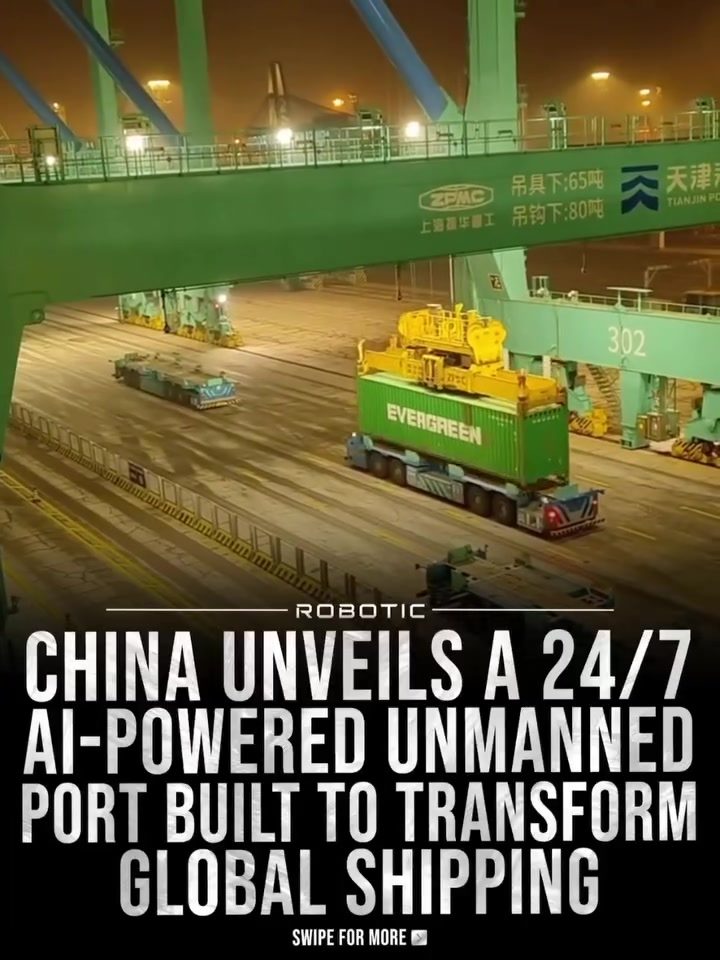
AI-Powered Unmanned Ports: The Future of Global Logistics
The future of global logistics is here, and it's powered by AI and 5G technology. Unmanned ports, equipped with autonomous transport vehicles and intelligent quay cranes, are revolutionizing the way containers are moved, loaded, and stacked. These smart ports operate 24/7, significantly improving speed, efficiency, and reliability while reducing operational costs across the supply chain.
Why This Matters
The shift towards automation in ports is a critical development in global logistics. Traditional port operations often rely heavily on manual labor and are susceptible to delays and inefficiencies. With the integration of AI and autonomous technology, ports can handle complex operations with minimal human intervention, leading to faster turnaround times and reduced costs. This transformation is not just about efficiency; it's about creating a more resilient and adaptive supply chain that can meet the demands of a rapidly evolving global market.
Main Discussion
The Role of AI and 5G Technology
AI and 5G technology are the backbone of these unmanned ports. Autonomous transport vehicles and intelligent quay cranes work in tandem to move, load, and stack containers. The AI systems coordinate these operations, ensuring that everything runs smoothly and efficiently. The 5G network provides the high-speed connectivity needed to support these advanced technologies, enabling real-time data exchange and quick decision-making.
ZPMC: A Leader in Port Automation
The Tianjin Port, equipped with ZPMC cranes, exemplifies this technological advancement. ZPMC, a prominent player in the field of port equipment, has developed cranes that can lift up to 65 tons and 80 tons, showcasing the robust capabilities of modern port automation. These cranes are not just about lifting heavy loads; they are integral to the seamless operation of the port, ensuring that containers are moved quickly and efficiently.
24/7 Operations and Efficiency
One of the standout features of these AI-powered unmanned ports is their ability to operate around the clock. This 24/7 functionality is a game-changer in the logistics industry. It means that ships can be loaded and unloaded faster, reducing waiting times and increasing the overall throughput of the port. This continuous operation also helps in managing peak periods more effectively, ensuring that the port can handle surges in demand without compromising on efficiency.
The Impact on the Supply Chain
The transition to unmanned ports has a ripple effect across the entire supply chain. By improving speed, efficiency, and reliability, these ports help reduce operational costs. This cost reduction can be passed on to consumers, making goods more affordable. Additionally, the increased efficiency means that goods can be delivered faster, enhancing the overall customer experience. This transformation is not just about the port; it's about creating a more efficient and interconnected logistics network.
Safety and Reliability
Automated ports are designed with safety in mind. The use of AI and autonomous technology minimizes the risk of human error, which is a common cause of accidents in traditional port operations. The intelligent systems can also monitor and predict maintenance needs, reducing the likelihood of equipment failure and ensuring that the port operates reliably. This focus on safety and reliability is crucial for building trust in AI-powered logistics solutions.
Practical Tips
For Port Operators
Port operators looking to transition to AI-powered unmanned operations should invest in robust AI and 5G infrastructure. This includes not just the hardware but also the software and algorithms that drive the automation. Collaboration with companies like ZPMC, which have a proven track record in port automation, can provide valuable insights and support.
For Shipping Companies
Shipping companies can benefit from these advancements by leveraging the increased efficiency and reliability of unmanned ports. This means planning their routes and schedules more effectively, ensuring that they can take full advantage of the 24/7 operations. Additionally, shipping companies should consider how they can integrate their own systems with the port's AI systems to create a more seamless and efficient logistics network.
For Logistics Providers
Logistics providers can play a key role in this transformation by offering services that support AI-powered ports. This includes everything from providing the necessary infrastructure to offering consulting services on how to best leverage these technologies. Logistics providers should also focus on developing partnerships with port operators and shipping companies to create a more interconnected and efficient supply chain.
Important Takeaways
AI-powered unmanned ports are more than just a futuristic concept; they are a reality that is already transforming global logistics. These ports offer significant advantages in terms of speed, efficiency, and reliability, making them a critical component of the modern supply chain. As autonomous technology continues to advance, we can expect to see even more innovative solutions that further enhance the capabilities of these ports.
Conclusion
The future of global logistics is here, and it's powered by AI and 5G technology. Unmanned ports, equipped with autonomous transport vehicles and intelligent quay cranes, are revolutionizing the way containers are moved, loaded, and stacked. These smart ports operate 24/7, significantly improving speed, efficiency, and reliability while reducing operational costs. As autonomous technology continues to advance, ports, warehouses, and logistics networks could become increasingly intelligent and connected, paving the way for a more efficient and resilient supply chain.
Watch the Reel
Questions readers ask
How does AI enhance efficiency in unmanned ports?
AI enhances efficiency in unmanned ports by enabling real-time decision making, optimizing container handling processes, and predicting maintenance needs. This allows for smoother operations, reduced downtime, and faster turnaround times for ships.
What role does 5G technology play in autonomous port operations?
5G technology facilitates seamless connectivity and low-latency communication among various autonomous systems in ports, such as vehicles and cranes. This ensures rapid data exchange, enabling synchronized operations and enhancing overall efficiency.
How do AI-powered ports reduce operational costs?
AI-powered ports reduce operational costs by minimizing the need for manual labor, optimizing resource use, and streamlining processes. This leads to lower labor expenditures, decreased equipment wear and tear, and improved energy management.
What are the benefits of 24/7 port operations?
24/7 port operations allow for continuous processing of vessels, reducing waiting times, and increasing the number of ships that can be handled. This results in faster cargo turnover and enhances the reliability of global supply chains.
How do unmanned ports improve supply chain resilience?
Unmanned ports improve supply chain resilience by adapting to changing market demands through flexible and efficient operations. Automated systems can quickly adjust to variations in cargo volume and vessel scheduling, ensuring smoother operations during peak times or disruptions.
What are intelligent quay cranes and how do they function?
Intelligent quay cranes are automated cranes equipped with AI and sensors that enable precise and efficient container handling. They can operate independently, moving containers to and from ships with minimal human intervention, enhancing speed and accuracy in port operations.
What is the impact of AI on container handling in ports?
AI optimizes container handling by automating the movement, loading, and stacking of containers. This reduces human error, speeds up the process, and ensures that containers are handled safely and efficiently, contributing to overall port productivity.
Related deep dives
Similar reads based on topic and creator.


Recent articles
Fresh deep dives from the latest Reels we unpacked.




Comments
Be the first to comment.