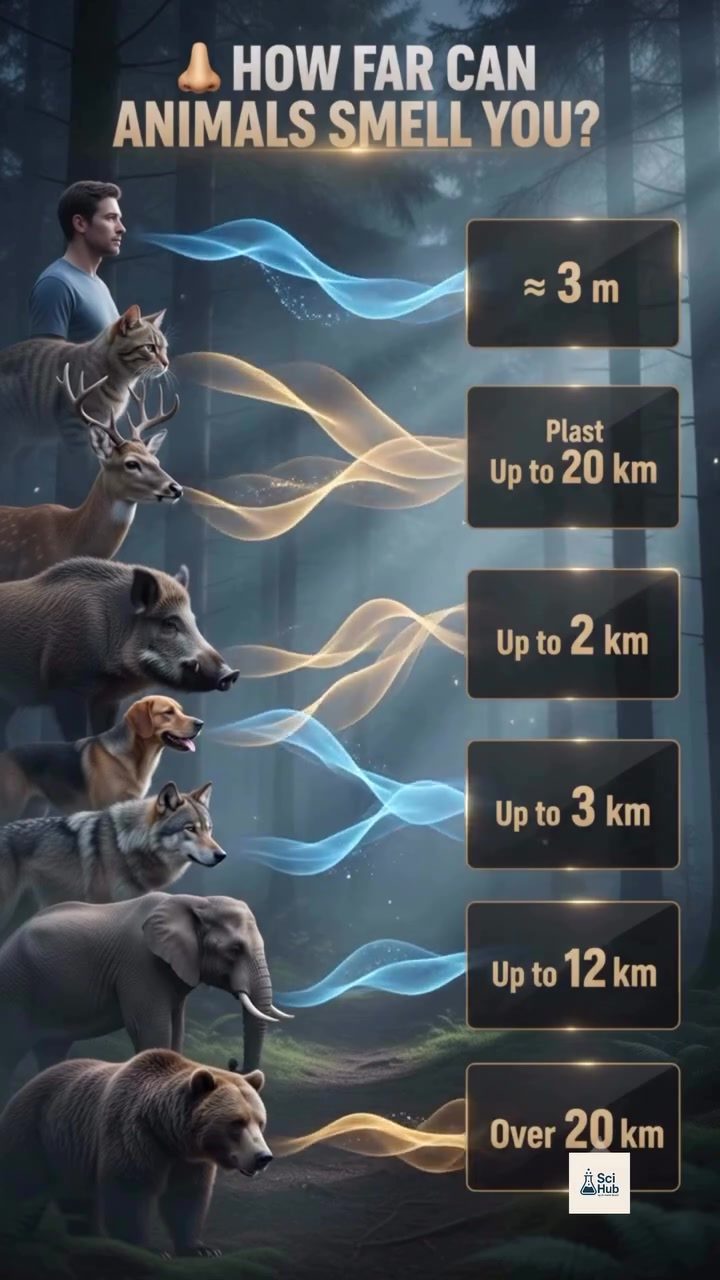
How Far Can Animals Smell?
Animals have an astonishing ability to detect scents from distances that far surpass human capabilities. This extraordinary sense of smell is crucial for their survival, enabling them to track prey, detect predators, and locate food. The olfactory system, which includes the brain and nose, plays a pivotal role in this ability. Many animals possess far more olfactory receptors and dedicate a larger portion of their brain to processing smells compared to humans. This article delves into the remarkable olfactory capabilities of various animals and the science behind their incredible sense of smell.
Why This Matters
Understanding the olfactory capabilities of animals provides insights into their behavior, survival strategies, and evolutionary adaptations. This knowledge is valuable for wildlife conservation, hunting and farming practices, and even for developing technologies inspired by nature, such as advanced scent-detecting devices. By appreciating the intricacies of an animal's sense of smell, we can better understand how they navigate their environments and interact with their ecosystems.
Main Discussion
The Olfactory System
The olfactory system is composed of the nose and the brain regions responsible for detecting and processing odors. Animals with acute senses of smell have more olfactory receptors, which are specialized cells in the nose that detect odor molecules. These receptors send signals to the brain, where the information is processed and interpreted.
Human vs. Animal Smell Range
Humans can detect faint scents from around 3 meters away under typical conditions. However, many animals far surpass this capability.
- Cats can detect certain odors from up to 150 meters away.
- Deer have highly sensitive noses that can detect danger or predators from hundreds of meters away, often reaching 400 meters under favorable conditions.
- Wild Boars can locate underground food and detect scents from up to 700 meters or more.
- Dogs possess up to 300 million olfactory receptors, allowing them to follow scent trails over several kilometers, depending on the conditions.
- Wolves use their sense of smell for hunting, communication, and navigation, tracking scents over several kilometers.
- Elephants are among the best smellers in the animal kingdom, with a keen sense of smell that aids in detecting water sources and other resources from great distances.
- Bears have one of the most powerful senses of smell among land mammals, capable of tracking odors over several kilometers.
Factors Affecting Smell Detection
An animal's ability to detect a scent depends on various factors, including wind direction, humidity, temperature, terrain, and the strength of the odor. These variables can significantly influence the effectiveness of an animal's sense of smell. For example, a strong wind can carry scents over longer distances, while humidity can affect how well odor molecules travel through the air. Therefore, it's important to consider these environmental factors when discussing the range at which animals can smell.
Practical Tips
For Wildlife Observers
Understanding an animal's sense of smell can enhance wildlife observation experiences. Here are some tips:
- Wind Direction: Pay attention to the wind direction. Animals often detect scents coming from upwind, so position yourself accordingly to avoid being detected.
- Scent Control: Minimize your own scent by using scent-free products and avoiding strong-smelling foods before venturing into wildlife areas.
- Approach Quietly: Move slowly and quietly to avoid disturbing animals or alerting them to your presence through vibrations or sounds.
For Hunters and Farmers
Knowing the olfactory capabilities of animals can improve hunting and farming practices:
- Hunting: Understand that animals can detect human scent from considerable distances. Use scent-eliminating products and plan your approach based on wind direction.
- Farming: For farmers raising livestock or dealing with pest control, it’s crucial to manage scents effectively. Pheromones and other scent-related products can be used to attract or repel animals as needed.
For Pet Owners
Pets, particularly dogs, have a superior sense of smell. Here are some tips for pet owners:
- Training: Utilize your dog's keen sense of smell for training exercises, such as scent tracking or search and rescue tasks.
- Environment: Recognize that your dog's behavior may be influenced by smells in the environment. For example, dogs may become excited or agitated by scents from other animals or even from human food.
Important Takeaways
- Animals possess far more olfactory receptors and a larger brain region dedicated to processing smells compared to humans.
- The ability to detect scents varies significantly among different species and is influenced by factors such as wind direction, humidity, and terrain.
- Understanding an animal's sense of smell can enhance wildlife observation, hunting and farming practices, and pet training.
Conclusion
The extraordinary olfactory capabilities of animals are a testament to their remarkable adaptations for survival. By understanding how animals use their sense of smell, we gain valuable insights into their behavior and can apply this knowledge to various practical applications. Whether you are a wildlife observer, hunter, farmer, or pet owner, recognizing the power of an animal's sense of smell can greatly enhance your interactions with the natural world.
Watch the Reel
Questions readers ask
How does the distance animals can smell compare to human capabilities?
Animals can detect scents from distances that far exceed human capabilities. For instance, while humans might smell something from a few feet away, many animals can detect scents from miles away. This is due to their superior number of olfactory receptors and larger brain regions dedicated to processing smells.
Which animals have the most remarkable sense of smell?
Several animals stand out for their extraordinary sense of smell. Dogs, for example, can detect scents that are 10,000 to 100,000 times fainter than what humans can smell. Sharks can sense a single drop of blood in 25 gallons of water, and some insects, like moths, can detect pheromones from miles away.
How do animals use their sense of smell for survival?
Animals rely heavily on their sense of smell for various survival tasks. They use it to track prey, detect predators, and locate food. For example, wolves can smell prey from miles away and follow the scent trail to catch it, while deer can detect predators by sensing their scent from far off.
What role does the olfactory system play in an animal's ability to smell?
The olfactory system, which includes the nose and the brain, is crucial for an animal's sense of smell. Many animals have a larger number of olfactory receptors and dedicate a larger portion of their brain to processing smells, giving them a more acute sense of smell compared to humans.
How do animals like dogs track scents over long distances?
Dogs and other animals with a keen sense of smell can track scents over long distances by following the scent trail left by other animals. This is possible due to their ability to detect even the faintest traces of a scent and follow it, often with great precision, even when the trail is old or faint.
How does the sensitivity of an animal's nose affect their olfactory range?
The sensitivity of an animal's nose directly affects their olfactory range. A more sensitive nose allows the animal to detect lower concentrations of odor molecules, thereby increasing the distance from which they can detect a scent. This heightened sensitivity is due to a larger number of olfactory receptors and specialized brain regions for processing smells.
Related deep dives
Similar reads based on topic and creator.




Recent articles
Fresh deep dives from the latest Reels we unpacked.




Comments
Be the first to comment.