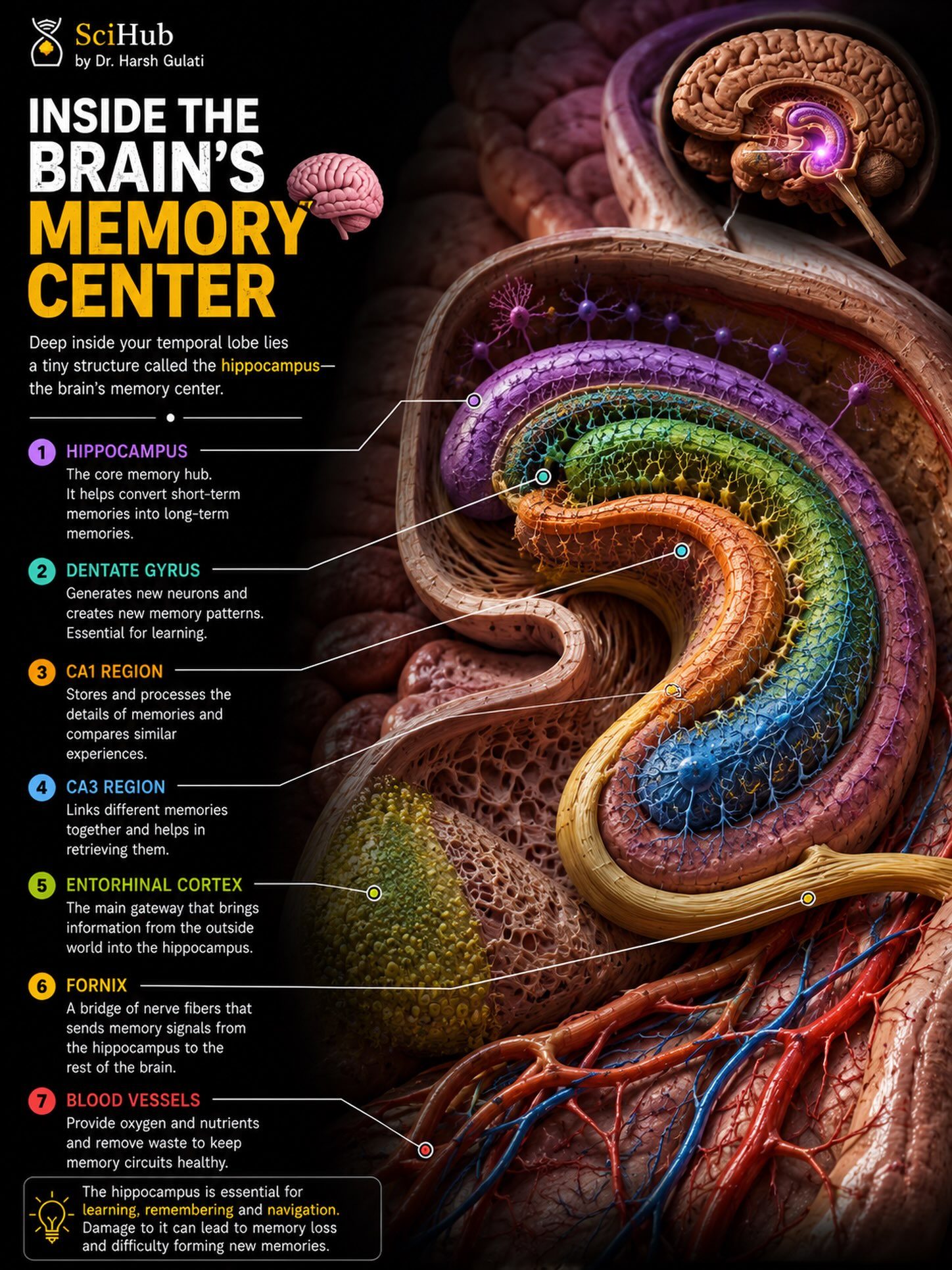
Inside the Brain’s Memory Center
Hidden deep within the temporal lobe lies a small, curved structure called the hippocampus. This unassuming part of the brain plays a vital role in turning today’s experiences into tomorrow’s memories. Every time you learn a new skill, remember a face, or recall where you parked your car, your hippocampus is hard at work.
Why the hippocampus matters
The hippocampus is crucial for converting short-term memories into long-term memories. It communicates with surrounding brain regions to organize, strengthen, and store information. This tiny structure contains millions of interconnected neurons that constantly form and modify connections, allowing your brain to adapt, learn, and remember throughout your life. Notably, the hippocampus is one of the few regions in the adult human brain where new neurons can continue to form, a process called adult neurogenesis, which supports learning and memory.
Key regions involved in memory processing
The Hippocampus: The Core Memory Hub
The hippocampus is often referred to as the brain’s memory center. It serves as the core memory hub, responsible for converting short-term memories into long-term memories. This process is essential for retaining information over extended periods, from recalling facts to remembering personal experiences.
The Dentate Gyrus: Generating New Neurons
The dentate gyrus is a critical component of the hippocampus. It generates new neurons and creates new neural patterns, which are essential for learning and memory. This region also stores and processes the details of memories, comparing similar experiences to help in the formation of new memories.
The CA1 Region: Linking Memories
The CA1 region plays a crucial role in linking different memories together. It helps in retrieving memories by associating them with other related information, making it easier to recall past experiences and understand new information.
The CA3 Region: The Gateway to the Hippocampus
The CA3 region acts as the main gateway that brings information from the outside world into the hippocampus. It receives sensory inputs and processes them, sending the relevant information to other parts of the hippocampus for further processing.
The Fornix: Sending Memory Signals
The fornix is a bridge of nerve fibers that sends memory signals from the hippocampus to the rest of the brain. This structure is essential for consolidating memories and ensuring that they are stored correctly in the brain.
The Entorhinal Cortex: Connecting the Brain
The entorhinal cortex serves as a hub that connects the hippocampus to other parts of the brain. It plays a crucial role in memory formation and retrieval, ensuring that information is properly processed and stored.
Blood Vessels: Keeping Memory Circuits Healthy
Blood vessels are vital for providing oxygen and nutrients to the memory circuits in the brain. They also remove waste products, ensuring that the memory centers function optimally. Maintaining healthy blood vessels is essential for keeping memory circuits healthy and functional.
Practical tips for maintaining a healthy hippocampus
Maintaining a healthy hippocampus is crucial for optimal memory function. Here are some practical tips to help keep your hippocampus in top condition:
Engage in Mental Stimulation
Activities that stimulate the mind, such as reading, puzzles, and learning new skills, can help enhance memory function. These activities promote neurogenesis and strengthen neural connections in the hippocampus.
Stay Physically Active
Regular physical exercise has been shown to boost memory and cognitive function. Aim for at least 30 minutes of moderate exercise most days of the week to support a healthy hippocampus.
Maintain a Balanced Diet
A balanced diet rich in fruits, vegetables, lean proteins, and whole grains provides the necessary nutrients for optimal brain function. Omega-3 fatty acids, found in foods like fatty fish and walnuts, are particularly beneficial for brain health.
Get Quality Sleep
Sleep is essential for memory consolidation. Aim for 7-9 hours of quality sleep each night to support memory function and overall brain health.
Manage Stress
Chronic stress can negatively impact the hippocampus, leading to memory loss and cognitive decline. Practice stress-reduction techniques such as meditation, deep breathing, and yoga to manage stress levels effectively.
Important takeaways
The hippocampus is a small but powerful structure in the brain that plays a crucial role in memory formation and retrieval. It communicates with other brain regions to organize, strengthen, and store information, ensuring that memories are properly processed and retained.
Maintaining a healthy hippocampus is essential for optimal memory function. Engaging in mental stimulation, staying physically active, maintaining a balanced diet, getting quality sleep, and managing stress are all practical tips to support a healthy hippocampus.
Conclusion
The hippocampus is a remarkable structure that enables us to learn, remember, and navigate the world around us. By understanding its function and the surrounding regions that support it, we can take practical steps to maintain optimal brain health. Keep your mind active, stay physically fit, and prioritize a healthy lifestyle to support the hippocampus and enhance your memory function.
Watch the Reel
Questions readers ask
What is the primary function of the hippocampus in the brain?
The hippocampus is primarily responsible for converting short-term memories into long-term memories. It processes and stores information, enabling you to recall past experiences, learn new skills, and remember important details.
Where is the hippocampus located?
The hippocampus is situated deep within the temporal lobe of the brain. It is a curved structure that plays a crucial role in memory formation and storage.
How does the hippocampus contribute to the learning process?
The hippocampus facilitates learning by continuously adapting and forming new neural connections. It helps in organizing, strengthening, and storing information, making it easier for the brain to learn and retain new knowledge.
What role do neural connections play in the hippocampus?
Neural connections in the hippocampus are vital for memory formation. The structure contains millions of interconnected neurons that constantly form and modify these connections, allowing the brain to adapt, learn, and remember information efficiently.
Why is the hippocampus considered the brain's memory hub?
The hippocampus is considered the brain's memory hub because it is central to transforming fleeting experiences into lasting memories. It communicates with surrounding brain regions to organize and store information, making it indispensable for both memory formation and retrieval.
What happens when the hippocampus is damaged?
Damage to the hippocampus can lead to significant memory impairments, such as difficulty forming new memories and recalling recent events. This condition is often referred to as anterograde amnesia, where individuals struggle to create new memories post-injury, while memories formed before the damage may remain intact.
How does the hippocampus interact with other brain regions for memory storage?
The hippocampus communicates with various brain regions, such as the cortex and amygdala, to organize and store information. It helps in the consolidation of memories by sending signals to these regions, ensuring that new experiences are properly encoded and stored for future recall.
Related deep dives
Similar reads based on topic and creator.




Recent articles
Fresh deep dives from the latest Reels we unpacked.




Comments
Be the first to comment.