Unitree's Humanoid Robots in Action
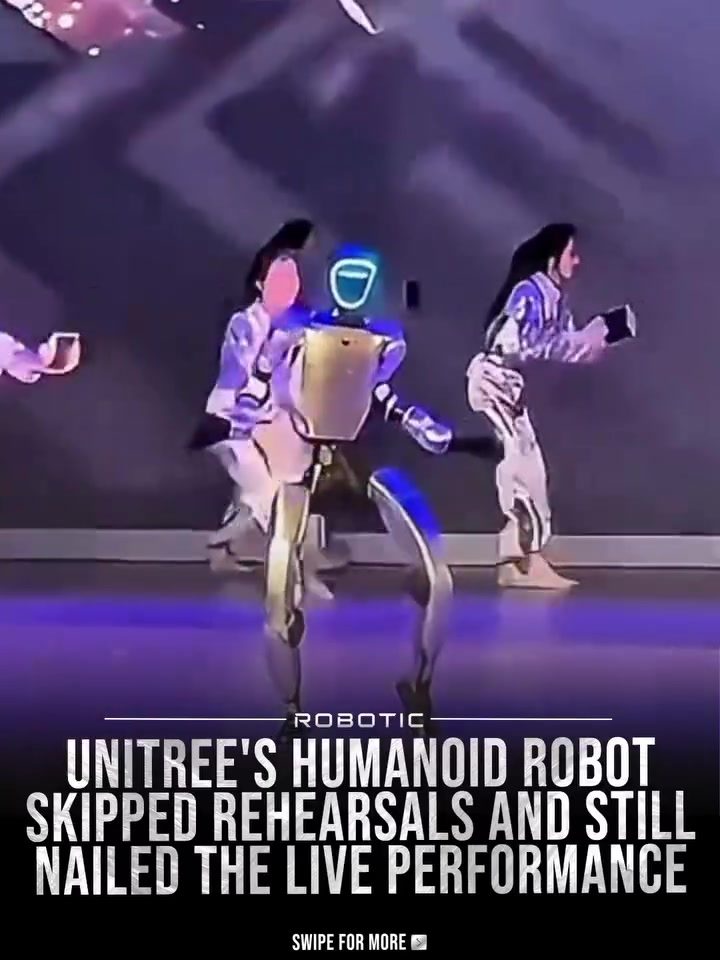
Unitree's humanoid robots stole the spotlight during China’s 2025 Spring Festival Gala, the world's largest television stage, delivering a flawless performance. Developed by Unitree Robotics in Hangzhou, China, a team of 16 H1 humanoid robots took part in a synchronized Yangge folk dance alongside human dancers. This event showcased the rapid advancements in robotics, offering a glimpse into how these machines are progressing from lab experiments to real-world, large-scale performances.
Context / Why this matters
Unitree's robots are designed to mimic human movements and are becoming more and more adaptable and flexible — able to handle live performances that require real-time adjustments and complex choreography. This performance was directed by acclaimed filmmaker Zhang Yimou. The robots spun, tossed, and caught handkerchiefs in perfect sync with human dancers, demonstrating movements that typically require years of practice to master. The robots' ability to perform complex movements live showcases the rapid advancements in full-body motion control technology.
Main discussion
The Technology Behind the Performance
The UNITREE humanoid robots are equipped with advanced full body motion control systems, which allow them to mimic human movements with remarkable precision. The robots' ability to perform complex movements in real-time, such as spinning and catching handkerchiefs, highlights the sophistication of their control systems. These systems use a combination of sensors, actuators, and sophisticated algorithms to coordinate the robots' movements.
The Yangge Folk Dance
The Yangge folk dance is a traditional Chinese dance that requires precise coordination and synchronization. The fact that 16 UNITREE humanoid robots were able to perform this dance alongside human dancers is a testament to their advanced capabilities. The robots' ability to synchronize their movements with human dancers also highlights their adaptability and flexibility.
The Performance
Unitree's humanoid robots performed live during China’s 2025 Spring Festival Gala, which was broadcast to hundreds of millions of viewers. The performance showcased the robots' advanced full body motion control as they spun, tossed, and caught handkerchiefs in real time, demonstrating movements that typically take years of practice to master. The robots' performance was even more impressive because they performed live without any prior rehearsals.
The Importance of Live Performance
The fact that the robots performed live without any rehearsals highlights their adaptability and flexibility. Live performances require real-time adjustments and quick reflexes, and the fact that the robots were able to perform flawlessly is a testament to their advanced capabilities.
The Future of Humanoid Robotics
The performance by UNITREE humanoid robots during China’s 2025 Spring Festival Gala is just one example of how humanoid robots are progressing from research labs into large-scale real-world performances. As technology continues to advance, it is likely that we will see more and more robots in public performances and other real-world applications.
The Role of AI
The robots' ability to perform complex movements in real-time is a testament to the power of AI. AI algorithms are used to coordinate the robots' movements, allowing them to adapt to changing conditions and perform with remarkable precision.
Practical tips
The UNITREE humanoid robots' performance serves as a practical demonstration of several key points:
- Real-Time Adaptability: Humanoid robots can perform intricate movements flawlessly, even in live settings, showcasing their real-time adaptability. If you're involved in robotics or AI, understand that real-time control and adaptability are critical for successful live performances.
- Synchronization with Humans: These robots can synchronize with human dancers, highlighting their flexibility. When designing robots for real-world applications, consider their ability to interact seamlessly with humans.
- Advanced Motion Control: The robots' full body motion control systems are crucial for their performance. If you’re working on similar projects, focus on developing sophisticated control systems that can handle complex movements with precision.
- Live Performance Capabilities: Performing live without rehearsals demonstrates the robots' readiness for real-world applications. When developing robots, ensure they are capable of handling live performance scenarios, where real-time adjustments are essential.
Important takeaways
The performance by Unitree's humanoid robots offers several key takeaways:
- Advanced Capabilities: The robots' ability to perform complex movements in real-time highlights their advanced capabilities.
- Adaptability: The fact that the robots performed live without any rehearsals demonstrates their adaptability and flexibility.
- Real-World Applications: The performance showcases how humanoid robots are progressing from research labs into large-scale real-world performances.
- The Role of AI: The robots' advanced capabilities are a testament to the power of AI, which plays a crucial role in coordinating their movements.
Conclusion
The performance by Unitree's humanoid robots during China’s 2025 Spring Festival Gala was a remarkable demonstration of the rapid advancements in robotics. The robots' ability to perform complex movements in real-time, synchronize with human dancers, and handle live performances without prior rehearsals highlights their advanced capabilities and adaptability. As technology continues to advance, we can expect to see more and more robots in public performances and other real-world applications. The future of humanoid robotics is bright, and performances like this are a testament to the incredible progress being made in the field.
Watch the Reel
Questions readers ask
What specific model of Unitree robots performed at the 2025 Spring Festival Gala?
The 16 humanoid robots that performed were of the H1 model, developed by Unitree Robotics in Hangzhou, China.
How many robots participated in the performance and what kind of dance did they perform?
A total of 16 H1 humanoid robots participated in a synchronized Yangge folk dance, which is a traditional Chinese dance.
What makes the 2025 Spring Festival Gala performance notable in the field of robotics?
The performance is notable for showcasing advanced full-body motion control technology, allowing the robots to handle complex choreography and real-time adjustments during a live event.
How do Unitree's robots mimic human movements and why is this significant?
Unitree's robots are designed to replicate human movements, allowing them to interact seamlessly with human dancers and perform complex routines on a large scale. This adaptability is a significant step toward integrating robots into more dynamic, real-world scenarios.
What is the significance of the 2025 Spring Festival Gala performance for robotics in China?
The performance highlights China's advancements in robotics, demonstrating the country's capability to develop and deploy sophisticated humanoid robots in high-profile, large-scale events.
Related deep dives
Similar reads based on topic and creator.



Recent articles
Fresh deep dives from the latest Reels we unpacked.




Comments
Be the first to comment.