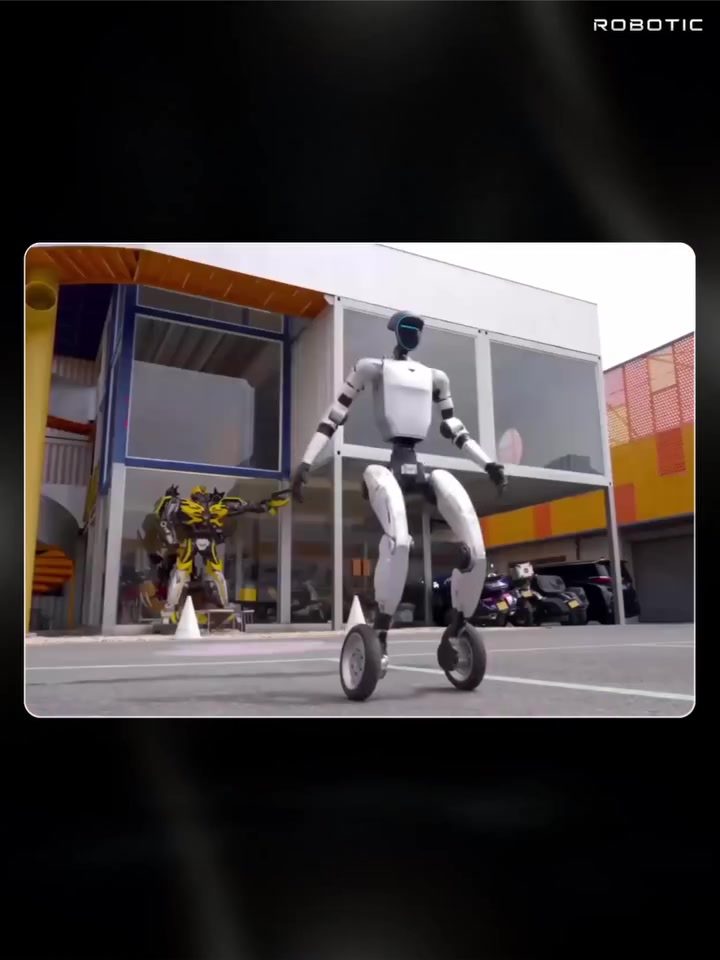
Humanoid Robots and the Future of Mobility
The G1 humanoid robot, developed by Unitree Robotics, has recently showcased remarkable skating abilities, pushing the boundaries of what humanoid robots can achieve. Demonstrating impressive balance and agility, the robot navigates various urban environments with coordinated wheel-leg control, performing complex maneuvers such as 360-degree turns, one-leg spins, front flips, and smooth transitions between rolling and stepping. This new demo highlights Unitree’s innovative approach to integrating wheels and legs for more efficient and practical mobility.
Context / Why this matters
Advancements in humanoid robotics are transforming how we perceive and utilize robots in everyday tasks. While traditional robots have been efficient in performing specific tasks, humanoid robots offer the flexibility to adapt to different environments and situations. The G1 humanoid robot, with its hybrid mobility system, represents a significant leap in this direction. By combining the efficiency of wheels with the adaptability of legs, this robot can handle a wide range of tasks more effectively.
Main Discussion
The Hybrid Mobility System
Unitree Robotics has developed a hybrid mobility system that allows the G1 humanoid robot to switch seamlessly between rolling and stepping. This system consists of coordinated wheel-leg control, enabling the robot to maintain balance and stability while performing complex maneuvers. The ability to switch between wheels and legs allows the robot to move faster and more efficiently, making it suitable for various tasks.
Advanced Balance and Agility
The G1 humanoid robot showcases impressive balance and agility, crucial for navigating urban environments. The robot’s ability to perform 360-degree turns, one-leg spins, and front flips demonstrates its advanced capabilities. These movements require precise coordination and control, highlighting the robot’s sophisticated design and programming.
Versatility in Different Environments
The G1 robot's hybrid mobility system allows it to operate effectively on both roller skates and ice skates, making it versatile in different environments. This versatility is essential for real-world applications, where the robot may need to adapt to various surfaces and conditions. The demo showcases the robot's ability to maintain balance and perform complex maneuvers on different terrains, proving its adaptability.
Potential Applications
The G1 humanoid robot has several potential applications, including real-world task execution, AI training, and data collection. Its hybrid mobility system makes it an ideal form for general-purpose robotics, capable of handling a wide range of tasks. The robot's agility and balance make it suitable for tasks that require precise movements and adaptability, such as search and rescue missions, delivery services, and industrial inspections.
Practical Tips
When considering the use of humanoid robots for practical applications, several factors should be considered:
- Environmental Adaptability: Ensure the robot can adapt to various environments and surfaces. The G1 robot's hybrid mobility system makes it versatile in different settings.
- Balance and Stability: Choose a robot with advanced balance and agility capabilities. The G1 robot's ability to perform complex maneuvers is crucial for tasks that require precision and stability.
- Efficiency and Practicality: Opt for a robot that combines efficiency with practicality. The G1 robot's hybrid mobility system allows it to move faster and more efficiently, making it suitable for various tasks.
- Task-Specific Capabilities: Consider the robot's specific capabilities and how they align with your needs. The G1 robot's agility and balance make it ideal for tasks that require precise movements and adaptability.
Important Takeaways
The G1 humanoid robot by Unitree Robotics represents a significant advancement in the field of robotics. With its hybrid mobility system, the robot showcases impressive balance, agility, and versatility, making it suitable for various real-world applications. The ability to switch between wheels and legs allows the robot to move faster and more efficiently, opening up new possibilities for its use in different industries.
Additionally, the robot's design and programming highlight the potential for general-purpose robotics, capable of handling a wide range of tasks. Its advanced capabilities and adaptability make it an ideal form for tasks that require precision and stability, such as search and rescue missions, delivery services, and industrial inspections.
In summary, the G1 humanoid robot demonstrates the future of mobility in robotics, combining efficiency and adaptability for practical and versatile use.
Conclusion
The G1 humanoid robot's advanced capabilities and hybrid mobility system represent a significant leap in the field of robotics. Its ability to navigate various environments with precision and adaptability makes it a valuable tool for real-world applications. As the technology continues to evolve, humanoid robots like the G1 will play an increasingly important role in various industries, transforming how we approach tasks and challenges.
Watch the Reel
Questions readers ask
What makes the Unitree G1 robot's skating demonstration significant?
The G1 robot's skating demo showcases its exceptional balance and agility, highlighting the potential for humanoid robots to navigate urban environments efficiently. Its ability to perform complex maneuvers like 360-degree turns and front flips underscores the advancements in adaptable robotics.
How does the G1 robot's hybrid wheel-leg system work?
The G1 robot's hybrid system combines the stability of wheels with the versatility of legs, allowing for seamless transitions between rolling and stepping. This design enables the robot to handle various terrains and obstacles, making it well-suited for urban mobility.
What types of maneuvers can the G1 robot perform?
The G1 robot can perform a variety of impressive maneuvers, including 360-degree turns, one-leg spins, and front flips. These abilities demonstrate the robot's agility and precision in navigating complex environments. Additionally, the G1 can smoothly transition between rolling and stepping, enhancing its overall adaptability.
How does Unitree Robotics' approach to robotics differ from traditional methods?
Unitree Robotics' approach integrates wheels and legs in a hybrid system, which sets it apart from traditional robotics that often rely solely on one mode of locomotion. This combination allows the G1 robot to navigate urban environments more efficiently and adapt to various terrains.
What are the advantages of a hybrid wheel-leg system in a humanoid robot?
A hybrid wheel-leg system offers the stability and speed of wheels while also providing the versatility and adaptability of legs. This combination allows the G1 robot to navigate complex urban environments with ease, making it a more practical and efficient solution for various tasks.
What does the G1 robot's performance say about the future of urban mobility?
The G1 robot's performance suggests a future where humanoid robots can seamlessly navigate urban environments, performing tasks with agility and efficiency. This advancement in robotics could transform how we approach urban mobility, making it more adaptable and versatile.
What are some of the most impressive features of the G1 robot's skating demonstration?
Some of the most impressive features include the robot's ability to maintain balance during complex maneuvers, perform smooth transitions between rolling and stepping, and execute precise movements like one-leg spins and front flips. These features showcase the G1's advanced capabilities and the potential for future advancements in robotic mobility.
Related deep dives
Similar reads based on topic and creator.



Recent articles
Fresh deep dives from the latest Reels we unpacked.




Comments
Be the first to comment.