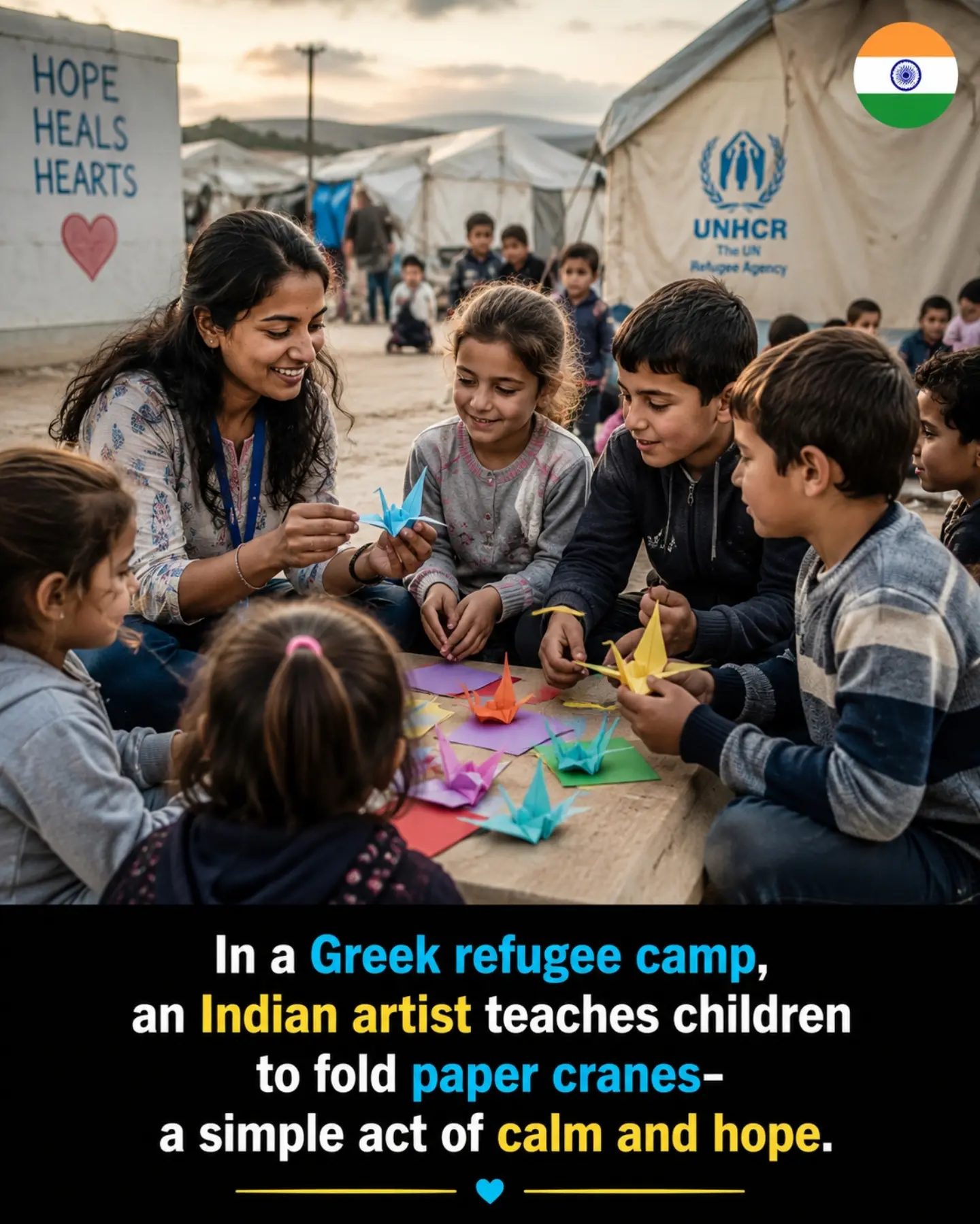
Refugee Camp Activities — Folding Paper Cranes for Calm and Hope
In a refugee camp in Greece, children are gathering and learning a new skill — folding paper cranes. The camp is supported by the United Nations High Commissioner for Refugees (UNHCR), and the activity is led by an Indian artist. The simple act of folding paper cranes is more than just a craft; it symbolizes calm and hope for the children participating.
Context
Refugee Camps in Greece
Greece has been a significant entry point for refugees and migrants seeking asylum in Europe. The influx has led to the establishment of numerous refugee camps across the country, each facing unique challenges in providing shelter, healthcare, education, and recreational activities. These camps are often supported by international organizations like the UNHCR, which aims to ensure that refugees have access to the necessary resources and support.
The Power of Art and Craft in Humanitarian Settings
Art and craft activities play a crucial role in humanitarian settings. They provide a means of expression, a distraction from the challenges of daily life, and a way to foster a sense of community. Simple crafts like folding paper cranes can have a profound impact on the psychological well-being of refugees, especially children.
Main Discussion
The Symbolism of Paper Cranes
The paper crane is a powerful symbol in many cultures, but it holds particular significance in Japan, where it is known as origami tsuru. The legend of the thousand origami cranes, or Senbazuru, is a story of hope and healing. It is believed that folding 1,000 paper cranes can grant a wish or bring good fortune. This tradition has been adopted by various cultures as a symbol of peace, hope, and resilience.
The Role of UNHCR in Refugee Camps
The UNHCR is dedicated to supporting refugees and asylum seekers worldwide. In Greece, the UNHCR provides essential services, including shelter, food, healthcare, and education. The organization also supports recreational and cultural activities that promote the well-being of refugees. Activities like folding paper cranes are part of a broader initiative to create a sense of normalcy and hope in difficult circumstances.
The Impact of Creative Activities on Refugee Children
Creative activities offer more than just a distraction for refugee children; they provide a therapeutic outlet. Children in refugee camps often face traumatic experiences, and engaging in art and craft activities can help them process their emotions and find a sense of calm. The act of folding paper cranes, for instance, requires focus and concentration, which can be soothing and meditative.
The Role of Art in Healing
Art has long been recognized as a powerful tool for healing and self-expression. For refugee children, engaging in art activities can provide a sense of empowerment and control. It allows them to express their emotions and experiences in a non-verbal way, which can be particularly beneficial for children who may struggle to articulate their feelings verbally.
Practical Tips
Engaging in Craft Activities
- Choose Simple Crafts: Start with simple and accessible crafts that require minimal materials. Paper cranes are an excellent example — they only need paper and a bit of instruction.
- Provide Clear Instructions: Make sure the instructions are clear and easy to follow. For children, visual aids can be very helpful.
- Encourage Creativity: Allow for creativity and personalization. While the basic steps for folding a paper crane are the same, children can add their own touches, such as coloring or decorating the cranes.
- Create a Supportive Environment: Ensure that the environment is conducive to learning and creativity. A quiet, well-lit space with comfortable seating can make a big difference.
- Promote Social Interaction: Encourage children to work together and share their creations. This can foster a sense of community and belonging, which is essential in refugee camps.
Incorporating Art into Daily Life
- Schedule Regular Sessions: Schedule regular craft or art sessions to provide a consistent outlet for creativity and self-expression.
- Integrate with Other Activities: Combine craft activities with other educational or therapeutic programs. This can make the activities more meaningful and impactful.
- Provide Positive Reinforcement: Encourage children by praising their efforts and creations. This can boost their self-esteem and motivation.
- Use Art as a Communication Tool: Encourage children to use art as a means of communication. This can be especially helpful for children who may struggle with verbal communication.
Important Takeaways
- Engaging in simple crafts like folding paper cranes can have a profound impact on the psychological well-being of refugee children.
- The UNHCR plays a crucial role in supporting refugee camps, providing essential services and promoting activities that foster hope and resilience.
- Creative activities offer a therapeutic outlet for children, helping them process their emotions and find a sense of calm.
- Art and craft activities can be integrated into daily life to provide a consistent outlet for creativity and self-expression.
Conclusion
The simple act of folding paper cranes in a Greek refugee camp highlights the power of art and creativity in promoting psychological well-being. The UNHCR's support and the Indian artist's leadership have created an environment where children can find calm and hope through a simple, meaningful activity. This example underscores the importance of integrating art and craft activities into humanitarian efforts, providing refugees with more than just basic necessities but also the tools to heal and thrive.
Watch the Reel
Questions readers ask
What is the purpose of the art therapy program supported by UNHCR in Greek refugee camps for children?
The art therapy program aims to help refugee children cope with the emotional impact of displacement. By engaging in creative activities like folding paper cranes, children can find a sense of calm and hope amidst their challenging circumstances.
Who leads the paper crane folding activity in the refugee camps?
The paper crane folding activity is led by an Indian artist. This artist uses art as a therapeutic tool to help refugee children express their emotions and find solace in the art making process.
What does folding paper cranes symbolize for the children in the refugee camps?
Folding paper cranes symbolizes hope, calm, and a sense of accomplishment. It gives children a creative outlet and a way to focus their minds, helping them to temporarily escape from the difficulties of their daily lives.
How does art therapy help refugee children in coping with displacement?
Art therapy, such as folding paper cranes, allows refugee children to process their emotions and experiences in a non-verbal way. It provides a safe and engaging environment for them to express themselves, foster a sense of community, and develop resilience.
What kind of support does UNHCR provide to refugee camps in Greece?
UNHCR provides comprehensive support to refugee camps in Greece, including shelter, healthcare, and various activities designed to enrich the lives of refugees. This support extends to initiatives like art therapy, which aim to improve the well-being of refugee children.
What are some simple art therapy activities that can be done in refugee camps?
Simple art therapy activities, such as folding paper cranes, are effective for children in refugee camps. These activities require minimal materials and can be easily facilitated, making them accessible and beneficial for children in various settings.
How do activities like paper crane folding contribute to the overall well-being of refugee children?
Activities like paper crane folding contribute to the overall well-being of refugee children by providing them with a constructive way to pass the time, learn new skills, and connect with others. These activities can also instill a sense of purpose and achievement.
Related deep dives
Similar reads based on topic and creator.

Recent articles
Fresh deep dives from the latest Reels we unpacked.




Comments
Be the first to comment.