Deep Sea Laboratories
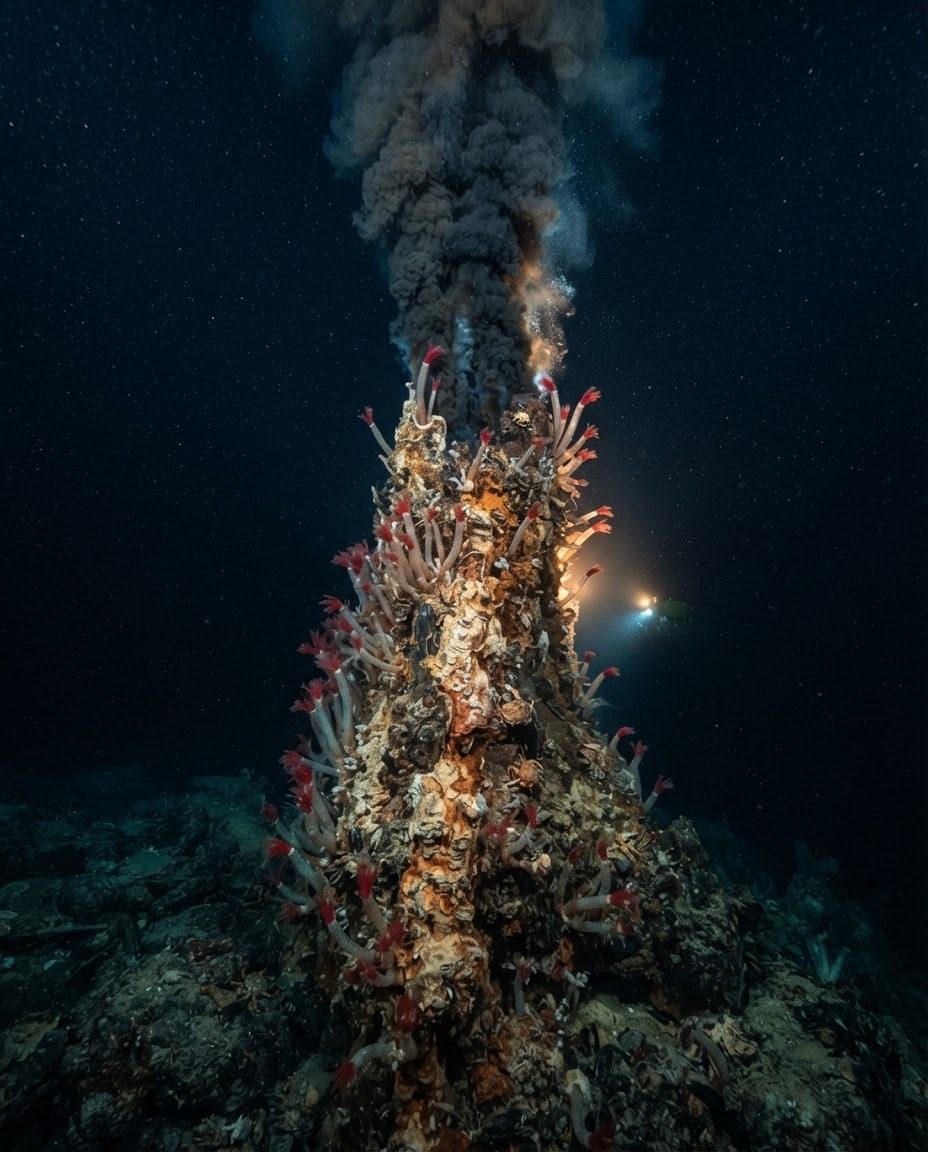
Hydrothermal vents are geological features so profound, they often seem out of this world. Hiding beneath the ocean floor, they offer a glimpse into how life can adapt and flourish in the most extreme conditions the Earth offers. These vents release heated water and chemicals from the Earth's interior, they emit dark plumes into the water. The plume is composed primarily of dissolved minerals and other compounds. The illumination of the vent brings a sense of otherworldly awe, showcasing the unusual beauty of these deep-sea laboratories. The vents create a unique environment, unlike anything found on land. They support entire ecosystems. Creatures thrive in the absence of sunlight. Instead, the creatures rely on a process called chemosynthesis, where they derive energy from the chemicals released by the vents. In contrast to the land-based survival systems, these organisms directly convert chemical compounds to energy, thus supporting life in a seemingly barren ocean floor. These environments are quite literally alien. The presence of vent plumes in the surrounding water indicates the abundance of life. Researching these areas has led to the discovery of new species, such as giant tubeworms and pumpkin-shaped microorganisms. The discovery of these organisms has greatly contributed to research in the subject areas of biology and astrobiology.
The Mysteries of the Marine Mankind
The discovery of hydrothermal vents has revolutionized our understanding of where life can exist. It has expanded our definition of habitable environments. The marine life found in these environments has opened up new fields of study, such as chemosynthesis. The isolation of the vents, as well as the ability to support life, has led some researchers to believe that extraterrestrial life may exist in similar environments on other planets or moons. The discovery of hydrothermal vents on Mars has led to speculation that these environments may have once supported life. The research on hydrothermal vents has also led to a greater understanding of the early Earth. The vents may have played a role in the origin of life. The unique ecosystems found around hydrothermal vents have also led to advancements in biotechnology. Some microorganisms found in these environments have been found to have useful properties, such as the ability to break down toxic chemicals. Researching this is ongoing. Vent plumes are often a mixture of heated water and other minerals. These vents are regions of interest for mining. The vents often contain valuable minerals, such as gold, copper and zinc. It is not uncommon to find deep sea mining vessels.
Diving for New Insights
Understanding hydrothermal vents not only yields insights into the bounds of life itself, but also offers a new frontier of research for humanity. The corals and marine life surrounding these vents provide a wealth of information for marine biologists. The organisms in this environment have developed unique adaptations to survive in the harsh conditions. Researchers are still working to understand the intricate relationships between these organisms and their environment. This knowledge could be instrumental in advancing our understanding of the processes that allow life to exist on Earth. Exploring these ecosystems could also help us understand the origins of life on Earth. The vents may have played a critical role in the emergence of life on our planet. Further research could help us understand the fundamental processes that allowed life to emerge from the primordial soup of early Earth. This could also provide insights into the conditions and methods that could support life on other planets. The marine life found around these vents can also help us understand the impacts of climate change and pollution. These ecosystems are sensitive to changes in the environment, so observing them can provide insights into the broader impacts of our activities on Earth.
Watch the Reel
Related deep dives
Similar reads based on topic and creator.




Recent articles
Fresh deep dives from the latest Reels we unpacked.




Comments
Be the first to comment.