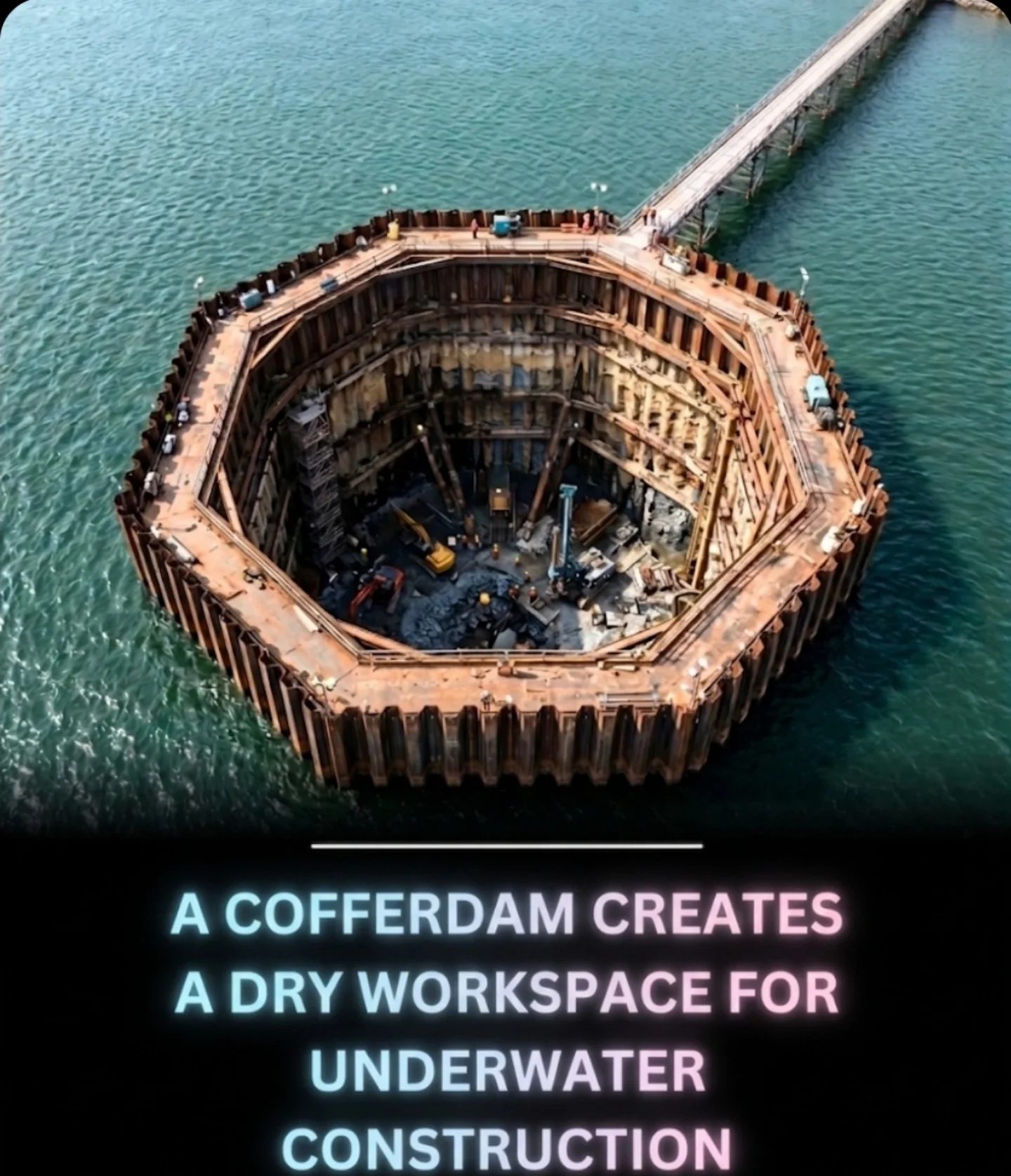
Understanding Underwater Construction with Cofferdams
Cofferdams are a key tool in underwater construction, enabling engineers to work in dry conditions below the water surface. These temporary, watertight structures allow for a controlled environment essential for tasks that would be challenging or impossible in submerged conditions.
Why Cofferdams Matter in Underwater Construction
Underwater construction projects present unique challenges, primarily due to the presence of water. Tasks like pouring concrete or excavating foundations require a dry workspace to achieve the necessary precision and structural integrity. Cofferdams facilitate this by isolating a specific area, removing the water, and creating a stable, dry environment for construction activities.
Key Operational Phases of Cofferdams
Cofferdams are engineered to withstand the immense hydrostatic pressure from the surrounding water while maintaining a dry workspace. Here are the critical phases of their operation:
Structural Isolation
The process begins with structural isolation, where interlocking steel sheet piles are driven deep into the bed of the water body. These piles form a rigid, watertight perimeter, effectively sealing off the construction area from the surrounding water. This step ensures that the workspace remains isolated and free from water intrusion.
Pressure Management
Once the perimeter is secured, internal bracing systems are installed to counteract the hydrostatic pressure exerted by the water outside. These systems are crucial for maintaining the structural integrity of the cofferdam. As the water is pumped out, the internal bracing helps to balance the external pressure, preventing any potential collapse or deformation.
Foundation Sealing
To ensure a completely dry workspace, a "tremie" concrete seal is often applied to the bottom of the cofferdam. This seal prevents water from seeping up through the soil, providing an additional layer of protection against water intrusion. This step is vital for maintaining the dry conditions necessary for various construction activities.
Applications and Benefits
Cofferdams are versatile and find applications in various engineering and construction projects, including infrastructure, marine engineering, and maintenance.
Infrastructure
One of the primary applications of cofferdams is in constructing bridge piers and support pylons. These structures often require precise foundations that can only be achieved in a dry environment. Cofferdams enable engineers to pour concrete and reinforce structures with the necessary precision and strength.
Marine Engineering
In marine engineering, cofferdams are used to build lock systems, dams, and offshore platforms. These projects demand a controlled environment to ensure structural integrity and safety. By creating a dry workspace, cofferdams facilitate the construction of these critical marine structures.
Maintenance
Cofferdams are also crucial for executing critical repairs on submerged structures. Tasks such as repairing or reinforcing underwater foundations, piers, and other infrastructure require a dry workspace to ensure the repairs are effective and long-lasting.
Practical Tips for Effective Use of Cofferdams
When planning an underwater construction project involving cofferdams, consider the following practical tips:
Site Assessment
Conduct a thorough site assessment to determine the depth, soil composition, and hydrostatic pressure. This information is crucial for designing and installing an effective cofferdam system.
Material Selection
Select high-quality materials for the steel sheet piles, bracing systems, and concrete seals. The durability and strength of these materials will directly impact the stability and longevity of the cofferdam.
Water Management
Develop a comprehensive water management plan, including pumping systems and water treatment facilities. Efficient water management ensures that the cofferdam remains free from water intrusion and maintains a dry workspace.
Important Takeaways
Cofferdams are indispensable in underwater construction, offering a controlled environment for various tasks. Key takeaways include:
- Versatility: Cofferdams find applications in infrastructure, marine engineering, and maintenance, making them a versatile tool in the construction industry.
- Structural Integrity: Proper structural isolation, pressure management, and foundation sealing are critical for maintaining a stable and dry workspace.
- Precision: The dry environment provided by cofferdams allows for precise construction and repair, enhancing the structural integrity of the final product.
Conclusion
Underwater construction poses significant challenges, but cofferdams offer a practical solution by creating a controlled, dry workspace. Whether constructing bridge piers, building marine structures, or performing critical repairs, cofferdams provide the necessary environment for precise and effective work. By understanding their operational phases and applications, engineers can leverage cofferdams to overcome the complexities of underwater construction, ensuring successful and durable projects.
Watch the Reel
Questions readers ask
What are cofferdams and why are they crucial for underwater construction?
Cofferdams are temporary, watertight structures used to create dry workspaces underwater. They are crucial for underwater construction as they allow engineers to work in dry, controlled conditions, enabling precise tasks such as concrete pouring and excavation, which would be difficult or impossible to perform underwater.
How do cofferdams manage hydrostatic pressure during underwater construction?
Cofferdams manage hydrostatic pressure by isolating the workspace and countering the water pressure. This creates a stable, dry environment essential for tasks like concrete pouring. Engineers need to design these structures so that the hydrostatic pressure at depth does not compromise the workspace.
What are the benefits of using cofferdams in submerged construction projects?
Cofferdams offer several benefits, including the isolation of specific work areas, removal of water, and the creation of a stable, dry environment. This stability allows for precise construction activities and helps maintain structural integrity, which is vital for the success of underwater projects.
What are the key considerations in cofferdam design for underwater construction?
Key considerations in cofferdam design include the depth of the workspace, the type of soil or substrate, and the expected hydrostatic pressure. Engineers must also consider the materials used for construction, the stability of the structure, and the methods for water isolation to ensure a successful project.
Can you explain how cofferdams facilitate underwater concrete pouring?
Cofferdams facilitate underwater concrete pouring by providing a dry, stable workspace. This allows for precise mixing and pouring of concrete, ensuring that the structural integrity of the construction is maintained. Without a dry workspace, the concrete could be compromised by water, leading to potential structural issues.
What are some common applications of cofferdams in underwater engineering?
Cofferdams are commonly used in various underwater engineering projects, such as bridge construction, tunnel building, and the repair or maintenance of underwater structures. They are also useful for creating dry workspaces for tasks like foundation excavation and installation of piping systems.
What happens to cofferdams after the underwater construction is completed?
Once the underwater construction is completed and the workspace is no longer needed, cofferdams are typically dismantled or removed. The process involves carefully dewatering the structure, dismantling the temporary walls, and ensuring that the site is returned to a safe and stable condition for the surrounding environment.
Recent articles
Fresh deep dives from the latest Reels we unpacked.




Comments
Be the first to comment.