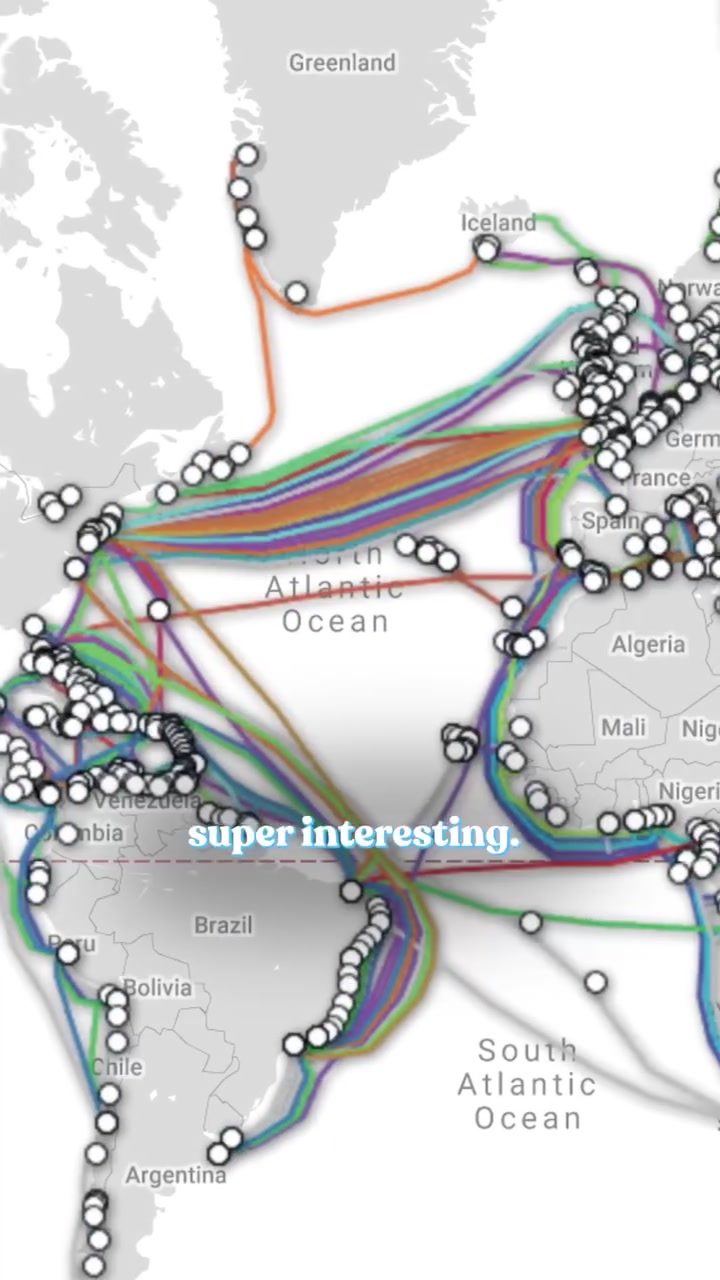
Why 99% of the Internet Runs Through Underwater Cables
Underwater cables form the backbone of global internet infrastructure, carrying an astonishing 99% of transoceanic data traffic. While satellites are often seen as a more efficient alternative, underwater cables remain the preferred method for several key reasons.
Why Cables Over Satellites?
The preference for underwater cables over satellites can be attributed to three main factors: latency, data capacity, and reliability. Understanding these aspects provides a clearer picture of why cables are the go-to solution for global data transmission.
Latency: The Need for Speed
Latency refers to the time it takes for data to travel from one point to another. This is a critical factor in data transmission, especially for applications that require real-time interaction, such as video calls or online gaming. Satellites, while effective for certain applications, introduce significant latency. The signal must travel all the way to space and back, which can take around 700 milliseconds for a round trip. In contrast, underwater cables provide a much shorter route across the ocean, reducing latency to approximately 100 milliseconds. This difference might seem small, but in the world of high-speed data transmission, every millisecond counts.
Data Capacity: Carrying the Load
Underwater cables are not just faster; they are also incredibly efficient in terms of data capacity. A single modern cable can carry up to 200 terabits per second. To put this into perspective, that's equivalent to downloading 25,000 high-definition movies every second. This enormous capacity makes cables the preferred choice for handling the vast amounts of data that traverse the globe daily. While satellites have made significant advancements, they still lag behind cables in terms of raw data-carrying capacity.
Reliability: Weathering the Storm
Reliability is another critical factor where underwater cables excel. These cables are designed to withstand a variety of environmental challenges, including weather conditions, solar storms, and space debris. Their underwater location provides an additional layer of protection, making them more resilient compared to satellites, which are vulnerable to various space-related hazards.
The Challenges of Underwater Cables
While underwater cables offer numerous advantages, they are not without their challenges. One of the more unusual threats comes from marine life. Sharks, for instance, have been known to attack these cables, although such incidents are relatively rare. Despite these occasional interruptions, the overall reliability and efficiency of underwater cables make them the best option for supporting the global internet infrastructure.
Practical Tips for Understanding Global Data Transmission
To better understand the intricacies of global data transmission, consider the following tips:
- Explore the Science Behind Latency: Delve into the technical details of how latency affects data transmission. Understanding the physics and engineering behind it can offer deeper insights into why cables are preferred over satellites.
- Investigate Data Capacity: Look into the specifications of modern underwater cables. Learn about the advancements in fiber-optic technology and how they contribute to the high data-carrying capacity of these cables.
- Consider Environmental Factors: Understand the environmental challenges that underwater cables face and how they are designed to withstand these conditions. This can provide a better appreciation for the engineering behind these critical infrastructure components.
Important Takeaways
- Underwater cables are the backbone of global internet infrastructure, carrying 99% of transoceanic data traffic.
- The primary reasons for preferring cables over satellites include lower latency, higher data capacity, and greater reliability.
- Latency, or the time it takes for data to travel, is significantly lower with cables compared to satellites, making them ideal for real-time applications.
- Modern underwater cables have an enormous data-carrying capacity, capable of transmitting up to 200 terabits per second.
- While satellites offer certain advantages, underwater cables are more reliable and better protected from environmental and space-related hazards.
Conclusion
Underwater cables play a pivotal role in the global internet infrastructure, ensuring fast, reliable, and high-capacity data transmission. By understanding the key factors that make cables the preferred choice over satellites, it becomes clear why these cables are the unsung heroes of our interconnected world. Whether transmitting a text message or streaming high-definition video, these cables ensure that data reaches its destination swiftly and efficiently, making them an indispensable part of modern technology.
Watch the Reel
Questions readers ask
What are underwater cables and why are they crucial for internet traffic?
Underwater cables are a network of fiber optic cables that span oceans and seas, connecting continents and facilitating global communication. They are crucial for internet traffic because they carry approximately 99% of transoceanic data, ensuring swift and reliable data transmission between distant locations.
What are some advantages of underwater cables over satellite internet?
Underwater cables offer lower latency, which means faster data transmission speeds. They also provide greater data throughput, allowing more data to be transmitted at once. Additionally, cables are more reliable in harsh conditions and less susceptible to interference or signal loss.
How do underwater cables ensure reliable internet connectivity?
Underwater cables are designed to withstand harsh ocean conditions. They are durable, resistant to damage, and can maintain consistent performance. This ensures reliable internet connectivity, even in remote or challenging environments, making them a preferred choice for global internet infrastructure.
What is data throughput and why is it important in the cable vs. satellite debate?
Data throughput refers to the amount of data that can be transmitted over a network in a specific period. It is important in the cable vs. satellite debate because underwater cables offer significantly higher data throughput, allowing for more efficient and faster data transmission compared to satellite internet.
What factors contribute to the preference for underwater cables in global internet infrastructure?
The preference for underwater cables is driven by several factors, including lower latency, higher data throughput, and reliability. These factors make underwater cables a more efficient and effective solution for global internet infrastructure, especially for long-distance data transmission.
How does the undersea cable network support internet traffic across oceans?
The undersea cable network consists of extensive lines of fiber optic cables that crisscross the ocean floors. These cables enable the transmission of vast amounts of data between continents, supporting the global internet traffic that powers modern communication, commerce, and entertainment services.
What role do underwater cables play in satellite vs. cable internet debates?
In the debate between satellite and cable internet, underwater cables are crucial because they offer superior performance in terms of speed, reliability, and data capacity. While satellites can provide internet access in remote areas, underwater cables are the backbone of global internet connectivity, handling the majority of data transmission efficiently.
Related deep dives
Similar reads based on topic and creator.


Recent articles
Fresh deep dives from the latest Reels we unpacked.




Comments
Be the first to comment.