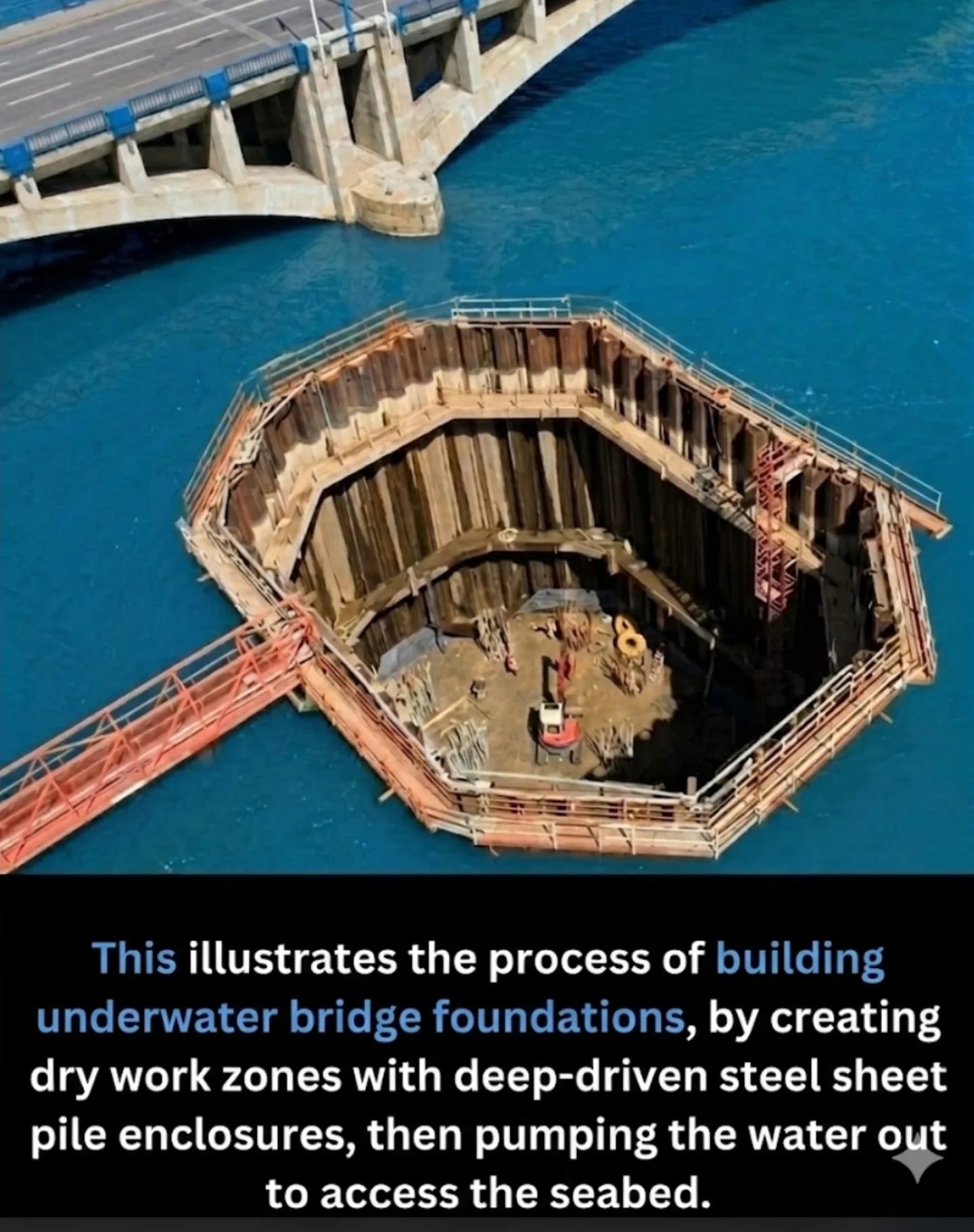
Underwater Bridge Construction: The Cofferdam Process
Underwater bridge construction is a complex engineering feat that requires isolating the seabed to create a dry, stable work environment. This process is crucial for constructing bridge piers in deep-water environments, where traditional construction methods are impractical. The key to this process is the use of cofferdams, which are temporary enclosures that allow engineers to work beneath the water's surface.
Why This Matters
Building bridges over deep water bodies like rivers and oceans is essential for modern infrastructure. These structures connect communities, facilitate transportation, and support economic growth. However, the challenges posed by deep-water environments necessitate innovative engineering solutions. Understanding the cofferdam process is vital for anyone interested in marine engineering, civil engineering, or the broader field of infrastructure development.
The Cofferdam Process
Creating a Dry Work Zone
The first step in constructing underwater bridge foundations is creating a dry work zone. This is achieved by driving interlocking steel sheet piles into the substrate. These steel sheets form a watertight enclosure, known as a cofferdam, around the work area. The enclosure is then dewatered, pumping out the water to create a dry environment on the seabed.
Managing Hydrostatic Pressure
One of the most significant challenges in this process is managing hydrostatic pressure. The water above the cofferdam exerts a tremendous amount of pressure, which can cause the seabed to buckle due to upward pressure. To counteract this, a "tremie" concrete plug is poured underwater to seal the base of the cofferdam before dewatering. This concrete plug creates a stable foundation that can withstand the hydrostatic pressure.
Ensuring Structural Integrity
The temporary steel enclosure must be engineered to withstand various forces, including deep-water currents, tidal shifts, and potential vessel impacts. This requires a deep understanding of structural engineering principles and the ability to design a system that can withstand lateral loads. The cofferdam's strength and stability are critical to the success of the entire project, as any failure could lead to catastrophic consequences.
Permanent Execution
Once the dry environment is secure, the actual construction of the bridge pier begins. Reinforced concrete is cast to create a permanent pier. This concrete structure will support the massive spans of the bridge, ensuring its stability and durability. The process involves meticulous planning and execution to ensure that the concrete cures properly and forms a solid foundation.
Dismantling the Cofferdam
After the concrete has cured and the pier is complete, the cofferdam is dismantled. This process involves carefully removing the steel sheet piles, which can be reused for future projects. The dismantling must be done with great care to avoid damaging the newly constructed pier. Once the cofferdam is removed, the foundation is ready to support the bridge's superstructure.
Practical Tips
Planning and Design
Thorough planning and design are crucial for the success of any underwater bridge construction project. Engineers must consider various factors, including the depth of the water, the type of substrate, and the environmental conditions. Detailed blueprints and simulations can help anticipate potential challenges and develop effective solutions.
Material Selection
Choosing the right materials is essential for the durability and stability of the cofferdam and the bridge pier. High-quality steel and concrete are often used due to their strength and resistance to corrosion. However, engineers may also consider other materials depending on the specific requirements of the project.
Monitoring and Maintenance
Regular monitoring and maintenance are necessary to ensure the structural integrity of the cofferdam and the bridge pier. This includes checking for signs of wear and tear, addressing any issues promptly, and making necessary adjustments to the design or construction process.
Safety Precautions
Underwater bridge construction is inherently risky due to the challenging environment. Safety precautions must be prioritized to protect workers and ensure the success of the project. This includes providing adequate safety equipment, conducting regular safety drills, and implementing emergency response plans.
Environmental Considerations
Constructing bridges in deep-water environments can have significant environmental impacts. Engineers must consider the potential effects on marine life, water quality, and the surrounding ecosystem. Implementing environmentally friendly practices and minimizing the use of harmful materials can help mitigate these impacts.
Important Takeaways
The Importance of Cofferdams
Cofferdams play a critical role in underwater bridge construction by creating a dry, stable work environment. Without them, it would be impossible to construct bridge piers in deep-water environments. Understanding the process of creating and managing cofferdams is essential for anyone involved in marine engineering or civil engineering.
The Role of Hydraulic Forces
Managing complex hydraulic forces is a key aspect of underwater bridge construction. Engineers must consider various factors, including hydrostatic pressure, lateral loads, and environmental conditions, to ensure the stability and durability of the bridge pier. This requires a deep understanding of hydraulic engineering principles and the ability to design effective solutions.
The Need for Structural Integrity
Ensuring the structural integrity of the cofferdam and the bridge pier is crucial for the success of the project. This involves selecting the right materials, conducting thorough planning and design, and implementing regular monitoring and maintenance. Safety and environmental considerations are also essential to protect workers and minimize the environmental impact.
Conclusion
Underwater bridge construction is a complex and challenging engineering feat that requires innovative solutions and a deep understanding of various engineering principles. The cofferdam process plays a critical role in this process, enabling engineers to create a dry, stable work environment in deep-water environments. By understanding the key aspects of this process, anyone involved in marine or civil engineering can contribute to the successful construction of modern infrastructure. This includes thorough planning, careful material selection, regular monitoring, and prioritizing safety and environmental considerations.
Watch the Reel
Questions readers ask
What is a cofferdam and why is it crucial for underwater bridge construction?
A cofferdam is a temporary water-tight enclosure used to pump out water and create a dry workspace on the seabed. It is crucial for underwater bridge construction as it allows for the safe and efficient building of bridge piers and foundations in deep-water environments, where direct construction is otherwise not feasible.
How does the cofferdam process work in deep-water pier construction?
The cofferdam process involves several steps. First, a temporary enclosure, often made of steel sheet piling, is installed on the seabed. Then, pumps are used to remove water from the enclosed area, creating a dry workspace. Once the pier is constructed, the cofferdam is dismantled, and the water is allowed to flow back in.
What are the main challenges in underwater bridge construction, especially in deep-water environments?
The main challenges include managing high water pressure, ensuring the stability of the construction site, and dealing with unpredictable marine conditions. Additionally, engineers must design structures that can withstand the unique forces and corrosion risks associated with underwater environments.
What materials are commonly used for cofferdam construction in deep-water environments?
Steel sheet piling is commonly used due to its strength and ability to withstand the pressures of deep water. The steel sheets are driven into the seabed to create a watertight barrier. Other materials, such as concrete or specialized composites, may also be used depending on the specific project requirements.
Why is the dewatering process important in the cofferdam method for bridge piers?
The dewatering process is vital as it removes water from the enclosed area, creating a dry workspace for construction. This allows engineers to work safely and efficiently, using conventional construction techniques. Effective water pressure management during dewatering is crucial to prevent structural damage and ensure the stability of the cofferdam.
What are the benefits of using cofferdams for constructing concrete piers underwater?
Cofferdams provide a controlled and stable environment for constructing concrete piers. They protect the construction site from water currents, waves, and marine life, ensuring the quality and durability of the concrete. This method also helps to manage water pressure and prevents erosion or damage to the seabed foundation.
What happens after the construction of the bridge piers is completed?
Once the bridge piers are constructed, the cofferdam is carefully dismantled. The water is allowed to fill the area again, and the temporary enclosure is removed. The site is then inspected and prepared for the next phase of the bridge construction, which typically involves connecting the piers to form the complete bridge structure.
Recent articles
Fresh deep dives from the latest Reels we unpacked.




Comments
Be the first to comment.