Genetics of Twin Siblings and Offspring
Genetics can be a complex topic, but understanding the basics can provide fascinating insights into how traits are passed down through generations. One intriguing scenario involves the offspring of identical twins. Let's dive into the genetics behind this and explore the implications.
Why this matters
Understanding the genetic relationships between siblings, twins, and their offspring can help clarify inheritance patterns, genetic disorders, and family trees. This knowledge is particularly useful in fields like medicine, genealogy, and even personal curiosity about family history.
Main discussion
Identifying the genetic relationship
Identical twins, also known as monozygotic twins, develop from a single fertilized egg that splits into two. This means they share 100% of their genetic material. Identical twins are always of the same sex and have the same genetic makeup. However, fraternal twins, or dizygotic twins, develop from two separate fertilized eggs and share about 50% of their genetic material, similar to regular siblings.
Twin siblings and their children
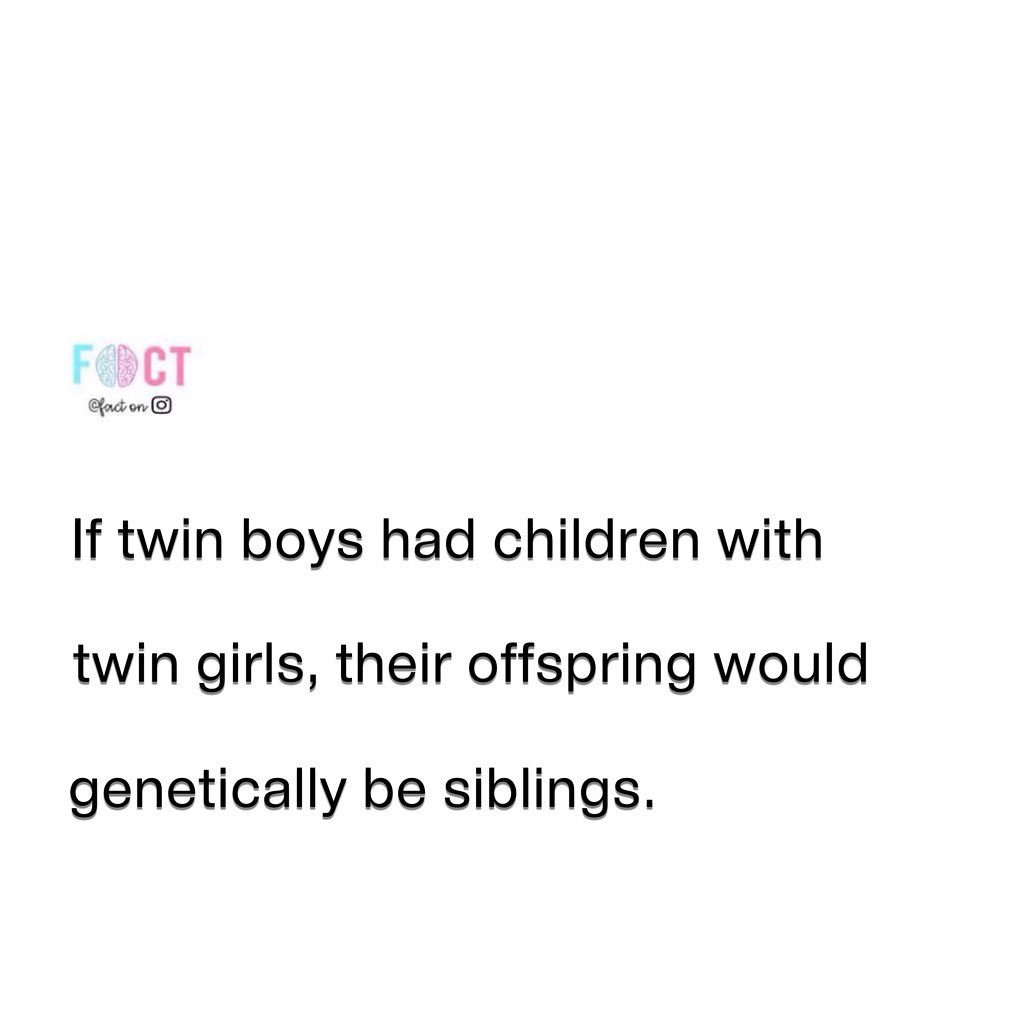
When twin boys have children with twin girls, the resulting offspring exhibit a unique genetic relationship. The offspring would genetically be siblings, despite coming from different sets of parents.
This scenario raises an interesting question: How can offspring from different sets of identical twins be considered siblings? The answer lies in their genetic makeup.
Genetic inheritance
Identical twins share the same genetic material. When they procreate, the genetic material passed down to their offspring will be the same as that of their twin sibling. Therefore, the offspring of identical twins will share a higher degree of genetic similarity than typical siblings.
To illustrate this:
- Identical twins, both boys and both girls, share the same genetic material.
- When they have children, the offspring inherit genes from their twin parents.
- Since the parents are genetically identical, the offspring will share a high degree of genetic similarity, making them genetically siblings.
The role of genetics in inheritance
Genetics plays a crucial role in determining how traits are passed from one generation to the next. In the case of identical twins, their offspring will have a higher chance of inheriting similar traits because of the identical genetic material shared by their parents.
Practical Tips
Understanding your family tree
Knowing the genetic relationships within your family tree can provide valuable insights. If you have identical twins in your family, consider how their offspring might genetically be siblings despite having different sets of parents.
Genetic testing
Consider genetic testing to better understand your genetic makeup and the potential health risks you may face. This can provide clarity on inherited traits and help in making informed decisions about your health.
Genetic counseling
Talking to a genetic counselor can offer personalized guidance on understanding your genetic makeup and the implications for your family. They can help interpret genetic test results and provide advice on managing potential risks.
Important takeaways
- Identical twins share 100% of their genetic material.
- Offspring of identical twins can be genetically related in a unique way, appearing as siblings.
- Genetic testing and counseling can provide valuable insights and guidance.
Conclusion
The scenario of twin boys and twin girls having children and their offspring being genetically siblings highlights the fascinating and complex nature of genetics. Understanding these genetic relationships can provide a deeper appreciation of how traits are passed down through generations and the importance of genetic material in determining familial connections. By grasping these concepts, you can gain valuable insights into your own family history and genetic makeup, potentially leading to better-informed decisions about health and family planning.
Watch the Reel
Questions readers ask
What are genetic siblings and how do they relate to twin offspring?
Genetic siblings are individuals who share a higher degree of genetic similarity due to shared ancestry. In the case of twin offspring, the children of identical twins are genetic siblings because they inherit the same genetic material from their parents, who are identical twins.
How does the genetic bond differ between siblings from different parents and twin offspring?
Siblings from different parents share about 50% of their genetic material, as they inherit half from each parent, making them less genetically similar. Conversely, the offspring of identical twins share a more similar genetic profile because they inherit 100% of the same genetic material from their parents, who are identical twins.
Can the offspring of identical twins inherit the same genetic disorders?
Yes, the offspring of identical twins can inherit the same genetic disorders due to their shared genetic material. This shared genetic inheritance can increase the likelihood of passing down specific genetic traits or conditions.
What are the implications of twin offspring for family trees and genealogy?
The offspring of identical twins can complicate family trees and genealogy because they share a closer genetic bond, despite having different parents. This unique genetic relationship can affect how family histories are traced and understood, making it important to account for these genetic similarities when researching family lineages.
How does the genetic relationship in twins affect inheritance patterns?
The genetic relationship in twins, particularly identical twins, influences inheritance patterns. Because identical twins share 100% of their genetic material, any inherited traits or disorders will be the same in both twins. The same principles apply when the twins have children, who will inherit similar genetic material due to the twins' shared genetic makeup.
Do twins having children result in a different genetic profile for the offspring?
When identical twins have children, the genetic profile of the offspring is more similar compared to children of non-identical twins or non-twin siblings. This is because the identical twins pass down the same genetic material to their children, resulting in a higher degree of genetic similarity among the offspring.
Recent articles
Fresh deep dives from the latest Reels we unpacked.




Comments
Be the first to comment.